
At Home COVID Test Kit Accuracy: Your Complete Usage Guide
At Home COVID Test Kit Accuracy: Your Complete Usage Guide
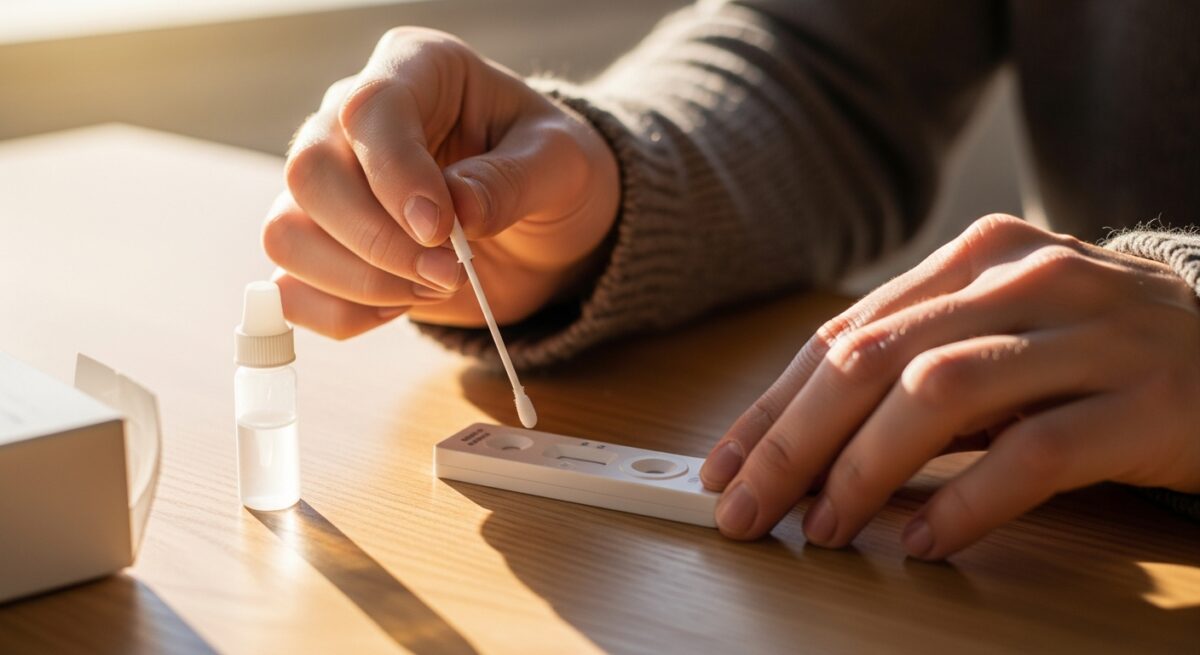
In the era of telemedicine and self-managed care, at home COVID test kits have become a cornerstone of personal and public health. These small, unassuming boxes represent a significant shift in how we monitor our well-being, offering a rapid, private way to screen for infection. However, their value is entirely dependent on two critical factors: understanding their accuracy and executing their usage correctly. A positive covid test at home can guide crucial decisions about isolation, treatment, and seeking further care, but only if the result is trustworthy. This guide delves beyond the basic instructions to provide a comprehensive look at how these tests work, their real-world reliability, and the precise steps needed to maximize their effectiveness, empowering you to take confident control of your health screening.
Understanding How At Home COVID Tests Work
At home COVID tests, also known as rapid antigen tests, are designed to detect specific proteins from the SARS-CoV-2 virus. Unlike PCR tests, which are processed in a lab and amplify tiny amounts of viral genetic material, antigen tests provide a quicker result by identifying proteins on the virus’s surface. This fundamental difference is key to understanding their performance. The test process involves collecting a sample, typically from the nasal cavity, and mixing it with a solution that breaks the virus apart. This mixture is then applied to a test strip containing antibodies that are designed to bind to COVID-19 antigens. If these antigens are present, a colored line appears on the test strip, indicating a positive result.
The convenience of getting a positive covid at home test result in 15-30 minutes is transformative, but it comes with important caveats regarding sensitivity. Antigen tests are generally most accurate when viral loads are high, which often corresponds to when a person is most contagious. This makes them excellent tools for screening in the early symptomatic phase. However, they may not detect very early infections or late-stage infections where the viral load has dropped below the test’s detection threshold. This is why timing and context are everything when interpreting results.
Evaluating the Accuracy of Rapid Antigen Tests
Accuracy in diagnostic testing is measured by two main parameters: sensitivity and specificity. Sensitivity refers to a test’s ability to correctly identify those with the disease (true positive rate). Specificity refers to its ability to correctly identify those without the disease (true negative rate). For at home COVID test kits, specificity is typically very high, often above 99%. This means a positive result is highly likely to be a true positive, especially if you have symptoms. The chance of a false positive is low.
Sensitivity, however, is more variable. Studies show that when used by symptomatic individuals within the first week of symptom onset, the sensitivity of many FDA-authorized at home tests can be comparable to PCR tests, often in the mid-80% to high-90% range. For asymptomatic individuals, sensitivity can be lower. This is not a flaw in the test, but a reflection of lower viral loads. The key takeaway is that a single negative test cannot definitively rule out infection, especially if you have been exposed or have symptoms. This is why serial testing, or testing multiple times over 48 hours, is recommended by health authorities to increase the chance of detection.
Several factors can influence the accuracy of your result. User error is a primary concern, which is why following the instructions meticulously is non-negotiable. The timing of the test relative to exposure or symptom onset is another major factor. Test quality and storage matter too, a point worth considering when you pick up cvs covid tests at home or any other brand, ensure they are not expired and have been stored as directed. Finally, emerging viral variants can theoretically affect test performance, though manufacturers and the FDA monitor this closely.
A Step by Step Guide to Proper Test Administration
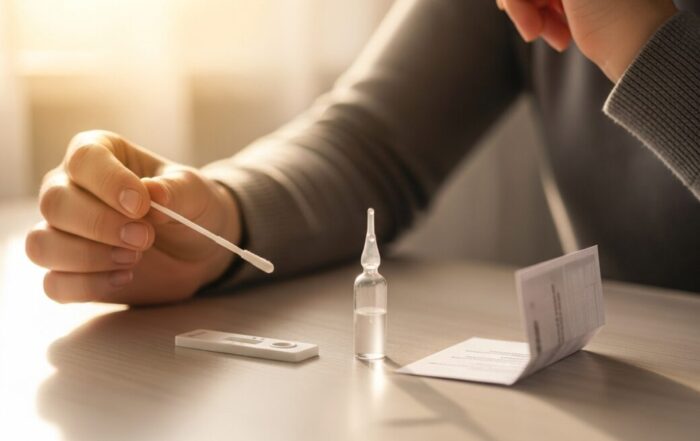
Maximizing accuracy starts with perfect technique. While each brand has slight variations, the core principles remain the same. First, create a clean, well-lit workspace and wash your hands thoroughly. Read all instructions before you begin. Assemble all components: the test device, swab, extraction tube with pre-measured liquid, and timer.
To perform the test correctly, follow this numbered process:
- Open the extraction tube and place it firmly in the provided holder. Do not spill the liquid.
- Carefully open the swab package, touching only the handle. Do not let the soft fabric tip touch any surface.
- Insert the swab into your nostril, following the depth instructions precisely (usually about 3/4 to 1 inch, or until resistance is met). Rotate the swab firmly against the inside walls of your nostril for the specified time (often 15 seconds).
- Repeat the process in your second nostril using the same swab.
- Immediately insert the swab into the extraction tube. Rotate and press the swab against the tube’s walls for the specified time (e.g., 15 seconds) to release the sample into the liquid.
- Remove the swab while squeezing the tube’s sides to extract as much liquid as possible from the swab tip. Dispose of the swab safely.
- Cap the tube with the provided dropper tip. Gently squeeze the tube to place the specified number of drops (often 3 or 4) onto the test device’s sample well.
- Start your timer immediately. Read the result only within the exact time window stated in the instructions (e.g., 15-30 minutes). Reading too early or too late can lead to incorrect interpretations.
After the test, clean your workspace, seal all used components in the provided waste bag, and dispose of it with your household trash. Document the date, time, brand, and result. This record can be valuable for healthcare consultations.
Interpreting Your Results and Next Steps
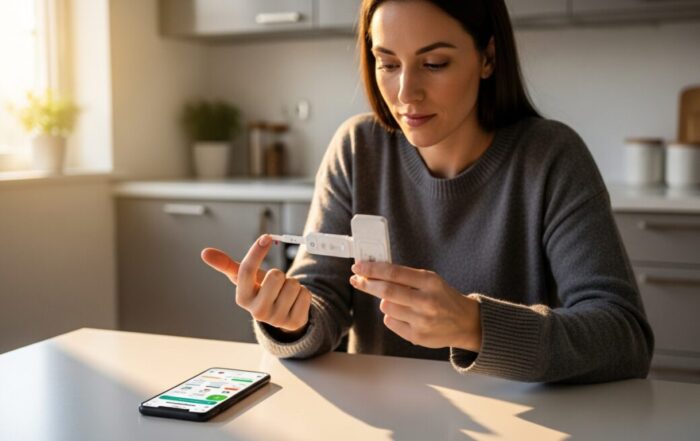
Interpreting the test lines is straightforward but must be done within the strict time window. A positive result is indicated by two colored lines: one at the control (C) region and one at the test (T) region. Any faint line at the T region, no matter how light, should be considered positive. The control line must always appear for the test to be valid. A negative result shows only the control (C) line. An invalid result, where the control line does not appear, means the test did not work and must be repeated with a new kit.
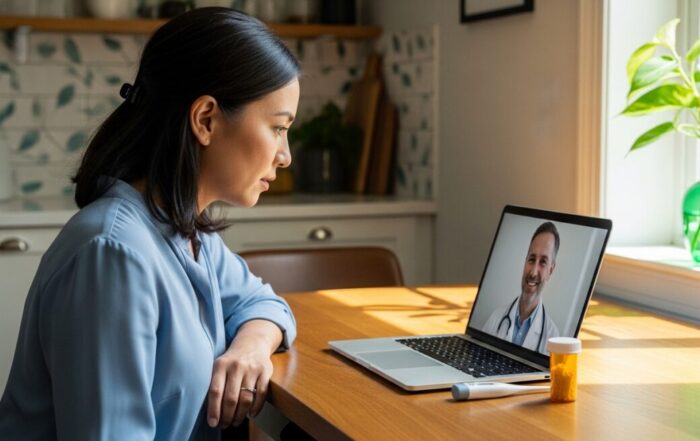
If you receive a positive covid test at home, you should assume you have COVID-19 and are likely contagious. The CDC recommends isolating for at least 5 days from the positive test date or symptom onset, and wearing a high-quality mask around others for a full 10 days. Notify your close contacts. This is also the critical moment to leverage telemedicine services. Platforms like Doctors Home allow you to consult immediately with a licensed healthcare professional from your home. A virtual doctor can review your symptoms, provide official medical guidance, and, if appropriate, discuss treatment options or prescribe medications to help manage the illness, all without risking exposure to others.
If you are symptomatic but test negative, do not assume you are in the clear. The virus may not yet be detectable. Isolate if possible and test again in 24-48 hours. If you remain symptomatic with repeated negative tests, consider that you may have another respiratory illness. A telemedicine consultation can help differentiate between COVID-19, flu, RSV, or a common cold. For instance, our guide on at home flu test kits explains how similar self-tests can help identify influenza, aiding in getting the right care faster.
If you are asymptomatic and test negative after an exposure, continue to monitor for symptoms and consider testing again 5 days post-exposure. A negative at home test is a helpful data point for making safer decisions about gatherings but should be combined with other precautions like masking in indoor public spaces.
Integrating At Home Testing into Your Health Strategy
At home COVID test kits are powerful tools, but they are most effective when used strategically as part of a broader health management plan. They are ideal for pre-event screening, post-exposure checks, and symptomatic testing. Keeping a few kits on hand, perhaps picked up with your cvs covid tests at home order along with other essentials, ensures you are prepared. However, they are not a substitute for professional medical advice, diagnosis, or treatment.
This is where digital healthcare platforms fill a vital gap. Telemedicine bridges the convenience of at home testing with the expertise of clinical guidance. After a positive covid at home test, you can seamlessly transition to a virtual visit to discuss your results with a doctor, get an official assessment, and access supportive care. This integrated approach, self-testing followed by professional consultation, represents the modern, patient-centered model of healthcare. It reduces strain on emergency rooms, minimizes community transmission, and delivers care efficiently and effectively.
Frequently Asked Questions
How long after exposure should I take an at home COVID test?
If you have been exposed but have no symptoms, the CDC recommends testing at least 5 full days after your last exposure. If you develop symptoms at any point, test immediately.
Can I use an expired at home COVID test kit?
Do not use an expired test. The chemical reagents may degrade over time, leading to unreliable results. Many test expiration dates have been extended by the FDA. You can check the FDA website for a list of extended expiration dates by brand and lot number.
My test line is very faint. Is that positive?
Yes. Any visible line, no matter how faint, at the test (T) region within the read-time window is considered a positive result. It indicates the presence of viral antigens.
Where can I get free at home COVID tests?
The federal free test program has ended, but many insurance plans still cover the cost of at home tests. You can also purchase them at pharmacies, retailers, and online. Some community health centers and local health departments may still offer free tests.
What should I do if my at home test is positive but my PCR test is negative?
This is uncommon but can happen. The PCR test is more sensitive, so a false positive on the antigen test is more likely than a false negative on a PCR. Discuss discrepant results with a healthcare provider to determine the best course of action based on your symptoms and exposure history.
At home COVID test kits have democratized access to vital health information, putting diagnostic power directly in your hands. By understanding their strengths, respecting their limitations, and executing the testing procedure with care, you can generate reliable results that inform smart health decisions. Remember, these tests are a starting point. A positive result is a clear signal to isolate and seek professional medical guidance, a process made effortlessly secure and private through modern telemedicine services. By combining the immediacy of self-testing with the expertise of virtual care, you can navigate your health with greater confidence, speed, and safety.
About the Author: Kevin Ramirez

Sign up for our newsletter and Save 20% on Test Kits
"*" indicates required fields