
Telehealth for High Blood Pressure Management: A 2026 Guide
Telehealth for high blood pressure management lets you review home readings and adjust medications remotely. Learn how virtual visits work and when in-person care is needed.

By Hannah Young
High blood pressure affects nearly half of all adults in the United States, yet only about one in four have it under control. For many people, the biggest barriers to managing hypertension are not lack of willpower but lack of access: time off work for appointments, long waits to see a clinician, and difficulty coordinating monitoring between visits. Telehealth for high blood pressure management is changing that equation, offering a way to check in with a licensed clinician, review home readings, and adjust treatment plans without sitting in a waiting room. This article explains how virtual care works for hypertension, which medications are commonly discussed, how remote monitoring fits in, and when an in-person visit is still the right call.
How Telehealth for High Blood Pressure Management Works
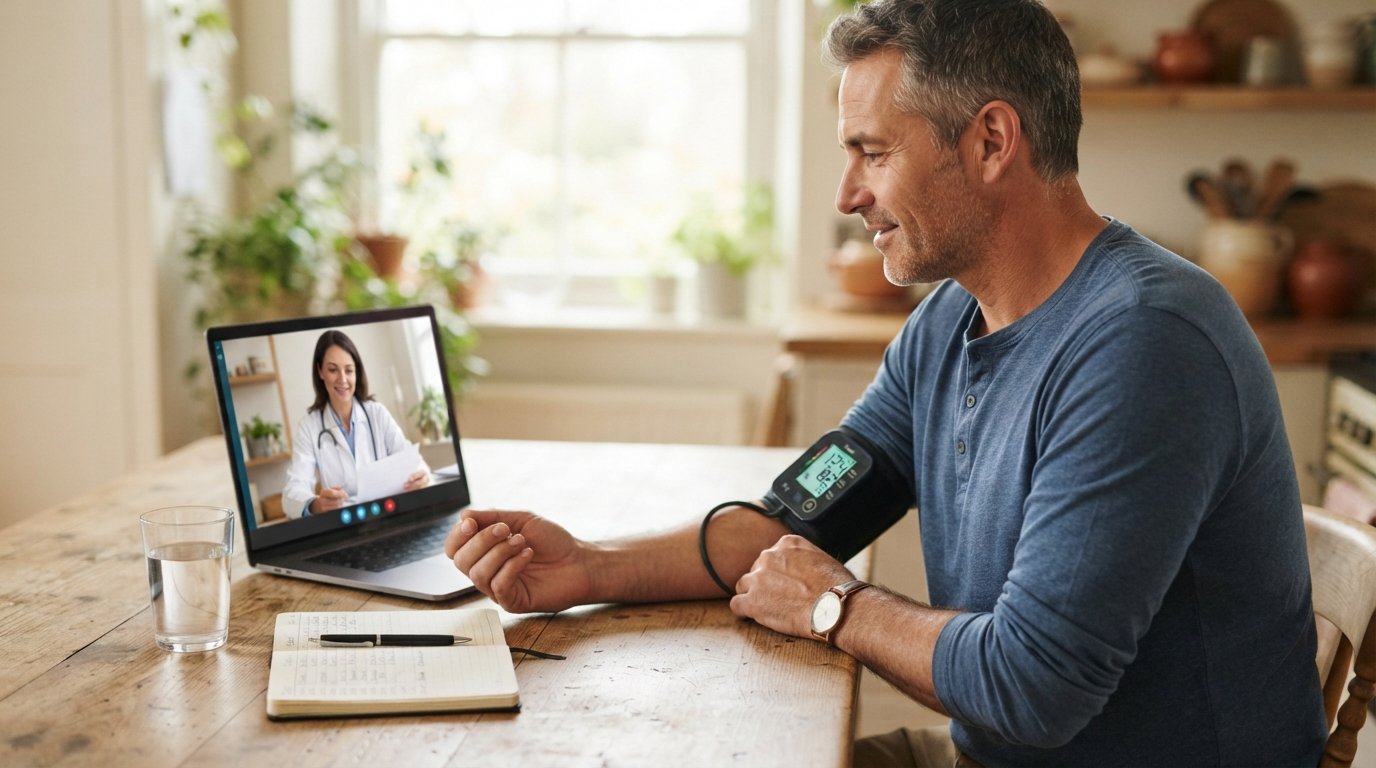
Telehealth for high blood pressure management typically involves a scheduled video or phone visit with a licensed clinician, often a nurse practitioner or physician assistant working under a physician's supervision. Before the visit, you may be asked to submit recent blood pressure readings taken at home, along with a list of current medications and any symptoms you have noticed. During the visit, the clinician reviews that information, asks about lifestyle factors such as diet, exercise, stress, and sleep, and discusses whether your current treatment plan is working or needs adjustment.
One of the key advantages of virtual visits is that they can happen more frequently than in-person appointments. A clinician might schedule a follow-up every two to four weeks while adjusting medications, which is much harder to do with traditional office visits. This more frequent touchpoint can lead to faster control of blood pressure, because treatment changes can be made and evaluated in near real time rather than over months. Telehealth platforms also often include secure messaging, so you can ask questions between visits without playing phone tag.
It is important to understand what telehealth for high blood pressure management is not. It is not a replacement for emergency care. If you have a blood pressure reading above 180/120 mmHg and symptoms such as chest pain, shortness of breath, severe headache, or vision changes, call 911 immediately. Telehealth is designed for routine management and follow-up, not for acute crises. Additionally, some states have rules about which clinicians can prescribe which medications via telehealth, and those rules vary. A reputable telehealth service will explain these limitations upfront.
Medications Commonly Discussed in Virtual Hypertension Visits
Clinicians managing high blood pressure through telehealth typically discuss the same classes of medications used in in-person care. The difference is that the conversation happens remotely, often with a stronger emphasis on home monitoring data. The most common medication classes include thiazide diuretics (such as hydrochlorothiazide), ACE inhibitors (such as lisinopril), angiotensin II receptor blockers or ARBs (such as losartan), and calcium channel blockers (such as amlodipine). Each class works differently, and the choice depends on your overall health, other conditions you have, and any side effects you experience.
During a virtual visit, the clinician will review your blood pressure log and ask about side effects. For example, ACE inhibitors can cause a dry cough in some people, and diuretics can lead to increased urination or electrolyte imbalances. Because telehealth visits are often shorter and more focused than in-person appointments, it helps to come prepared with specific questions and a written record of your readings. The clinician may adjust the dose of an existing medication, switch to a different class, or add a second medication if one is not enough. Many people need two or more medications to control blood pressure, and telehealth can make it easier to try combinations and monitor the results.
It is also worth noting that some medications commonly discussed for other conditions can affect blood pressure. For instance, nonsteroidal anti-inflammatory drugs (NSAIDs) like ibuprofen can raise blood pressure, and some decongestants can do the same. A telehealth clinician will review your full medication list, including over-the-counter products and supplements, to identify potential interactions. This review is one of the most valuable parts of a virtual visit, because it can catch problems that might otherwise go unnoticed.
Remote Monitoring and Self-Reported Readings
Remote monitoring is a cornerstone of effective telehealth for high blood pressure management. Many telehealth services ask patients to use a validated home blood pressure monitor and submit readings through a secure portal or app. Some programs provide the monitor or recommend specific models that have been validated for accuracy. The readings are then reviewed by the clinician before or during the visit, allowing for data-driven decisions rather than relying on a single measurement taken in a clinic, which can be affected by white coat hypertension or masked hypertension.
To get the most out of remote monitoring, it helps to follow a consistent routine. The American Heart Association recommends taking readings at the same times each day, typically morning and evening, and recording two readings spaced one minute apart. Sit quietly for five minutes before measuring, keep your feet flat on the floor, and rest your arm on a table at heart level. Avoid caffeine, exercise, and smoking for at least 30 minutes before a reading. These steps may seem small, but they make a big difference in the accuracy of the data your clinician uses to guide treatment.
Self-reported readings also empower patients to take a more active role in their care. When you see how your blood pressure responds to medication changes, dietary shifts, or stress, you can have more informed conversations with your clinician. Some telehealth platforms include educational modules that explain what the numbers mean and how to interpret trends. This education is not a substitute for medical advice, but it can help you ask better questions and understand the rationale behind treatment decisions.
Safety Points and When In-Person Evaluation Is Necessary
While telehealth for high blood pressure management is convenient and effective for many people, there are situations where an in-person evaluation is essential. The most urgent is a hypertensive crisis, defined as a blood pressure reading above 180/120 mmHg. If you have such a reading and any symptoms such as chest pain, shortness of breath, back pain, numbness or weakness, vision changes, or difficulty speaking, call 911 immediately. Do not wait for a telehealth appointment. If you have a very high reading but no symptoms, contact your clinician promptly; they may advise you to seek in-person care or go to an urgent care center.
Other situations that may require in-person attention include new or worsening symptoms that could indicate a complication of hypertension, such as swelling in the legs, sudden weight gain, or changes in urination. Additionally, some diagnostic tests, such as an electrocardiogram (ECG) or blood tests to check kidney function and electrolyte levels, cannot be done remotely. A telehealth clinician may order these tests and ask you to complete them at a local lab or clinic. If you have conditions such as diabetes, kidney disease, or heart failure, your care may need to be coordinated with specialists, and some of those visits may need to be in person.
It is also important to be honest with your telehealth clinician about your lifestyle and medication adherence. High blood pressure is often asymptomatic, which can make it tempting to skip medications or ignore lifestyle recommendations. But uncontrolled hypertension silently damages blood vessels, the heart, the kidneys, and the brain over time. A virtual visit is a safe space to discuss challenges with adherence, side effects, or cost concerns. The clinician can then work with you to find solutions, such as simplifying your medication schedule or switching to a lower-cost generic.
Lifestyle Modifications and Follow-Up Schedules
Lifestyle modifications are a critical part of any high blood pressure management plan, and telehealth visits are a good venue for discussing them. The clinician may ask about your diet, physical activity, alcohol intake, and sleep habits. Evidence-based recommendations include reducing sodium intake to less than 1,500 milligrams per day for many people, following a DASH-style eating pattern rich in fruits, vegetables, and low-fat dairy, engaging in at least 150 minutes of moderate-intensity aerobic exercise per week, limiting alcohol, and maintaining a healthy weight. These changes can lower blood pressure by several points on their own and can make medications more effective.
Follow-up schedules in telehealth for high blood pressure management are often more frequent than in traditional care, especially early on. A typical schedule might include a visit every two to four weeks until blood pressure is controlled, then every three to six months for maintenance. Some platforms offer asynchronous check-ins, where you submit readings and answer questions, and the clinician responds with recommendations without a live video visit. This flexibility can be particularly helpful for people with busy schedules or limited mobility.
It is also worth discussing home monitoring frequency with your clinician. Some people check their blood pressure daily, while others do it a few times a week. The right frequency depends on how stable your readings are and whether you are in an active phase of treatment adjustment. Your clinician can help you set a schedule that provides useful data without becoming a source of anxiety. Remember that a single high reading is not a crisis; trends over time matter more.
Preparing for a Telehealth Visit for Hypertension
To get the most out of a virtual visit, preparation is key. Before the appointment, gather your home blood pressure readings, a list of all medications and supplements you take (including doses), and any questions you want to ask. Find a quiet, private space with a stable internet connection, and make sure your device is charged. If you use a home monitor, have it nearby in case the clinician asks you to take a reading during the visit. Being prepared helps the visit run smoothly and ensures you cover the topics that matter most to you.
It is also helpful to think about your goals for the visit. Are you hoping to lower your blood pressure to a specific target? Are you concerned about side effects from a medication? Do you want to discuss lifestyle changes? Writing these down beforehand can keep the conversation focused. Telehealth visits are often shorter than in-person appointments, so having a clear agenda helps you and your clinician make the most of the time.
Finally, remember that telehealth for high blood pressure management is a partnership. The clinician brings medical expertise, but you bring the day-to-day data and experience of living with your condition. The more engaged you are in monitoring and communication, the better your outcomes are likely to be. If something does not make sense, ask for clarification. A good telehealth clinician will welcome your questions and work with you to develop a plan that fits your life.
Telehealth has made it easier than ever to stay on top of high blood pressure, but it works best when you understand its scope and limitations. By combining regular virtual visits, consistent home monitoring, and open communication with your clinician, you can take meaningful steps toward better blood pressure control, all from the comfort of your home.