
Home Remedies for Common Ailments: When They Are Not Enough
Home remedies for common ailments when they are not enough: learn the red flags, the three-question check, and when a telehealth visit beats another DIY attempt.

By Maya Foster
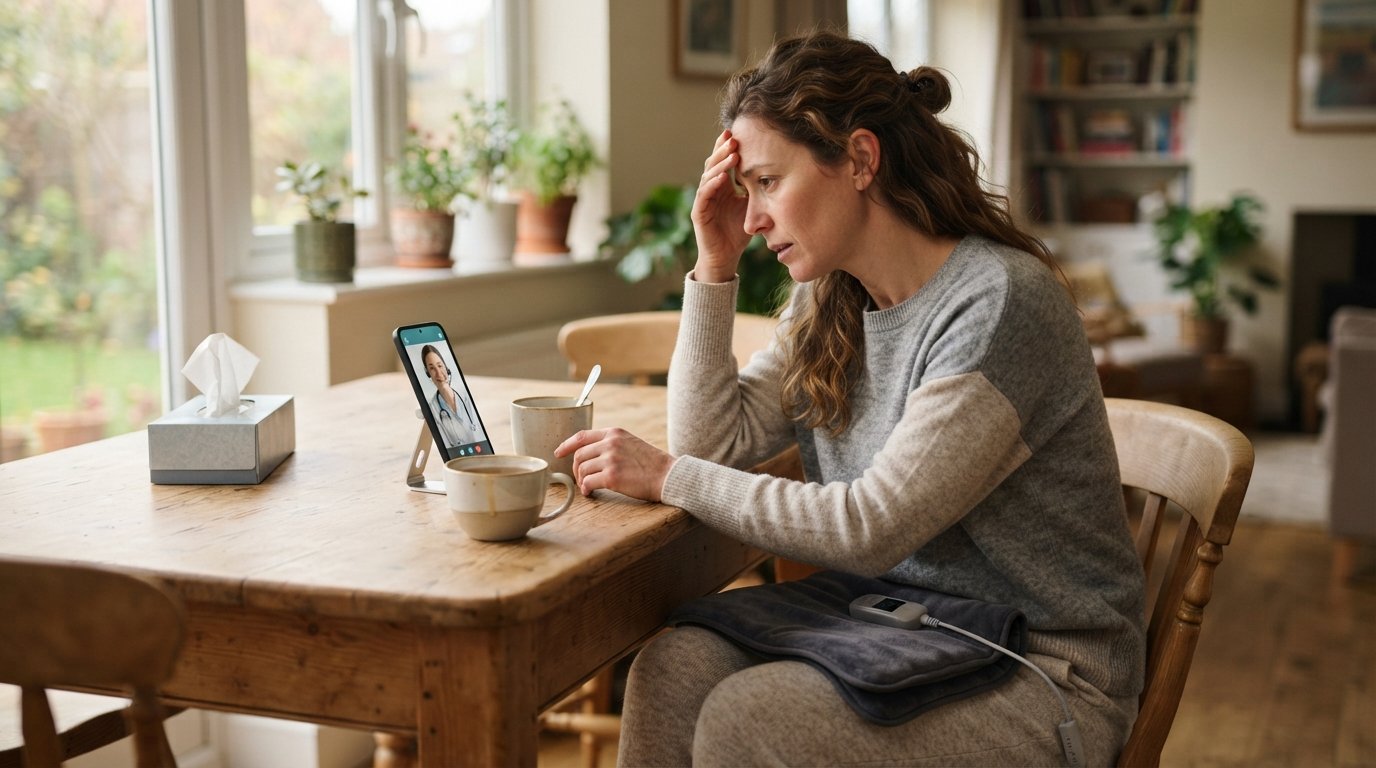
You have tried the saltwater gargle, the heating pad, the extra fluids, and the over-the-counter cream. The symptoms are still there, or worse, they are changing in ways that make you uneasy. That moment of uncertainty, when self-care stops feeling sufficient, is exactly where good information matters most. Knowing when home remedies for common ailments are not enough is a skill, not a sign of failure. It protects you from two opposite mistakes: rushing to an emergency room for a mild issue, or waiting too long while a treatable problem quietly worsens.
This guide walks through the practical signals that separate a self-limiting ailment from one that deserves clinical attention. It covers the safety flags clinicians watch for, how a telehealth visit fits between home care and urgent care, and what a licensed provider typically asks before discussing treatment. DoctorsHome is an educational publisher and does not diagnose, prescribe, sell medication, or book visits. Everything here is general information to help you have a sharper conversation with a licensed clinician, who is the only person who can decide on a prescription or a treatment plan.
What a Self-Limiting Ailment Actually Looks Like
A self-limiting ailment is one that runs a predictable course and resolves without prescription treatment. The common cold is the classic example: symptoms peak in a few days, then steadily improve over seven to ten days. Mild viral sore throats, uncomplicated heartburn after a heavy meal, tension headaches, and minor sprains usually follow the same pattern. The key word is predictable. When the timeline matches what you would expect and the symptoms are stable or improving, home care is a reasonable first step.
Home remedies for common ailments when they are not enough is a phrase that should make you ask a specific question: is this illness behaving the way it should? A cold that follows the expected arc is different from a cold that plateaus for a week or suddenly worsens on day five. Clinicians often describe this as the difference between a stable trajectory and a changing one. A stable trajectory gives you permission to keep doing what you are doing. A changing trajectory is the signal to escalate.
There is also a difference between symptom severity and symptom direction. A bad sore throat that is slowly getting better is usually less concerning than a mild sore throat that is getting worse each day. Direction matters because it tells you where the illness is heading. If you cannot describe your symptoms as improving, stable, or clearly following a known pattern, that is the first hint that home remedies may not be enough.
How to Tell When Self-Care Stops Being Enough
Most people do not need a medical degree to sense that something has shifted. The problem is that the shift is easy to rationalize away, especially when you are tired, busy, or hoping the issue will resolve on its own. A useful framework is to check three things daily: duration, direction, and function. Duration asks how long the symptom has been present compared with what is typical. Direction asks whether it is improving, holding steady, or worsening. Function asks whether you can still eat, sleep, work, and move roughly as usual.
When any one of those three checks fails, home care deserves a second look. When two or three fail at once, it is time to contact a clinician. For example, a cough that has lasted three weeks fails the duration check even if you feel otherwise fine. A rash that is spreading fails the direction check even if it does not hurt. A headache that keeps you in bed fails the function check even if it started mildly. None of these automatically means something serious, but each one moves the situation out of the do-it-yourself zone.
It also helps to distinguish between symptoms you can observe and symptoms you can only feel. Visible changes, such as spreading redness, swelling, discharge, or a new rash pattern, are easier to track and often easier for a clinician to evaluate over a video visit. Internal symptoms, such as fatigue, dizziness, or a persistent low-grade fever, are vaguer but equally important. Write them down with dates and times. A simple log of what you tried, when symptoms started, and how they changed gives a clinician far more to work with than a vague memory.
Red Flags That Call for a Clinician, Not Another Remedy
Some symptoms should end the home remedy experiment immediately. These are the safety flags that clinicians treat as urgent regardless of how mild the rest of the picture looks. They are not a complete list, and they are not a diagnosis, but they are reliable reasons to stop self-treating and seek professional evaluation.
- Fever that lasts more than three days in an adult, or any fever in an infant, especially when it is accompanied by stiff neck, confusion, or a rash that does not fade under pressure.
- Spreading redness or warmth around a wound, bite, or skin infection, particularly when it expands quickly or is paired with streaks, increasing pain, or fever.
- Signs of dehydration, including very dark urine, dizziness on standing, a dry mouth that does not improve with fluids, or reduced urination for eight hours or more.
- Trouble breathing, chest pain, or a cough that brings up blood, which are emergency symptoms and should prompt a call to emergency services rather than a telehealth appointment.
- A symptom that keeps returning after repeated home treatment, such as recurring heartburn, recurrent urinary discomfort, or headaches that now occur more often than before.
These flags matter because home remedies for common ailments when they are not enough often fail silently. A minor skin infection treated with warm compresses may look unchanged for a day, then worsen quickly. Dehydration can build gradually while you are focused on the original illness. The purpose of the list is not to scare you but to give you a clear line where self-care stops and clinical care begins.
Mental health deserves the same honesty. If low mood, anxiety, or sleep problems are lasting more than two weeks, interfering with work or relationships, or include thoughts of self-harm, home remedies such as exercise, journaling, or sleep hygiene are supportive but not sufficient. In a crisis, call or text 988 in the United States, or call 911 for immediate danger. A telehealth clinician can discuss treatment options, but emergency services are the right call when safety is at stake.
Where Telehealth Fits Between Home Care and Urgent Care
Telehealth occupies a useful middle ground. It is more than a home remedy because a licensed clinician is reviewing your symptoms, but it is less than an in-person urgent care or emergency visit when a physical exam or imaging is needed. For many common ailments, this middle ground is exactly right. Sinus infections, uncomplicated urinary tract infections, mild skin conditions, cold sores, seasonal allergies, and many cases of acid reflux can be evaluated and discussed over a video visit.
The practical advantage is timing. A telehealth visit can happen the same day, often within hours, which shortens the window in which a mild problem can become a bigger one. It also keeps you out of waiting rooms when your immune system is already taxed. The limitation is equally important: telehealth cannot listen to your lungs with a stethoscope, press on your abdomen, or swab your throat. If your symptoms suggest that a hands-on exam is needed, a good clinician will tell you and direct you to in-person care.
DoctorsHome explains the topics people look up on telehealth platforms, including weight loss, sexual health, hair, skin, herpes, birth control, menopause, and mental health. Each page names medications clinicians commonly discuss and notes the safety points a licensed clinician still has to review. That framing is deliberate. The site does not diagnose, prescribe, sell medication, or book visits. It exists so that when you do speak with a clinician, you already understand the vocabulary and the questions that matter.
What Clinicians Typically Ask Before Discussing Treatment
When you escalate from home care to a clinical conversation, the first few minutes are usually about history rather than treatment. Clinicians ask when symptoms started, what you have already tried, and whether anything made it better or worse. They ask about fever, medications, allergies, pregnancy status, and chronic conditions such as diabetes or immune suppression. These questions are not red tape. They determine whether a prescription is safe and whether a telehealth visit is appropriate at all.
For example, a clinician discussing a urinary tract infection will ask about flank pain, fever, and pregnancy because those factors change the recommendation. A clinician discussing acne or rosacea will ask about pregnancy and sun exposure because some topical treatments are not appropriate during pregnancy. A clinician discussing weight loss will ask about cardiovascular history and other medications because GLP-1 options such as semaglutide and tirzepatide have specific safety considerations. The same pattern holds across sexual health, hair loss, and mental health: the medication conversation only begins after the safety conversation.
You can prepare for this efficiently. Before the visit, write down the symptom timeline, the remedies you tried, your current medications and supplements, any allergies, and your pregnancy status if relevant. Note any questions you want answered, including what to do if symptoms do not improve. This preparation does not replace the clinician's judgment, but it makes the visit more useful and reduces the chance that an important detail gets missed.
Building a Smarter Escalation Plan
The most practical approach is to decide your escalation point before you get sick. For a typical cold or mild stomach bug, give home care 48 to 72 hours and check the three questions daily: duration, direction, and function. If the symptom is stable or improving and you can still function, continue home care. If it worsens, spreads, or interferes with basic needs, move to a telehealth visit. If red flags appear, skip telehealth and seek urgent or emergency care.
This plan works best when it is specific to the ailment. For a skin infection, the escalation point is spreading redness or fever. For a cough, it is shortness of breath, chest pain, or a duration beyond three weeks. For digestive symptoms, it is blood in the stool, severe pain, or signs of dehydration. For mental health, it is two weeks of persistent low mood or any thought of self-harm. Writing these down once, while you are calm, removes the guesswork later.
Home remedies for common ailments when they are not enough is ultimately a question of judgment, and judgment improves with preparation. Home care is not a competition, and escalation is not an overreaction. The goal is to use the least intensive option that actually fits the situation, and to move up promptly when the situation changes. A licensed clinician remains the only person who can diagnose, prescribe, or decide on treatment. Your job is to notice the signals, document them clearly, and choose the right level of care at the right time.