
Virtual Primary Care Services: What to Expect From Online Doctors
Virtual Primary Care Services: What to Expect From Online Doctors

Imagine accessing comprehensive, ongoing medical care from the comfort of your living room. Virtual primary care services have evolved far beyond simple one-off telehealth visits for minor ailments. Today, online doctors offer a robust, continuous model of care that manages chronic conditions, coordinates preventive health, and builds lasting doctor-patient relationships, all through a digital interface. This model represents a fundamental shift in how primary care is delivered, prioritizing accessibility and convenience without sacrificing quality. For patients navigating this new landscape, understanding what to expect is key to maximizing the benefits of online primary care and integrating it effectively into their overall health strategy.
The Core Model of Virtual Primary Care
Virtual primary care is not a fragmented service for occasional needs. It is a subscription-based or per-visit model that provides patients with a dedicated primary care provider or care team accessible via video, phone, or secure messaging. This provider oversees your general health, much like a traditional in-person primary care physician (PCP). They maintain your medical records, manage ongoing conditions like hypertension or diabetes, order and interpret lab work, provide referrals to specialists when needed, and focus on preventive care. The continuity is the defining feature, setting it apart from on-demand urgent care telemedicine. Your online doctor gets to know you and your health history, creating a foundation for personalized, proactive care. This model is particularly powerful for managing stable chronic conditions, where regular check-ins and medication adjustments are necessary but do not always require a physical exam.
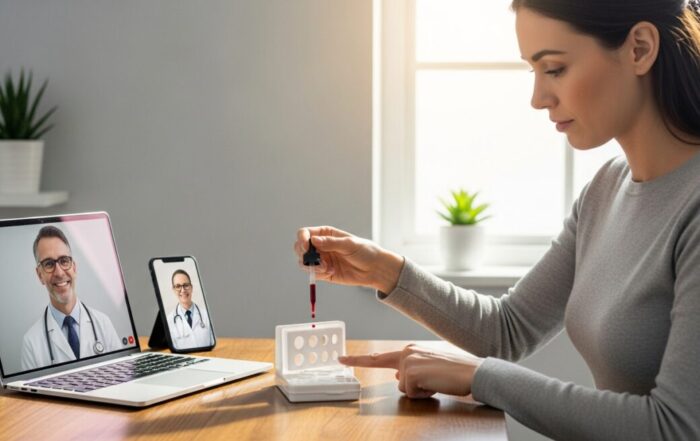
The technological infrastructure supporting this care is sophisticated. Platforms like Doctors Home utilize secure, HIPAA-compliant portals that serve as a central hub for all health interactions. Within these portals, patients can schedule appointments, have video consultations, send direct messages to their care team, view lab results, and request prescription refills. This centralized digital record ensures that every interaction is documented and accessible, reducing the risk of fragmented care. The integration of at-home testing kits, a service offered by platforms including Doctors Home, further bridges the gap between virtual and physical diagnostics. Patients can have necessary tests, from basic metabolic panels to more specific screenings, delivered to their door, with results seamlessly uploaded to their portal for provider review and discussion.
A Detailed Walkthrough of the Patient Experience
Knowing what happens step-by-step can alleviate uncertainty for new users. The journey typically begins with an in-depth onboarding or initial consultation. This first meeting, which may be longer than follow-ups, is where you establish care. You’ll discuss your complete medical history, current medications, allergies, and health goals. Your provider will review any past records you can provide. This session is crucial for building the patient-provider relationship and developing a baseline understanding. It’s important to come prepared with your history and a list of questions or concerns to make the most of this time.
Following the initial setup, routine care unfolds through scheduled follow-ups and asynchronous communication. For example, a patient with well-managed type 2 diabetes might have a quarterly video check-in to review glucose logs, discuss nutrition, and renew prescriptions, with the ability to message the care team if questions arise between visits. When a health issue emerges, you would schedule an acute visit, similar to calling your doctor’s office for a same-day appointment. The provider will assess your symptoms via video, determine if it’s manageable virtually, or if an in-person evaluation (like at a lab, imaging center, or urgent care) is necessary. They can then prescribe medication, recommend over-the-counter treatments, or coordinate the next steps.
To clarify the scope and process, here are the key components you can expect from a quality virtual primary care service:
- Continuous Relationship: A designated provider or core care team manages your health over time.
- Comprehensive Health Management: Care includes chronic disease management, preventive screenings, mental health support, and acute illness treatment.
- Integrated Diagnostics: Coordination of lab work and imaging, often through partnered networks or at-home test kits, with direct review of results.
- Care Coordination: Your online PCP provides referrals to in-network specialists and helps manage those aspects of your care.
- Digital-First Communication: Secure messaging for non-urgent questions, prescription refills, and administrative requests, reducing call hold times.
This structured approach ensures care is consistent and comprehensive. The integration of at-home testing is a significant advantage, as detailed in our guide on what to expect from online doctors, which explains how these kits empower patients and provide critical data for virtual providers. It allows for data-driven decisions without the patient needing to visit a separate lab facility, streamlining the diagnostic process entirely.
Conditions Perfectly Suited for Virtual Management
Virtual primary care excels in managing a wide array of health needs, particularly those that are conversation and monitoring-intensive. Chronic conditions that require regular medication management and lifestyle coaching are ideal. This includes hypertension, hyperlipidemia (high cholesterol), type 2 diabetes, thyroid disorders, asthma, and anxiety or depression. For these conditions, the frequent, low-friction access to a provider can lead to better adherence to treatment plans and earlier intervention when metrics trend in the wrong direction. Mental health support, often integrated into these services, is a natural fit for the virtual model, breaking down barriers of stigma and accessibility.
Preventive care and wellness is another strong suit. Online doctors can conduct annual wellness visits, discuss cancer screening schedules based on your age and risk factors, provide lifestyle counseling for weight management or smoking cessation, and administer routine vaccinations (often by sending a prescription to your local pharmacy). Furthermore, many platforms have developed specific clinical pathways for common acute conditions. For instance, services like Doctors Home offer focused treatment for conditions like herpes virus outbreaks and eye allergies. These pathways allow for efficient, evidence-based evaluation and prescription where appropriate, providing swift relief for uncomfortable but manageable ailments.
Understanding the Limitations and Safety Protocols
While powerful, virtual primary care has clear boundaries rooted in patient safety. Any condition requiring a hands-on physical examination, emergency intervention, or complex procedural diagnosis cannot be treated virtually. Severe chest pain, acute abdominal pain, shortness of breath, traumatic injuries, or neurological deficits like sudden weakness or slurred speech require immediate in-person emergency care. A responsible online doctor will unequivocally direct you to an emergency room or urgent care in these scenarios. Their role is to triage and guide you to the appropriate level of care, not to manage life-threatening emergencies remotely.
Safety is maintained through rigorous protocols. Licensed providers operate under the same medical standards and state licensure requirements as in-person doctors. They are obligated to practice within the standard of care, which includes knowing when a virtual visit is insufficient. Prescribing practices are also strictly regulated. Controlled substances (like most opioids, ADHD medications) often cannot be prescribed virtually without a prior in-person relationship or specific regulatory allowances. Providers will typically require recent lab work or vital sign data (sometimes obtained via at-home monitors) before initiating or refilling medications for chronic conditions to ensure safety and efficacy.
Maximizing Your Success with an Online Primary Care Doctor
Your experience hinges on being an engaged, prepared participant. Technology readiness is the first step. Ensure you have a reliable internet connection, a device with a camera and microphone, and a private, well-lit space for consultations. Before each appointment, prepare as you would for an in-person visit. Write down your symptoms, questions, and any updates to your medications or health status. Have your recent vital signs (like home blood pressure or glucose readings) and the names of your pharmacies and preferred local labs or imaging centers handy.
Communication is different in a virtual setting. Be clear and descriptive about your symptoms since the provider cannot physically examine you. Don’t hesitate to ask for clarification if you don’t understand a term or recommendation. Utilize the secure messaging function for follow-up questions, but understand its purpose for non-urgent communication. Perhaps most importantly, view your virtual primary care provider as the quarterback of your health team. Keep them informed of any specialist visits, hospitalizations, or care received outside their platform so they can maintain an accurate and complete medical record for you.
Frequently Asked Questions
Can I use virtual primary care if I have Medicare or Medicaid?
Coverage varies significantly by state and specific plan. Many Medicare Advantage plans and some state Medicaid programs now cover telehealth services, including virtual primary care. It is essential to check with your plan administrator to understand your benefits, copays, and any network restrictions before enrolling in a service.
How do prescriptions work with an online doctor?
After a consultation, if a prescription is medically appropriate, your provider will electronically send it to the pharmacy of your choice. For certain medications, especially those for chronic conditions, the provider may require recent lab results or other health data. Services often have partnerships with digital pharmacies for convenient home delivery, which can be integrated with their platform.
What happens if I need lab tests or imaging?
Your virtual provider can order necessary tests. They will typically send the order to a national lab network (like Quest or LabCorp) or a local facility you choose. Many services, including Doctors Home, also provide access to at-home testing kits for a range of screenings, which are mailed directly to you. The results are then sent to your provider for review and follow-up with you.
Is my personal health information secure on these platforms?
Reputable telemedicine platforms use enterprise-grade encryption and are fully compliant with HIPAA (the Health Insurance Portability and Accountability Act). Your video consultations are private and secure, and all stored health data is protected. Always review a platform’s privacy policy to understand their specific data security measures.
Can virtual primary care replace my in-person doctor completely?
For many healthy adults and those with stable chronic conditions, it can serve as a primary medical home. However, it works best as a complement to, not a full replacement for, the broader healthcare system. You will still need in-person services for emergencies, required physical exams, vaccinations, and certain procedures. The ideal model is a hybrid approach, with your virtual PCP coordinating any necessary in-person care.
Virtual primary care services represent a mature, patient-centered evolution in healthcare delivery. By offering consistent, accessible, and coordinated care, online doctors are effectively managing a wide spectrum of health needs and empowering patients to take an active role in their well-being. The model’s strength lies in its convenience and focus on continuous relationships, breaking down traditional barriers of time and geography. As technology and integration with tools like at-home testing continue to advance, virtual primary care is poised to become an even more integral and seamless component of a modern, effective healthcare strategy.
About the Author: Anthony Collins




Sign up for our newsletter and Save 20% on Test Kits
"*" indicates required fields