

Understanding Your At Home Thyroid Test Kit Options
Understanding Your At Home Thyroid Test Kit Options
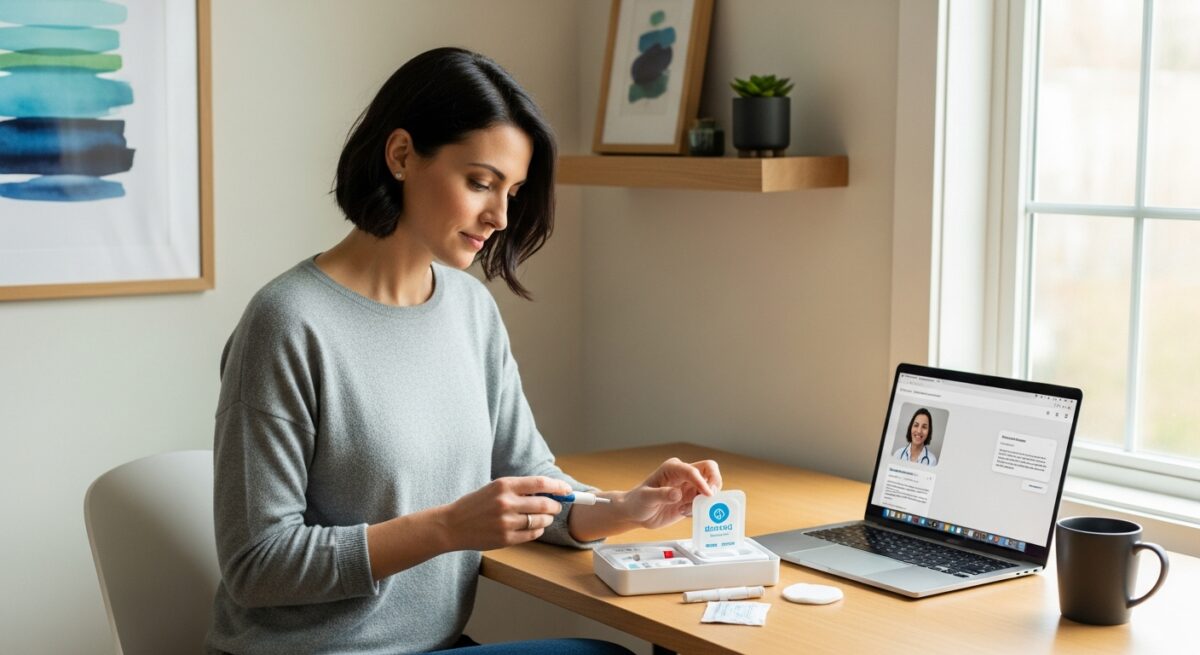
Feeling constantly fatigued, experiencing unexplained weight changes, or struggling with brain fog can be frustrating, especially when the cause is unclear. For millions, these symptoms point to a thyroid imbalance, a small gland with a massive role in regulating metabolism, energy, and mood. Traditionally, diagnosing thyroid issues required a doctor’s visit, a lab appointment, and a wait for results. Today, a new wave of digital health tools offers a different path. At home thyroid test kit options provide a convenient starting point for understanding your thyroid health from the comfort of your home, connecting the dots between symptoms and potential causes with a simple finger prick.
What an At Home Thyroid Test Kit Actually Measures
Before exploring specific at home thyroid test kit options, it’s crucial to understand what these tests can and cannot do. A thyroid panel typically measures levels of key hormones in your blood. The most common biomarkers include Thyroid Stimulating Hormone (TSH), which is produced by the pituitary gland to instruct the thyroid; Free T4 and Free T3, which are the active thyroid hormones circulating in your blood; and sometimes Thyroid Peroxidase Antibodies (TPO Ab), which can indicate autoimmune thyroid conditions like Hashimoto’s disease. It is important to recognize that an at home thyroid test kit is a screening tool, not a definitive diagnosis. The kit facilitates sample collection, which is then analyzed in a CLIA-certified laboratory. The results provide valuable data points that should be reviewed with a licensed healthcare provider who can interpret them in the full context of your symptoms, medical history, and potentially other diagnostics.
Evaluating Different At Home Thyroid Test Kit Providers
The market for direct-to-consumer lab testing has grown significantly, offering various at home thyroid test kit options. When comparing providers, several factors determine the quality and usefulness of the test. First, examine the panel’s comprehensiveness. A basic TSH-only test may be insufficient for a full picture, while a comprehensive panel including TSH, Free T4, Free T3, and TPO antibodies offers more insight. Second, verify that the company partners with reputable, CLIA-certified labs to ensure results meet high standards for accuracy. Third, consider the support offered. The best services include a review of results by a medical professional or clear guidance on next steps. Finally, assess the overall user experience, from the clarity of instructions to the method of sample collection (typically finger-prick blood) and the speed and clarity of result delivery via a secure portal.
To help you compare the landscape, here are key features to look for in quality at home thyroid test kit options:
- Comprehensive Biomarker Panel: Looks for tests that include TSH, Free T4, Free T3, and thyroid antibodies for a complete initial screening.
- CLIA-Certified Laboratory Analysis: Ensures the sample is processed in a facility that adheres to federal quality standards.
- Medical Professional Review: Some services include a doctor’s or nurse’s review of your results, adding a layer of interpretation.
- Clear Reporting and Education: Results should be presented in an easy-to-understand format with reference ranges and explanatory notes.
- Telehealth Integration: The most seamless options offer direct access to a consultation with a healthcare provider to discuss results and potential treatment paths.
Platforms like Doctors Home integrate these components by providing access to at-home testing kits coupled with telemedicine consultations. This model bridges the gap between convenient testing and actionable medical care, ensuring you are not left alone with a PDF of confusing numbers.
The Process: From Ordering to Understanding Results
Using an at home thyroid test kit follows a standardized process designed for simplicity. First, you order the kit online, and it is shipped discreetly to your address. Upon arrival, you will register the kit using a unique ID, often via a website or app. The collection process involves using the provided lancet to obtain a few drops of blood from a finger prick, applying them to a collection card or vial. It is vital to follow timing instructions, as some tests recommend taking the sample in the morning when thyroid hormone levels are most stable. After collection, you mail the sample back to the lab in a pre-paid package. Within a few days to two weeks, you receive a notification that your results are ready in a secure online portal.
Interpreting the results is the most critical step. The report will list your levels alongside standard reference ranges. It is common to see flags for “high” or “low.” For instance, a high TSH with low Free T4 often suggests hypothyroidism, where the thyroid is underactive. Conversely, a low TSH with high Free T4 may indicate hyperthyroidism. The presence of TPO antibodies suggests an autoimmune component. While this data is powerful, self-diagnosis is risky and can be misleading. Hormone levels exist on a spectrum, and optimal ranges for one person may differ from another. This is why the next step, consulting a professional, is non-negotiable for moving from information to action.
From Test Results to Treatment: The Role of Telemedicine
This is where the true value of modern at home thyroid test kit options is realized. A standalone test result is a data point. A test result reviewed by a licensed medical professional becomes a part of a diagnostic conversation. Telemedicine platforms seamlessly connect these two aspects of care. After receiving your results, you can schedule a virtual consultation to discuss them in detail. The provider can ask about your specific symptoms, review your medical history, and interpret the lab values in a clinical context. They can determine if the results indicate a need for lifestyle changes, further testing, or treatment, such as thyroid hormone replacement medication for hypothyroidism.
This integrated approach addresses major barriers to healthcare access, including convenience, time, and for some, cost. It eliminates the need for multiple separate appointments (one to get a lab order, another for the blood draw, a third to review results) and consolidates the process into a more efficient, patient-centered journey. For managing a chronic condition like thyroid disease, this model also supports ongoing care, allowing for easy follow-up consultations and monitoring of treatment efficacy through subsequent tests, all facilitated through a digital health platform.
Frequently Asked Questions About At Home Thyroid Tests
Are at home thyroid test kits accurate?
When the sample is analyzed in a CLIA-certified lab, the analytical accuracy is equivalent to tests ordered in a doctor’s office. Accuracy also depends on following the collection instructions precisely. The primary difference lies in the interpretation, which is why professional review is essential.
Can I use a thyroid test kit if I am already on medication?
Yes, these kits can be useful for monitoring your levels if you are on thyroid medication. However, it is crucial to inform the reviewing healthcare provider of your medication and dosage during your consultation for proper interpretation. Testing should be timed as advised by your treatment plan, often before taking your daily medication.
Will my insurance cover an at home test kit?
Coverage varies widely by insurance provider and plan. Most direct-to-consumer kits are purchased out-of-pocket. Some services may provide a doctor’s order that you can submit to your insurance for possible reimbursement, but you should check with your insurer first. Some telemedicine platforms offer bundled pricing that includes the consultation and test kit.
What is the difference between a finger-prick and a venous blood draw?
Venous draws (from a vein in your arm) collect a larger volume of blood. Modern micro-sample techniques used with finger-prick tests are generally considered reliable for measuring thyroid hormones, though some providers may prefer venous draws for certain situations or to confirm results.
What should I do if my test results are abnormal?
Do not panic. An abnormal result is a signal to consult a healthcare professional. Schedule a telemedicine appointment to review the findings. The provider may confirm the diagnosis, discuss potential causes, and recommend a treatment plan or additional tests. Never start or stop medication based solely on an at-home test result without medical guidance.
Exploring at home thyroid test kit options can be a proactive first step toward taking control of your health. These tools demystify the testing process and provide tangible data about your body’s function. By choosing a reputable service that prioritizes lab quality and connects you to licensed medical professionals, you transform a simple kit into a powerful component of a modern healthcare journey. The goal is not to replace your doctor, but to empower you with information and facilitate a more informed, efficient dialogue about your well-being, ultimately leading to personalized care and management.
About the Author: Brian Carter


Sign up for our newsletter and Save 20% on Test Kits
"*" indicates required fields