

Telemedicine ICU Remote Critical Care Explained: A Lifeline for Hospitals
Telemedicine ICU Remote Critical Care Explained: A Lifeline for Hospitals
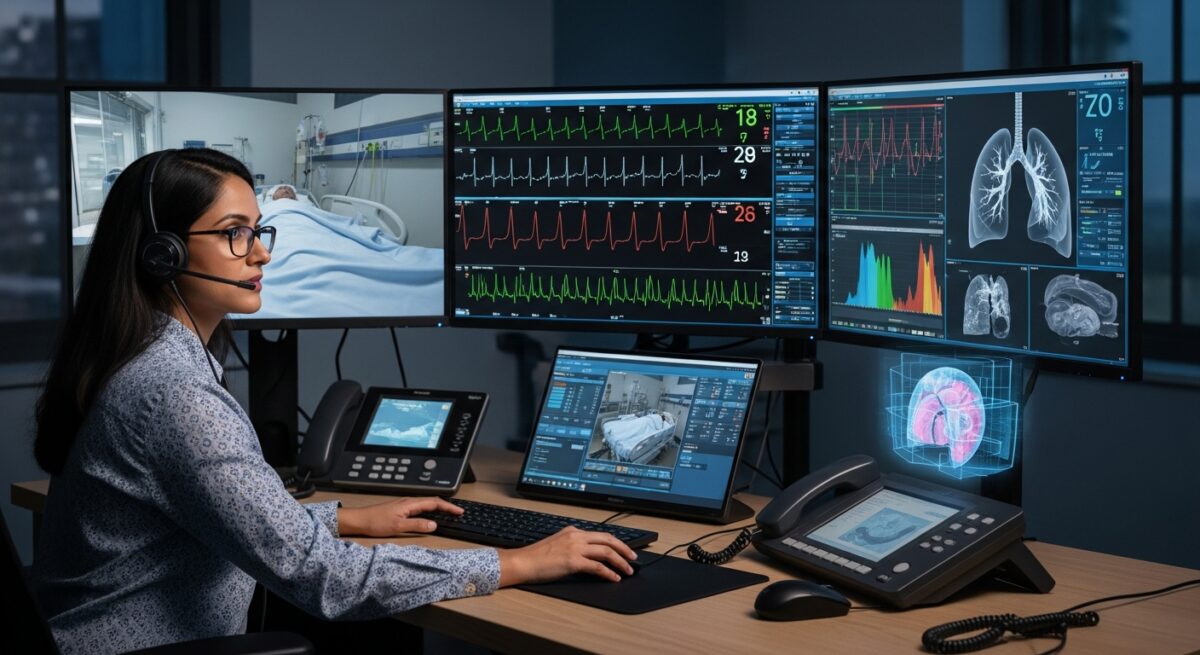
Imagine a rural hospital in the middle of the night. A patient is crashing, their vital signs spiraling, and the lone physician on duty is stretched thin. Now, imagine a specialized critical care physician, miles away in a command center, instantly alerted to the crisis, reviewing real-time data, and guiding the bedside team through a complex intervention. This is not science fiction, it is the reality of telemedicine ICU remote critical care, a transformative model that is redefining how we deliver life-saving medicine to the sickest patients. By leveraging advanced telehealth technology, this approach provides continuous, expert-level monitoring and intervention, effectively extending the reach of scarce intensivist specialists to any hospital bed, anywhere.
The Core Model: How Remote ICU Telehealth Works
Telemedicine ICU, often called tele-ICU or remote ICU, is a service delivery model where a centralized team of intensivists, critical care nurses, and other specialists provides around-the-clock care to patients in distant intensive care units. This is not a replacement for bedside staff, but a powerful augmentation. The model relies on a sophisticated technological ecosystem. High-definition, two-way audiovisual systems are installed in patient rooms, allowing the remote team to visually assess patients, read body language, and communicate directly with bedside nurses, patients, and families. These cameras are often robotically controlled, enabling the remote clinician to pan, tilt, and zoom for a detailed view.
The second, and arguably more critical, technological pillar is the data integration platform. Patient data from bedside monitors, ventilators, infusion pumps, and the hospital’s electronic health record (EHR) are aggregated and displayed on a centralized dashboard in the remote command center. Advanced software applies algorithms to this continuous stream of data, generating early warning alerts for subtle signs of deterioration long before a crisis becomes apparent. This proactive surveillance is the hallmark of an effective tele-ICU program. The remote team operates from a physical hub, often working in shifts to provide 24/7/365 coverage for multiple ICUs across different hospitals, creating a force multiplier for specialized expertise.
Tangible Benefits for Patients, Hospitals, and Systems
The implementation of a remote ICU telehealth program delivers measurable advantages across the healthcare continuum. For patients, the primary benefit is access to a higher level of specialized care. Studies consistently show that tele-ICU coverage is associated with significant reductions in ICU mortality rates and shorter lengths of stay in the ICU. This is achieved through faster response times to emergencies, more consistent adherence to evidence-based care protocols (like ventilator-associated pneumonia bundles), and the prevention of complications through early intervention.
For hospitals, especially those in underserved or rural areas, the benefits are operational and financial. These facilities often struggle with recruiting and retaining board-certified intensivists. A telemedicine ICU partnership solves this problem, providing immediate access to this expertise without the long-term recruitment burden. This support can help smaller hospitals retain more complex cases locally, keeping revenue within the community and patients closer to their families. Furthermore, by improving clinical outcomes and efficiency, tele-ICU programs can reduce costly complications and penalties associated with hospital-acquired conditions. For health systems, it creates a standardized, high-quality care delivery network across all facilities, ensuring every patient receives the same caliber of critical care regardless of location.
Key Components and Technology Infrastructure
A successful telemedicine ICU program rests on a triad of essential components: people, process, and technology. The human element is paramount. The remote team must be composed of highly trained, board-certified intensivists and critical care nurses who are not only clinically excellent but also skilled in remote communication and collaboration. Clear clinical protocols must define the roles and responsibilities of both the remote and bedside teams to avoid confusion and ensure seamless care coordination.
The technology stack is complex and must be robust. It typically includes the following core elements:
- Audiovisual Communication Systems: High-resolution, secure video carts or in-room cameras with pan-tilt-zoom capability, noise-canceling microphones, and monitors for family communication.
- Data Integration and Analytics Platform: The nerve center that pulls in real-time data from all connected devices and the EHR, presenting it via customizable dashboards and generating predictive alerts.
- Clinical Decision Support Tools: Integrated checklists, protocol libraries, and drug databases that support the remote team in making evidence-based decisions quickly.
- Secure Network Infrastructure: Health Insurance Portability and Accountability Act (HIPAA)-compliant, high-bandwidth, and redundant connections to ensure uninterrupted service and data security.
Interoperability, the ability of all these systems to communicate and share data seamlessly, remains a significant challenge but is critical for the model’s effectiveness. Without it, clinicians face a fragmented view of the patient.
Implementation Challenges and Considerations
Despite its clear benefits, deploying a tele-ICU program is not without hurdles. The initial capital investment for technology and hub construction can be substantial. Perhaps the most significant barrier is cultural resistance. Bedside staff may perceive the remote team as “big brother” surveillance or an implication that their care is inadequate. This is why a phased, collaborative implementation strategy is essential. Engaging bedside nurses and physicians from the outset as partners, not subjects, is crucial for buy-in. Clear communication that the remote ICU telehealth team is a supportive resource, not a replacement, helps alleviate fears.
Other challenges include navigating complex state medical licensing and credentialing requirements for physicians who are providing care across state lines. Reimbursement models for tele-ICU services are still evolving, though many hospitals view it as a cost of doing business that is justified by downstream savings from improved outcomes and efficiency. Finally, workflow integration is key. The remote team must complement, not disrupt, existing bedside workflows. Establishing clear escalation pathways and communication protocols is a non-negotiable step for success.
The Future of Remote Critical Care and Integration
The future of telemedicine ICU is one of deeper integration and intelligence. Artificial intelligence and machine learning will move beyond simple alerting to predictive analytics, identifying patients at risk for specific complications like sepsis or acute kidney injury with even greater lead time. The integration of remote monitoring will extend beyond the ICU walls, creating “virtual step-down units” where patients on general floors can be monitored with the same intensity, potentially preventing ICU readmissions. This concept of continuous acuity-adaptable monitoring is a logical next step.
Furthermore, tele-ICU platforms are beginning to integrate with other telehealth services, creating a comprehensive virtual care continuum. For instance, a patient stabilized in the tele-ICU could be seamlessly handed off to a virtual urgent care platform for follow-up, or have their chronic disease management coordinated through a remote patient monitoring program. This holistic approach to digital health ensures patients receive the right level of care at the right time, across all settings. As technology advances and value-based care pressures mount, telemedicine ICU remote critical care will shift from a innovative differentiator to a standard component of a resilient, high-quality hospital system.
Frequently Asked Questions
Is tele-ICU care as good as having a doctor physically in the ICU?
Research indicates it can be better in many contexts. Tele-ICU provides continuous, proactive monitoring by specialists, which is often not possible with an on-site physician who may be covering multiple units or be off-site. It augments, rather than replaces, bedside care, creating a collaborative team that leverages both physical presence and specialized, continuous oversight.
How does the remote team interact with the patient and family?
The audiovisual system allows for direct, face-to-face communication. Remote clinicians can speak with conscious patients to assess their status and with families to provide updates, explain care plans, and participate in family meetings, often making it easier for family members who cannot be physically present at all times.
What happens during a internet or technology failure?
Robust tele-ICU programs have extensive redundancy, including backup internet connections and failover systems. Clinical protocols always designate the bedside team as ultimately responsible, ensuring care continues uninterrupted. The remote hub also has procedures to immediately contact the bedside unit via phone if the video link fails.
Is patient data secure in a tele-ICU system?
Reputable programs use enterprise-grade, encrypted technology that complies with HIPAA and other healthcare data security regulations. Data transmission is secured, and access to the video feeds and patient dashboards is strictly controlled through authentication and audit logs.
Can any hospital implement a tele-ICU program?
While beneficial for many, it requires a significant investment in technology and a commitment to change management. It tends to provide the most value for hospitals with high ICU mortality rates, limited intensivist coverage, or a desire to retain more complex cases. Many hospitals partner with third-party providers rather than building their own hub.
The evolution of telemedicine ICU remote critical care represents a fundamental shift toward a more connected, equitable, and intelligent healthcare system. By transcending geographical barriers, it ensures that expertise, not zip code, determines a patient’s chance of survival and recovery. As this model continues to mature and integrate with broader digital health initiatives, its role as a cornerstone of modern critical care delivery is firmly established.
About the Author: Sarah Thompson



Sign up for our newsletter and Save 20% on Test Kits
"*" indicates required fields