
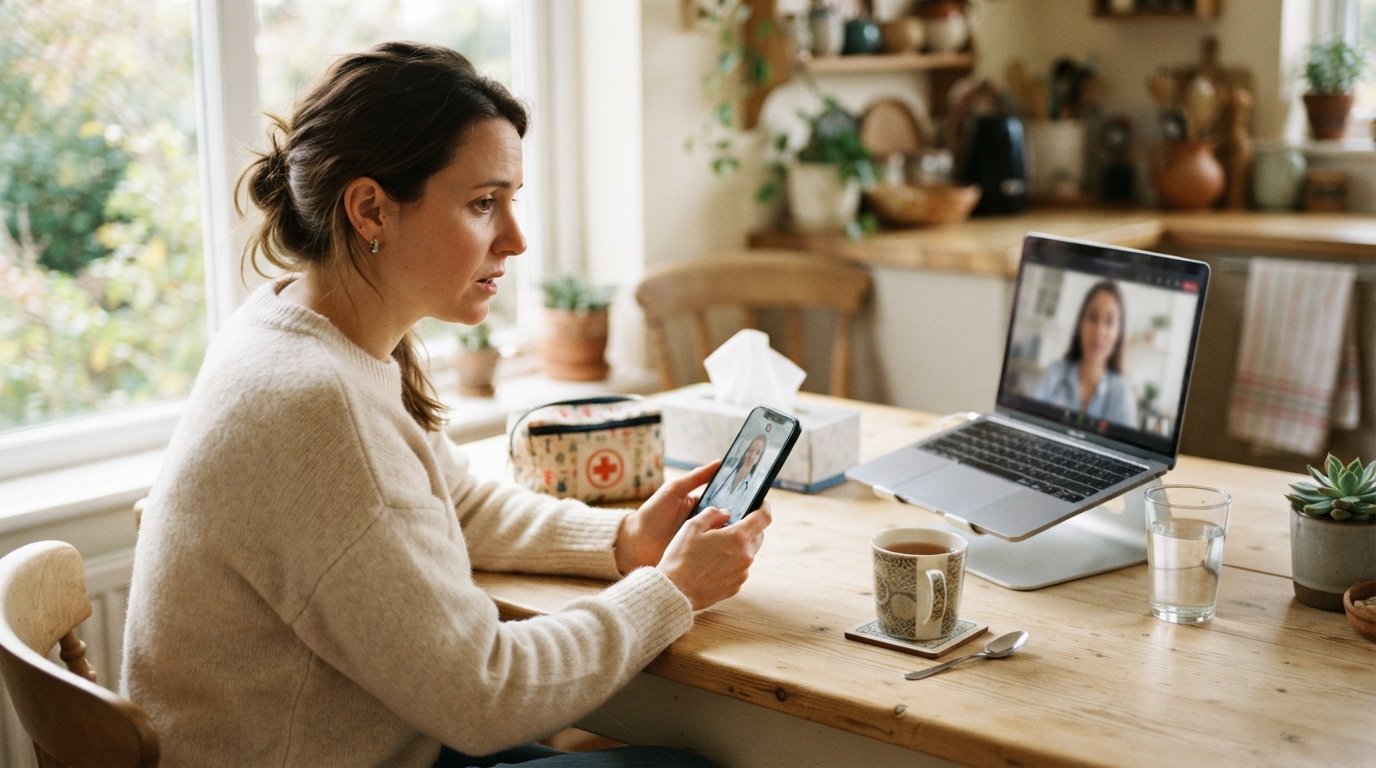
Telehealth vs Home Remedies: When to Get Virtual Care
Deciding when to use telehealth for common ailments instead of home remedies can save time and prevent complications. Learn the red flags and the benefits.

By Maya Foster
You feel a scratchy throat coming on, or a rash appears on your arm, and your first instinct is to raid the medicine cabinet or try a DIY remedy. That approach works for many minor issues, but there is a fine line between safe self-care and a situation that needs professional evaluation. Telehealth has made it easier than ever to connect with a licensed clinician for common ailments, but knowing when to use telehealth for common ailments instead of home remedies can save you time, money, and unnecessary suffering. This guide explains which conditions are well-suited for virtual visits, which red flags demand in-person or emergency care, and how to decide when picking up the phone (or opening an app) is smarter than waiting it out at home.
What Counts as a Common Ailment for Telehealth?
Telehealth is designed for situations that are urgent enough to need a clinician's input but not so severe that they require a physical exam or emergency intervention. Common ailments that fall into this category include upper respiratory infections (colds, mild flu), seasonal allergies, minor skin irritations, uncomplicated urinary tract infections, and mild gastrointestinal upset. For these issues, a virtual visit can provide a diagnosis, a treatment plan, and, when appropriate, a prescription. The key is that the condition can be adequately assessed through a conversation and visual inspection (via photo or video) without the need for hands-on examination or lab tests.
DoctorsHome, an educational publisher, explains that telehealth platforms typically cover a wide range of topics, from weight loss and sexual health to hair, skin, herpes, birth control, menopause, and mental health. Each page on DoctorsHome names medications clinicians commonly discuss and notes the safety points a licensed clinician still has to review. This educational focus helps you understand what to expect from a telehealth visit, but it does not replace the need for an actual consultation with a licensed professional. When you are deciding whether to use telehealth for a common ailment, consider whether the condition is one that a clinician can evaluate remotely with reasonable confidence.
When Home Remedies Are Enough (and When They Are Not)
Home remedies are appropriate for mild, self-limiting conditions. A cold that is improving, a minor headache, or a small cut that is healing well can often be managed with rest, over-the-counter products, and time. However, home remedies have limits. They cannot diagnose a bacterial infection, they cannot prescribe antibiotics or other prescription medications, and they cannot rule out serious conditions that mimic benign ones. For example, a sore throat could be viral pharyngitis (which resolves on its own) or strep throat (which requires antibiotics). Only a clinician can determine the difference, often with a rapid test that is not available at home.
Similarly, a skin rash might be contact dermatitis, a fungal infection, or an early sign of a more serious condition. While oatmeal baths and hydrocortisone cream might soothe symptoms, they will not address an underlying infection or an allergic reaction that needs medical treatment. The decision to use telehealth instead of home remedies hinges on whether you need a diagnosis, a prescription, or reassurance that the condition is not dangerous. If you are unsure, a virtual visit is a low-risk way to get clarity.
Red Flags That Require In-Person or Emergency Care
Telehealth is not appropriate for every situation. Certain symptoms are red flags that indicate the need for immediate in-person evaluation or emergency services. These include chest pain, difficulty breathing, severe abdominal pain, sudden weakness or numbness, confusion, high fever with stiff neck, and any symptom that feels life-threatening. In these cases, call 911 or go to the nearest emergency room. Telehealth visits are also not suitable for conditions that require a physical exam, such as a suspected fracture, a deep wound, or a severe eye injury.
Additionally, some common ailments can escalate quickly. A mild urinary tract infection, for instance, can progress to a kidney infection if left untreated, causing fever, flank pain, and nausea. If you experience these symptoms, you need in-person care, not a virtual visit. Similarly, a cold that lingers for more than 10 days or worsens after initial improvement could be a sinus infection or bronchitis that requires a clinician's assessment. Knowing these red flags helps you decide when to skip the home remedies and seek professional help, whether virtual or in person.
What a Telehealth Visit for a Common Ailment Looks Like
If you decide that telehealth is appropriate, the process is straightforward. You will typically fill out a questionnaire about your symptoms, medical history, and current medications. Then you will have a video or phone consultation with a licensed clinician, who will ask clarifying questions and may ask you to show the affected area on camera. For skin issues, you might upload a photo in advance. The clinician will then discuss possible diagnoses, treatment options, and whether a prescription is warranted. They will also review safety points, such as drug interactions, pregnancy considerations, and when to seek follow-up care.
DoctorsHome emphasizes that it does not diagnose, prescribe, sell medication, or book visits. Instead, it provides educational content that explains what clinicians commonly discuss during telehealth visits. For example, a page on acne might name tretinoin, antibiotics, and spironolactone as medications clinicians often consider, while noting that a licensed clinician must review safety points like pregnancy risk and side effects. This transparency helps you understand the landscape of treatment options before you engage with a telehealth provider. The same applies to common ailments: a telehealth visit for a cold might involve a discussion of symptom management, while a visit for a UTI might involve a prescription for antibiotics if the clinician determines it is appropriate.
Comparing Telehealth and Home Remedies: A Decision Framework
To decide between telehealth and home remedies, use a simple decision framework. First, assess the severity of your symptoms. If you have mild discomfort that is improving, home remedies and watchful waiting are reasonable. If symptoms are moderate, persistent, or worsening, consider telehealth. Second, consider the need for a diagnosis. If you suspect a bacterial infection, a prescription, or a condition that requires clinical judgment, telehealth is the better choice. Third, check for red flags. If any are present, seek in-person or emergency care immediately.
Here is a quick checklist to help you decide:
- Symptoms are mild and improving: Home remedies and over-the-counter products are likely sufficient.
- Symptoms are moderate, persistent, or worsening: Telehealth can provide evaluation and treatment.
- You need a prescription or diagnosis: Telehealth is appropriate for many common ailments.
- Red flags are present (chest pain, difficulty breathing, severe pain): Seek emergency care immediately.
- Condition requires physical exam or lab test: In-person visit is necessary.
This framework is not a substitute for professional medical advice, but it can guide your decision-making. When in doubt, a telehealth consultation is a safe, convenient way to get answers without leaving home. Just remember that telehealth is not for emergencies, and it cannot replace an in-person exam when one is needed.
Common Ailments Well-Suited for Telehealth
Many common ailments are ideal for telehealth because they can be diagnosed and managed through history and visual inspection. These include:
- Upper respiratory infections: Colds, mild flu, sinusitis, and pharyngitis can often be assessed virtually, with clinicians discussing symptom relief and whether antibiotics are needed.
- Allergies: Seasonal allergies and mild allergic reactions can be managed with guidance on antihistamines and avoidance strategies.
- Minor skin conditions: Acne, eczema, rosacea, and contact dermatitis can be evaluated via photo or video, with clinicians discussing topical treatments and when to seek in-person care.
- Uncomplicated urinary tract infections: In women, uncomplicated UTIs can be diagnosed based on symptoms and treated with antibiotics via telehealth, provided there are no red flags.
- Gastrointestinal upset: Mild diarrhea, constipation, and heartburn can be addressed with dietary advice and over-the-counter or prescription medications.
For each of these, telehealth offers convenience and timely access to a clinician. However, it is important to remember that telehealth providers have protocols for when to refer patients for in-person care. If your symptoms suggest a more serious condition, the clinician will advise you accordingly.
What Clinicians Discuss During a Telehealth Visit for Common Ailments
During a telehealth visit, a clinician will typically take a focused history, asking about the onset, duration, and severity of symptoms, as well as any relevant medical history and medications. They may ask you to perform a simple self-exam on camera, such as pressing on your sinuses or showing the back of your throat. For skin issues, they may ask you to upload a high-quality photo. Based on this information, they will discuss possible diagnoses and treatment options.
Treatment discussions often include over-the-counter remedies, prescription medications (if appropriate), and self-care strategies. For example, for a cold, the clinician might recommend rest, fluids, and over-the-counter pain relievers, and explain that antibiotics are not effective against viral infections. For a UTI, they might prescribe antibiotics and discuss side effects and the importance of completing the course. They will also review safety points, such as drug interactions, pregnancy considerations, and when to seek follow-up care if symptoms do not improve.
DoctorsHome's educational content mirrors these discussions by naming medications clinicians commonly discuss and noting the safety points a licensed clinician still has to review. This helps you understand the conversation you might have during a telehealth visit, but it is not a substitute for that visit. The site explicitly states that it does not diagnose, prescribe, sell medication, or book visits, so you should always consult a licensed clinician for actual medical care.
Safety and Limitations of Telehealth for Common Ailments
Telehealth is convenient, but it has limitations. It cannot provide a physical exam, which may be necessary for certain diagnoses. It also cannot perform lab tests or imaging, so conditions that require these tests are not suitable for virtual care. Additionally, telehealth is not appropriate for emergencies or for conditions that require immediate in-person intervention. It is also important to ensure that the telehealth provider is licensed in your state and that you are transparent about your symptoms and medical history.
Another limitation is that not all common ailments can be accurately diagnosed via telehealth. For example, a skin rash that looks like psoriasis might actually be a fungal infection, and only a biopsy or culture can confirm. In such cases, the clinician may recommend an in-person visit. Similarly, a persistent cough could be a sign of pneumonia, which often requires a chest X-ray. Telehealth clinicians are trained to recognize these situations and refer patients appropriately.
DoctorsHome emphasizes that it is an educational site and does not provide medical advice, diagnosis, or treatment. The information it provides is for informational purposes only and is not a substitute for professional medical advice. This is a crucial distinction: while educational content can help you make informed decisions, it cannot replace a consultation with a licensed clinician who can evaluate your specific situation.
How DoctorsHome Fits into Your Telehealth Journey
DoctorsHome serves as a starting point for learning about telehealth treatments. It explains the topics people look up on telehealth platforms, including weight loss, sexual health, hair, skin, herpes, birth control, menopause, and mental health. Each page names medications clinicians commonly discuss and notes the safety points a licensed clinician still has to review. This educational approach empowers you to have more informed conversations with telehealth providers.
However, DoctorsHome does not diagnose, prescribe, sell medication, or book visits. It is not a telehealth platform itself but rather a resource that helps you understand what to expect from one. When you are deciding when to use telehealth for common ailments instead of home remedies, DoctorsHome's content can help you weigh the options, but the actual decision and any treatment should come from a licensed clinician. The site's focus on safety points, such as pregnancy considerations, drug interactions, and mental-health crises, underscores the importance of professional oversight.
For those exploring telehealth for common ailments, DoctorsHome's articles on skin conditions, respiratory infections, and other topics can provide valuable context. But if you are experiencing symptoms that concern you, the next step is to consult a licensed clinician, either through a telehealth platform or in person. The educational content on DoctorsHome is designed to complement, not replace, that professional advice.
Making the Choice: Telehealth or Home Remedies?
In summary, the choice between telehealth and home remedies depends on the nature of your symptoms, your need for a diagnosis or prescription, and the presence of red flags. Home remedies are suitable for mild, self-limiting conditions, while telehealth is appropriate for moderate symptoms that require clinical evaluation. Emergency symptoms demand immediate in-person care. By understanding these distinctions, you can make smarter decisions about your health and avoid unnecessary delays in treatment.
Remember that telehealth is a tool, not a replacement for all in-person care. It is best used for common ailments that can be assessed remotely and for situations where convenience and speed are important. When in doubt, err on the side of caution and seek professional advice. DoctorsHome's educational resources can help you understand the options, but the final decision should always involve a licensed clinician who can provide personalized care.
Ultimately, when to use telehealth for common ailments instead of home remedies is a personal decision that should be informed by the severity of your condition, your medical history, and the guidance of a healthcare professional. Use the information here to guide your thinking, but do not hesitate to reach out to a licensed clinician when you need one. Your health is worth the extra step.