
COVID Test Cost at Pharmacy vs Urgent Care: 2026 Price Guide
Compare how much a COVID test costs at a pharmacy vs urgent care, including insurance, Medicare, and at-home kit options to avoid surprise bills.

By Hannah Young
You wake up with a scratchy throat and a mild fever. Before you reach for the thermometer, your mind jumps to a practical question: where should I get a COVID-19 test, and how much is it going to cost me? The answer is not as straightforward as it was a few years ago. The end of the public health emergency has shifted many testing costs back to consumers and insurers, creating a patchwork of prices that can range from $0 to well over $150 depending on where you go and how you pay. Understanding how much a COVID test costs at a pharmacy versus urgent care is no longer just a matter of convenience; it is a matter of financial planning. This guide breaks down the typical price ranges, the hidden factors that drive those costs, and how your insurance status changes what you actually pay out of pocket. Whether you are reaching for a rapid antigen kit at your local drugstore or considering a visit to a clinic for a PCR test, knowing the landscape helps you avoid surprise bills and make a decision that fits both your health needs and your budget.
The Price Tag of Testing: Retail Pharmacy vs. Urgent Care
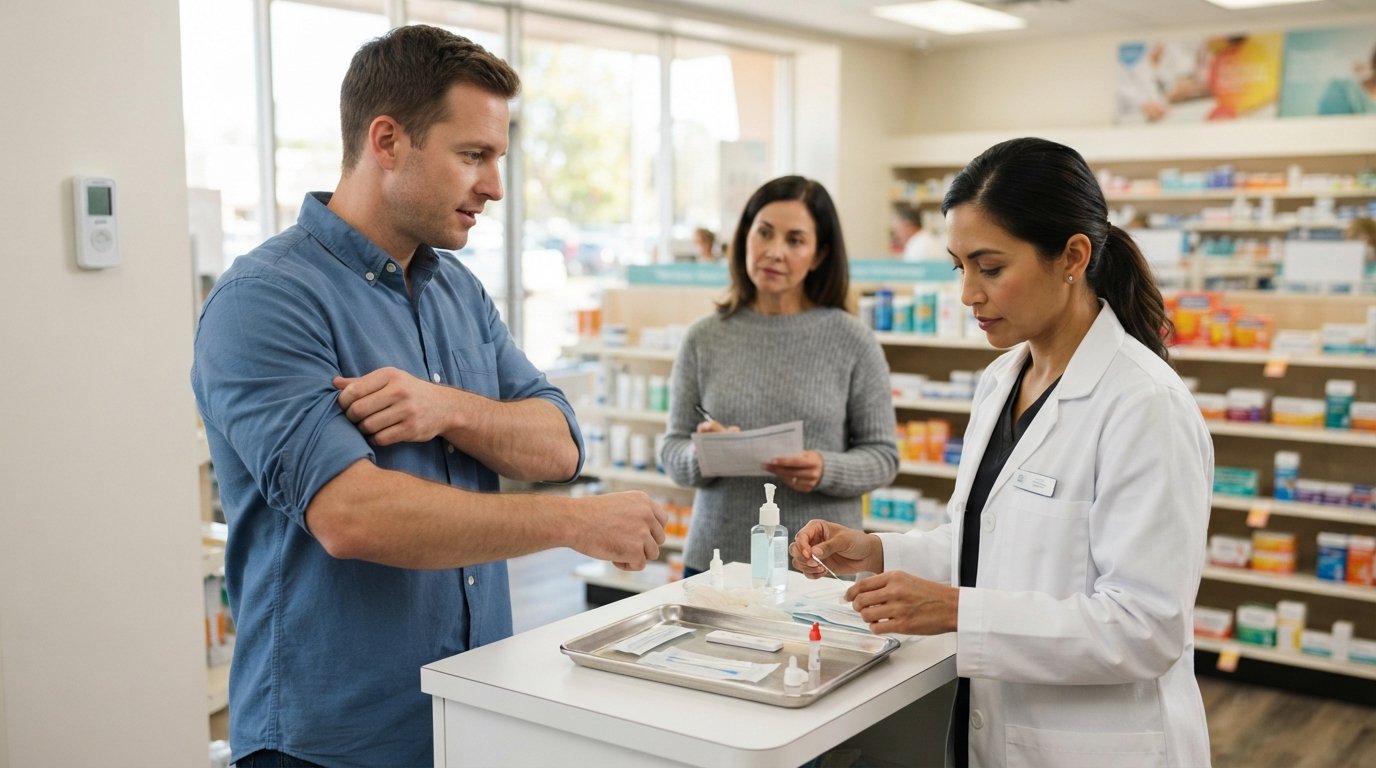
When you search for a COVID test, you will encounter two primary in-person options: the retail pharmacy counter and the urgent care clinic. While both can provide a test, their business models and the services they bundle with that test are quite different, which directly impacts the price you see at checkout or on your bill. A retail pharmacy, such as CVS or Walgreens, often operates on a high-volume, lower-margin model for testing. They may offer a rapid antigen test or a PCR test, but the service is typically streamlined: you book online, drive up, swab yourself under observation, and get results via an app or email. An urgent care center, by contrast, is a medical facility. The test is just one part of a clinical visit that may include a consultation with a nurse practitioner or doctor, a physical exam, and a treatment plan if you are positive. That additional layer of medical service is the primary reason urgent care testing often carries a higher price tag.
To give you a realistic picture, here is a breakdown of what you might expect to pay at each location if you are paying cash or using insurance that does not fully cover the test. Keep in mind that prices vary significantly by region, provider, and the specific type of test (rapid antigen vs. lab-based PCR).
- Retail Pharmacy (CVS, Walgreens, etc.): For a rapid antigen test, cash prices typically range from $19 to $50. For a PCR test, prices can range from $75 to $150, though many pharmacies now direct patients to at-home kits or insurance billing rather than offering on-site PCR for cash payers.
- Urgent Care Center: A visit that includes a rapid antigen test often costs between $50 and $150 as a self-pay rate. A PCR test at an urgent care can range from $100 to $250 or more, largely because it includes the facility fee and the clinician's evaluation.
- At-Home Test Kits: Over-the-counter rapid antigen tests generally cost between $8 and $12 per test, or about $20 to $25 for a two-pack. These are purchased directly from a pharmacy shelf without any clinical interaction.
The key takeaway is that the pharmacy is generally the cheaper in-person option for a standalone test, while urgent care costs more because you are paying for a medical evaluation alongside the swab. However, the lowest upfront cost does not always mean the best value. If you need a test to confirm a diagnosis for a prescription, an urgent care visit may be necessary, whereas a pharmacy test is sufficient for personal knowledge or travel requirements. Understanding what each price includes is the first step in making a cost-effective choice.
What Drives the Price Difference Between Pharmacy and Urgent Care?
The gap between a $30 pharmacy test and a $150 urgent care bill is not arbitrary. It reflects the underlying costs of running two very different types of businesses. A retail pharmacy is set up for transactions: you buy a product or a service, and you leave. The staff performing the test are often pharmacy technicians or specially trained assistants, not licensed clinicians. The overhead is lower because the testing station is a small add-on to an existing retail space. When you pay for a test at a pharmacy, you are primarily paying for the materials (the swab, the reagent, the cartridge) and a small administrative fee. The pharmacy may also bill your insurance for the test, but if you are self-pay, the price is designed to be competitive and accessible to encourage foot traffic into the store.
Urgent care centers, on the other hand, are medical practices. They must employ or contract with licensed healthcare providers (physicians, nurse practitioners, or physician assistants), maintain clinical facilities, and carry malpractice insurance. When you walk into an urgent care for a COVID test, you are not just buying a test; you are entering a clinical encounter. The provider must review your symptoms, assess your risk factors, and determine whether a test is appropriate. They may also evaluate you for other conditions like flu or strep, which requires additional tests or clinical judgment. The facility fee covers the cost of the building, the medical equipment, and the staff. Even if the test itself only costs the clinic $20, the total charge to the patient reflects the cost of providing a medical service, not just a product. This is why an urgent care bill can feel disproportionately high for a simple swab: you are paying for the expertise and the safety net of a medical evaluation.
Another factor is the type of test offered. Pharmacies are more likely to offer rapid antigen tests, which are cheaper to produce and process. Urgent cares often offer both rapid antigen and PCR tests. PCR tests are more accurate and require specialized laboratory equipment, which drives up the cost. Some urgent cares send PCR samples to an external lab, adding a lab processing fee to the bill. When you compare prices, always check which test is included. A $100 PCR test at an urgent care may be a better deal than a $50 rapid test at a pharmacy if you need the higher accuracy for a specific reason, such as confirming a negative result before visiting an immunocompromised family member.
Insurance, Medicare, and the Uninsured: How Your Coverage Changes the Cost
The price you see on a menu is rarely the price you pay if you have insurance. The landscape of COVID-19 testing coverage has changed dramatically since the federal public health emergency ended in May 2023. During the emergency, the government required insurers to cover COVID tests without cost-sharing. Now, most private insurers have returned to their standard rules: they will cover a test if it is deemed medically necessary and ordered by a healthcare provider, but they may not cover routine screening tests for asymptomatic people or tests required for travel or employment. This means that if you walk into an urgent care for a test because you were exposed at a party, your insurance might deny the claim, leaving you responsible for the full bill. If, however, you have symptoms and a provider orders the test, it is more likely to be covered, though you may still owe a copay or coinsurance.
Medicare and Medicaid have their own rules. Medicare Part B generally covers COVID-19 tests when ordered by a healthcare provider, but beneficiaries may be responsible for the 20% coinsurance. Over-the-counter at-home tests are not covered by original Medicare, though some Medicare Advantage plans may offer a limited benefit. Medicaid coverage varies by state, but most states continue to cover COVID testing for enrollees without cost-sharing. For the uninsured, the options are more limited. The federal government's free testing program, which provided tests through pharmacies and community health centers, has largely wound down. Some local health departments still offer free or low-cost testing, but availability is spotty. If you are uninsured and need a test, your cheapest option is often an at-home rapid test from a pharmacy, which you can buy for under $25. If you need a PCR test, you may face the full self-pay price at an urgent care, which can be prohibitive.
Here is a quick reference for how different payment paths affect your out-of-pocket cost:
- Private Insurance (medically necessary): Typically covered, but you may owe a copay ($0 to $50) or coinsurance (20% of the cost).
- Private Insurance (screening/travel): Often not covered; you may pay the full self-pay rate at the pharmacy or urgent care.
- Medicare Part B: Covered if ordered by a provider; you pay 20% coinsurance after the deductible.
- Uninsured (Self-Pay): You pay the full retail price, which is lowest for at-home kits and highest for urgent care PCR tests.
It is always wise to call your insurance company or check your plan's app before you get tested. Ask specifically whether the test will be covered at the location you are considering and whether you need a doctor's order. If you are uninsured, ask the pharmacy or urgent care for their self-pay price upfront. Many urgent cares offer discounted self-pay rates if you ask, and some pharmacies have cheaper cash prices than others. Being proactive can save you a significant amount of money and frustration.
At-Home Test Kits: What the Price Covers and When to Use Them
The rise of at-home COVID-19 tests has fundamentally changed the testing landscape. These kits, which you can buy at a pharmacy without a prescription, typically contain everything you need to collect a sample and get a result in about 15 minutes. A standard kit includes a sterile swab, a small vial of reagent liquid, a test card, and instructions. The price you pay (usually $8 to $12 per test) covers the manufacturing of these components, the packaging, and the retail markup. It does not cover a clinical evaluation, a prescription, or a report to public health authorities. You are paying for convenience and privacy. The test is self-administered, and you interpret the result yourself. This is why at-home tests are the cheapest option: there is no middleman, no facility fee, and no clinician time involved.
At-home tests are highly effective for what they are designed to do: detect a current infection when you are symptomatic and have a high viral load. If you have symptoms and test positive, you can be fairly confident the result is accurate. A negative result, however, is less reliable, especially if you test too early or too late in the course of illness. For this reason, public health guidelines often recommend serial testing (testing again in 24 to 48 hours) if you have symptoms but test negative. At-home tests are also useful for screening before gatherings, though their sensitivity is lower than PCR tests. The price of the kit is the entire cost; there are no hidden fees. You can buy them with a health savings account (HSA) or flexible spending account (FSA) card, which effectively gives you a tax discount. Some insurance plans may reimburse you for at-home tests if you submit a receipt, but this is increasingly rare.
When should you use an at-home test versus seeking a test at a pharmacy or urgent care? If you are generally healthy, have mild symptoms, and just want to know whether you have COVID so you can isolate, an at-home test is sufficient and cost-effective. If you are in a high-risk group (older adult, immunocompromised, or have underlying conditions) and test positive, you should contact a healthcare provider to discuss treatment options like Paxlovid. In that case, you may need a test administered by a healthcare professional to confirm the result and get a prescription. If you need a negative test for travel or return to work, check the specific requirements; some destinations require a PCR test, which you cannot do at home. In those situations, the higher cost of a pharmacy or urgent care test is unavoidable.
When a Test Result Should Prompt a Conversation with a Clinician
Getting a positive result on any COVID test, whether at home or at a clinic, can be anxiety-inducing. For most people, the illness will be mild and can be managed with rest, hydration, and over-the-counter fever reducers. However, there are specific scenarios where a positive test should be a trigger to contact a licensed clinician. If you are at high risk for severe disease, early treatment can make a significant difference. High-risk factors include being 65 or older, having a weakened immune system, or having chronic conditions like heart disease, diabetes, or lung disease. In these cases, you should speak with a provider as soon as possible after a positive test to see if you are eligible for antiviral medications. The cost of a telehealth visit or an urgent care consult is well worth it if it leads to early treatment that keeps you out of the hospital.
You should also seek medical advice if your symptoms are severe or worsening. Emergency warning signs include difficulty breathing, persistent chest pain or pressure, confusion, inability to wake or stay awake, and pale, gray, or blue-colored skin, lips, or nail beds. If you experience any of these, call 911 or go to the nearest emergency room immediately. For mental health crises, call or text 988 to reach the Suicide and Crisis Lifeline. For non-emergency concerns, a telehealth visit with a licensed clinician can be a convenient and affordable way to get advice. During a telehealth visit, the clinician can review your symptoms, discuss your test result, and recommend a treatment plan. They can also advise you on isolation guidelines and when it is safe to return to normal activities. Remember that a positive test is a piece of information, not a diagnosis; only a licensed clinician can evaluate your full health picture and provide personalized medical advice.
If you test negative but your symptoms persist or worsen, you should also check in with a provider. A negative rapid test does not rule out COVID entirely, and you may need a PCR test or an evaluation for other conditions like flu, strep throat, or a sinus infection. A clinician can help you determine the next steps and ensure you are not missing a treatable illness. The cost of a follow-up visit is often covered by insurance when it is deemed medically necessary, and many telehealth platforms offer flat-rate visits that are cheaper than urgent care. Ultimately, the decision to seek care should be based on your symptoms and risk factors, not just the test result. When in doubt, a conversation with a licensed clinician is a small price to pay for peace of mind and appropriate care.
Navigating the cost of COVID-19 testing does not have to be confusing. By understanding the difference between a low-cost pharmacy test and a comprehensive urgent care visit, checking your insurance coverage, and knowing when to use an at-home kit, you can make informed decisions that protect both your health and your wallet. Remember that DoctorsHome is an educational resource, not a medical provider, and the information here is designed to help you have more informed conversations with licensed clinicians. If you have symptoms or concerns, always consult a qualified healthcare professional for personalized advice.