
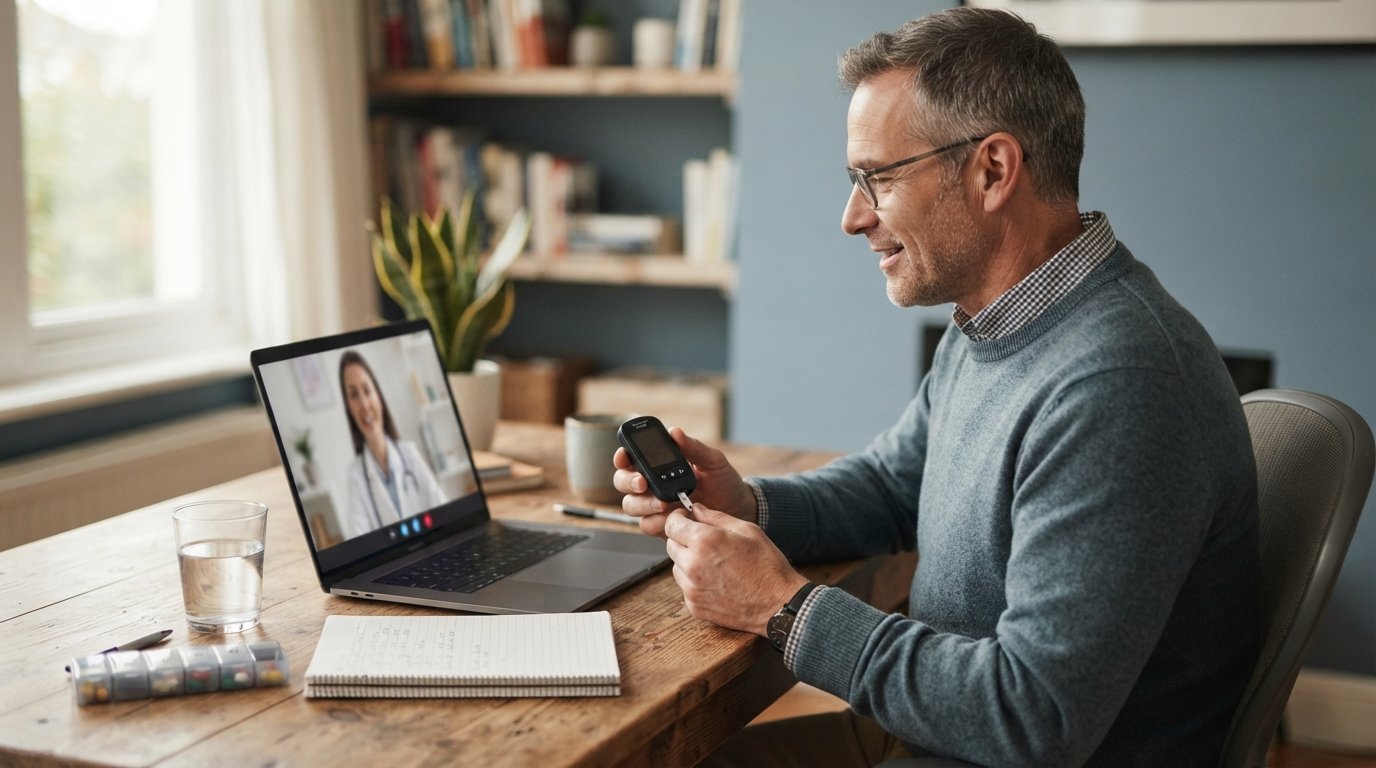
Telehealth for Diabetes Management and Medication
Telehealth for diabetes management and medication lets clinicians review glucose data, adjust regimens, and flag when in-person care is needed.

By Gabriel Keller
Managing diabetes well takes more than a prescription: it takes a rhythm of checks, adjustments, and honest conversations about food, stress, sleep, and blood sugar patterns. For millions of people, telehealth has become a practical way to keep that rhythm going without rearranging an entire day around a clinic visit. Whether you are newly diagnosed with type 2 diabetes, fine-tuning an insulin regimen, or helping a parent stay on track, virtual visits are now part of mainstream diabetes care. This article explains how telehealth for diabetes management and medication actually works, what clinicians typically review, which safety issues still require an in-person exam, and how to get the most from a virtual appointment. DoctorsHome is an educational publisher: we explain what telehealth platforms and licensed clinicians commonly discuss, but we do not diagnose, prescribe, sell medication, or book visits. A licensed clinician is the only person who can decide whether a medication is right for you.
How Telehealth Fits Into Diabetes Care
Diabetes care is unusually well suited to virtual visits because so much of the management happens between appointments, in the data you collect and the daily decisions you make. A telehealth visit for diabetes usually looks like a focused conversation: reviewing your glucose readings, checking how a medication is working, discussing side effects, and adjusting the plan. Many platforms also support secure messaging between visits, which means a question about a low blood sugar episode at 9 p.m. does not have to wait three weeks for an answer.
The evidence base is encouraging. Randomized trials and real-world studies of telehealth for diabetes management and medication have generally found outcomes comparable to in-person care for adults with type 2 diabetes, with some studies showing better engagement and lower dropout. Video visits are common for routine follow-ups, while phone-only visits remain an option for people without reliable internet. The key limitation is physical: a clinician cannot palpate a foot ulcer, listen to your heart, or examine your eyes through a screen, so virtual care works best when paired with periodic in-person checks.
Telehealth also changes who can help. Diabetes educators, dietitians, pharmacists, and mental health clinicians can join a virtual visit or see you separately, which matters because diabetes care is rarely just about medication. A pharmacist can review your full medication list for interactions, a dietitian can work through meal patterns, and a therapist can address the distress that often comes with a chronic condition. For many patients, this team-based approach is easier to assemble online than in a fragmented clinic system.
Medications and Insulin Regimens Clinicians May Review
During a virtual visit, a clinician will typically review your current medications, your glucose logs, and any symptoms or side effects since the last visit. For type 2 diabetes, common medication classes discussed include metformin, GLP-1 receptor agonists (such as semaglutide or tirzepatide), SGLT2 inhibitors, DPP-4 inhibitors, sulfonylureas, and insulin. Each class has a different role: metformin remains a first-line option for many people, GLP-1 medications and SGLT2 inhibitors offer cardiorenal benefits for certain patients, and insulin is essential when other options are not enough. A telehealth clinician may adjust doses, switch classes, or add a medication based on your readings and goals, but only after reviewing your history and safety factors.
Insulin management deserves special attention because it is where virtual care can be both most helpful and most limited. Many people with type 1 diabetes and some with type 2 diabetes use insulin pumps or multiple daily injections, and small adjustments can make a large difference in safety and quality of life. A virtual visit can be a good setting to review basal rates, correction factors, and patterns of highs and lows, especially if you share continuous glucose monitor (CGM) data or detailed logs in advance. However, starting insulin for the first time often benefits from in-person teaching, and any change that could cause severe hypoglycemia should be made cautiously with clear instructions on what to do if levels drop too low.
Here are the medication and regimen topics most commonly reviewed in a virtual diabetes visit:
- Metformin and combination pills: review of dose, timing, gastrointestinal side effects, and kidney function monitoring.
- GLP-1 receptor agonists and dual GIP/GLP-1 agonists: discussion of nausea, weight effects, injection technique, and cardiovascular benefits.
- SGLT2 inhibitors: review of genital hygiene, hydration, and signs of rare but serious side effects such as ketoacidosis.
- Insulin regimens: basal and bolus adjustments, pump settings, and hypoglycemia planning.
- Non-insulin injectables and older oral agents: cost, side effects, and whether a simpler regimen is possible.
It is important to remember that a telehealth clinician will not prescribe medication blindly. They need your recent lab results, your glucose data, and an honest account of what you are actually taking and when. If you use a platform that offers medication delivery, the clinician still has to review your history and safety points before any prescription is sent. DoctorsHome explains these medications and the safety points clinicians commonly discuss, but we do not prescribe or sell them.
Integrating Blood Glucose Monitoring and Lab Results Into Virtual Visits
One of the biggest changes in diabetes care over the past decade is the rise of continuous glucose monitoring. A CGM sensor sends readings every few minutes to your phone, and many telehealth platforms allow you to share that data directly with your clinician before or during a visit. This turns a vague statement like "my sugars have been okay" into a detailed picture of overnight trends, post-meal spikes, and periods of hypoglycemia. If you use a traditional fingerstick meter, uploading or typing your readings into a log before the visit serves the same purpose.
Lab results are the other half of the picture. A1C, kidney function (eGFR and urine albumin), liver enzymes, cholesterol, and vitamin B12 levels are commonly reviewed in diabetes care. Many telehealth services coordinate lab work through local draw sites or at-home phlebotomy, and some integrate results directly into your visit notes. If you have recent labs from another provider, bring them to the visit. A clinician cannot safely adjust medication without knowing your kidney function, especially for metformin and SGLT2 inhibitors.
Here is a practical sequence for preparing your data before a virtual diabetes appointment:
- Export or upload your glucose data: share CGM reports or meter logs covering at least two weeks, including any low readings.
- List your current medications and doses: include over-the-counter drugs and supplements, since some affect blood sugar.
- Gather recent lab results: A1C, kidney function, and cholesterol are the most commonly reviewed.
- Note your questions and symptoms: write down episodes of hypoglycemia, numbness, vision changes, or foot problems.
- Check your technology: test your camera and microphone, and have a backup phone number in case the video fails.
After the visit, make sure you understand the plan: what changed, what to monitor, when to follow up, and what to do if readings go out of range. A good telehealth clinician will document the plan in a visit summary you can access later. If something is unclear, use secure messaging to ask a follow-up question rather than guessing.
Safety Points and When In-Person Care Is Required
Telehealth is not appropriate for every diabetes problem. Certain symptoms and situations require an in-person exam or emergency care, and recognizing them is part of safe self-management. Severe hypoglycemia (confusion, seizure, loss of consciousness), diabetic ketoacidosis (nausea, vomiting, abdominal pain, fruity breath, rapid breathing), and hyperosmolar hyperglycemic state are medical emergencies: call 911. New foot wounds, redness, swelling, or loss of sensation need an in-person foot exam, because even a small ulcer can become serious quickly. Sudden vision changes, chest pain, or signs of stroke also require immediate in-person evaluation.
Beyond emergencies, some routine care is better done in person. Annual dilated eye exams, comprehensive foot exams, and dental checks are not reliably performed over video. Blood pressure measurement at home can be useful, but a clinician may want an in-person reading with a validated cuff. Vaccinations and some lab tests require a physical visit. For people with type 1 diabetes who are starting insulin pump therapy or transitioning to a new pump system, in-person training is often recommended, though follow-up adjustments can be virtual.
Medication safety is another area where telehealth has limits. A virtual clinician cannot physically examine an injection site or assess dehydration, and some side effects (such as severe abdominal pain on a GLP-1 medication or signs of pancreatitis) need urgent in-person evaluation. If you are pregnant or planning pregnancy, diabetes medication decisions become more complex, and in-person obstetric care should be part of the plan. Always tell your telehealth clinician about pregnancy, kidney disease, liver disease, and any history of pancreatitis or thyroid cancer, because these affect medication choices.
The Role of Telehealth in Diabetes Education and Lifestyle Support
Medication is only one part of diabetes management. Education and lifestyle support are where telehealth can shine, because they can be delivered in short, frequent sessions that fit real life. Diabetes self-management education and support (DSMES) programs are now available virtually in many areas, and they cover topics like carbohydrate counting, reading food labels, planning meals, and understanding how stress and sleep affect blood sugar. A certified diabetes care and education specialist can work with you one-on-one or in a group video session, and many insurance plans cover these services.
Lifestyle support through telehealth often includes working with a dietitian or health coach. These sessions can focus on practical changes: adding protein to breakfast, walking after meals, or building a bedtime routine that improves sleep. Mental health support matters too, because diabetes distress and depression are common and can affect glucose control. Teletherapy and virtual psychiatry are legitimate options, and a therapist who understands chronic illness can help you stay engaged with your care plan.
Here are some ways to use telehealth for education and lifestyle support:
- Book a virtual DSMES session: ask your clinician or insurer about covered programs.
- Schedule a dietitian visit: focus on one or two specific habits rather than a complete overhaul.
- Join a group education class: many hospitals and community programs now offer video classes.
- Use secure messaging for quick questions: ask about meal planning or exercise before your next visit.
- Address mental health directly: ask for a referral to a therapist or psychiatrist who offers virtual visits.
One of the most underused features of telehealth is asynchronous education: short videos, printable guides, and messages that you can review on your own time. If your platform offers these, use them. They can reinforce what you discussed in the visit and help you prepare better questions for next time. DoctorsHome provides general educational articles about telehealth topics, including diabetes, but your own clinician and care team are the source for personalized advice.
Making the Most of a Virtual Diabetes Appointment
Preparation is the difference between a rushed virtual visit and a productive one. Before the appointment, gather your glucose data, medication list, and recent labs. Write down your top three questions, because visits are often shorter than expected. During the visit, be honest about missed doses, cost barriers, and side effects; a clinician cannot help with problems they do not know about. Ask for the plan in writing, and confirm when the next follow-up should happen.
After the visit, review the summary and update your own records. If a medication was changed, ask what to watch for and when to call. If labs were ordered, find out where to go and how results will be shared. If you use a CGM, make sure your clinician can access your data for the next visit. Small administrative steps like these make virtual diabetes care safer and more effective.
Telehealth for diabetes management and medication is not a replacement for all in-person care, but it is a practical, evidence-supported tool for routine follow-ups, medication adjustments, education, and lifestyle support. Used well, it can reduce the burden of managing a chronic condition and help you stay connected to your care team between visits. If you are considering virtual care, start by asking your clinician or insurer what is covered, and always keep emergency numbers handy. For general education on telehealth topics, DoctorsHome is here to explain the landscape, while your licensed clinician remains the decision-maker for your individual care.