
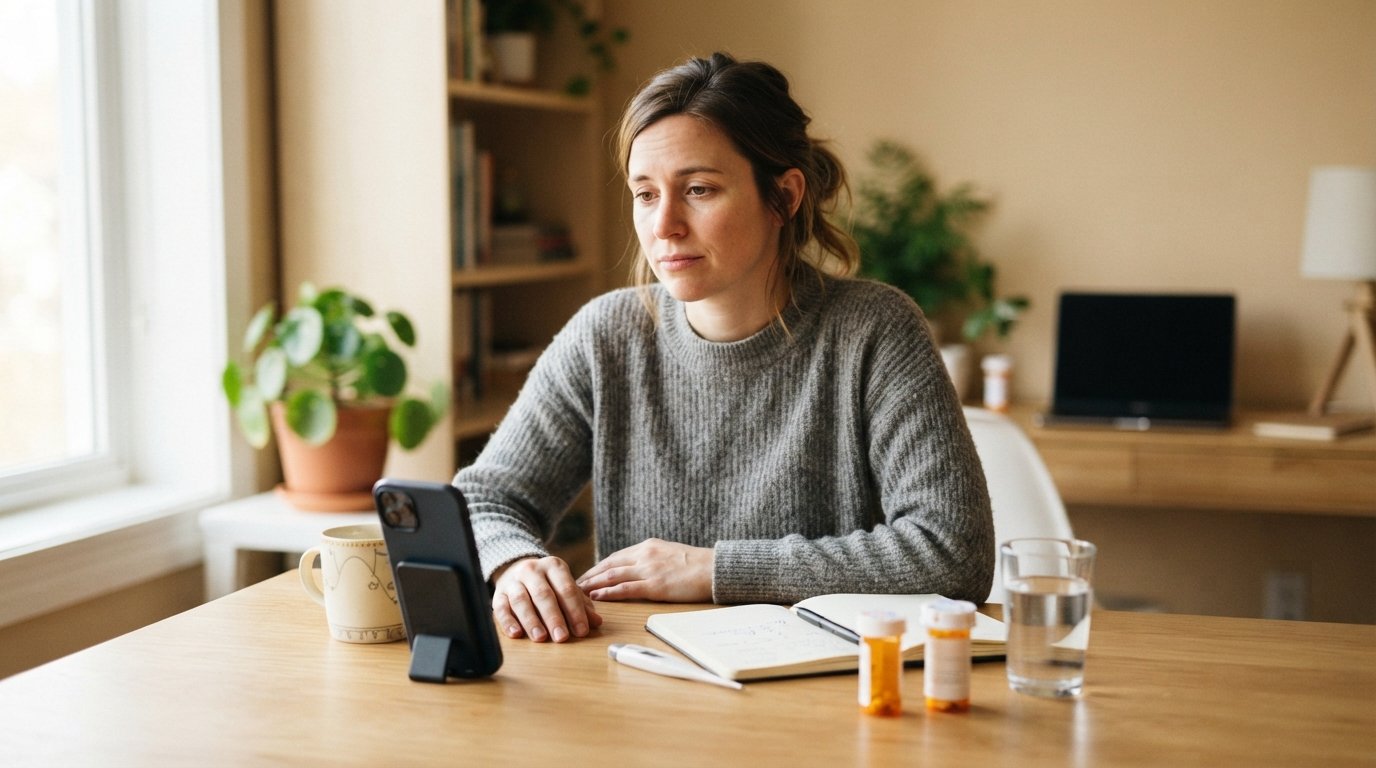
Same Day Telehealth Visit: What to Gather Beforehand
Preparing for a same day telehealth appointment means gathering meds, allergies, vitals, and a clear symptom timeline. Here is what to have ready.

By Alice Owens
Your throat started scratching at noon. By 3 p.m., swallowing feels like a chore, and you have a video visit booked for 4:30. In that 90 minute window, you can either scramble through drawers for pill bottles and guess at when your fever spiked, or you can walk into the appointment organized, concise, and ready to get the most out of a short window with a licensed clinician. The difference between a rushed, vague call and a productive one comes down to preparation, and preparing for a same day telehealth appointment is less about gathering a mountain of documents and more about pulling together the right handful of details in the right format.
Telehealth platforms have made urgent care more accessible, but the compressed timeline of a same day visit rewards people who show up with specifics. Clinicians on these calls have minutes, not hours, to understand your situation, weigh safety considerations, and decide whether a prescription conversation is appropriate or whether you need in-person evaluation. Everything you bring to that conversation either helps that process or slows it down. This guide walks through exactly what to gather, how to describe symptoms so they land clearly, and how to set up a virtual visit that actually works.
Why Same Day Telehealth Preparation Matters More Than You Think
A same day appointment compresses the normal information gathering that happens across a longer relationship with a provider. When you see a clinician in person after weeks of scheduling, there is often a chart, a history, and a familiar face. A same day telehealth visit frequently involves a clinician you have never met, a platform you may have used once, and a time slot that might be 10 or 15 minutes long. The clinician has to make judgment calls quickly, and those calls are only as good as the information you provide.
Preparation also protects you. When you can accurately report what medications you take, what you are allergic to, and how long symptoms have been present, you reduce the risk of a safety oversight. Clinicians discussing common telehealth treatments, whether that is a weight loss medication like semaglutide or tirzepatide, a sexual health medication like sildenafil or tadalafil, or a hair loss option like finasteride or minoxidil, all rely on accurate patient reporting to screen for contraindications. A missed detail about a nitrate medication or a pregnancy possibility can change the entire conversation.
There is also a practical efficiency argument. The faster you can convey your situation, the more of the appointment remains for questions, explanations, and next steps. People who spend the first five minutes of a 12 minute visit hunting for a pharmacy name or guessing at the date their symptoms started often leave feeling unheard. Preparing for a same day telehealth appointment what to gather is really about respecting the compressed format and making every minute count.
The Core Checklist: What to Have in Front of You
Before you sit down for the call, assemble a small set of items on the desk or table beside you. You do not need a binder. You need a single page or a notes app with the essentials, plus a few physical items within arm's reach. The goal is to eliminate the pauses where you say, hold on, let me go find that, while the clinician waits.
Start with the medication question, because it is the one clinicians ask first and the one patients most often fumble. You need the names, the doses, and how often you take each one. Include prescription medications, over the counter products you use regularly, supplements, and anything topical that could be systemically absorbed. If you use a GLP-1 medication for weight loss, note the specific drug and the current dose. If you use a nitrate for chest pain, that detail is critical for any conversation involving erectile dysfunction medication. If you take spironolactone for acne or hair loss, note it, because it interacts with other treatments.
Next, allergy history. This means medication allergies specifically, and the reaction type if you know it. A rash is different from swelling, and swelling is different from anaphylaxis. If you do not know the reaction, say so, but list the medication. Also note any allergies to food, latex, or environmental triggers if they seem relevant to your symptoms.
Recent vitals are the third pillar. If you have a home blood pressure cuff, a thermometer, a pulse oximeter, or a glucose meter, take a reading before the visit and write it down with the time. A single blood pressure reading of 148 over 92 taken at 3:15 p.m. is more useful than a vague report that your blood pressure runs a little high. If you have recent lab work from the past few months, have the results or a photo of them ready, especially if the visit relates to thyroid function, cholesterol, A1c, or hormone levels.
Finally, gather the logistical items: your pharmacy name and address, your insurance card if the platform asks for it, and a photo ID. Even if the platform collected these at booking, having them nearby prevents a mid call scramble if the clinician needs to confirm something.
- Medication list: Names, doses, frequency, including supplements and topicals
- Allergy history: Medication, food, and environmental allergies with reaction types
- Recent vitals: Blood pressure, temperature, heart rate, glucose, or oxygen readings with times
- Recent labs: Results or photos from the past three to six months if relevant
- Logistics: Pharmacy details, insurance card, photo ID, and a pen and paper
Once you have these items assembled, do a quick review. Say the medication names out loud. If you cannot pronounce one, write down the first few letters and the shape of the pill. Clinicians are used to patients describing a small white oval pill, and that description plus the first few letters is often enough to identify it. The point is not perfection. The point is giving the clinician enough to work with.
How to Describe Symptom Timing and Severity in Plain Language
The second major category of preparation is the symptom story. Clinicians on same day visits are trained to ask a specific set of questions: when did it start, how has it changed, how bad is it, what makes it better or worse, and are there associated symptoms. You can save time by having those answers ready in a concise, chronological format.
Start with onset. Not just the day, but the time of day and the circumstances. I woke up at 6 a.m. with a sore throat that was mild, and by 2 p.m. it hurt to swallow. That is more useful than I have had a sore throat for a day. If symptoms came on suddenly, say so, because sudden onset carries different weight than gradual onset. If you can point to a trigger, a new food, a new medication, a travel day, a stressful event, mention it.
Then describe severity in functional terms. A pain scale number is helpful, but function is better. I could not eat lunch because swallowing hurt. I had to leave work early because the headache made it hard to look at a screen. I woke up three times last night coughing. These descriptions tell the clinician how the symptom is interfering with your life, which is often more clinically meaningful than a number.
Next, the trajectory. Is it getting better, worse, or staying the same? Have you tried anything, and did it help? I took ibuprofen at noon and the fever came down for two hours, then came back. That tells the clinician something about the pattern. If you have a home test result, a COVID test, a strep test, a glucose reading, a blood pressure log, have it ready and note the time of the test.
Finally, list the associated symptoms, even the ones that seem unrelated. A sore throat plus a new rash means something different from a sore throat alone. A headache plus vision changes is a different conversation than a headache by itself. Write these down before the call so you do not forget one in the moment. It is common to blank on details when a clinician asks a direct question, and a written list prevents that.
- Onset: Date, time, and circumstances of when symptoms began
- Severity: Functional impact (sleep, eating, work, daily activities) rather than just a number
- Trajectory: Better, worse, or stable, plus what you have tried and whether it helped
- Associated symptoms: A written list of everything else you have noticed, even if it seems minor
One more note on severity: be honest about mental health symptoms if they are part of the reason for the visit. Same day telehealth appointments for anxiety, depression, or insomnia are common, and clinicians need to know how symptoms are affecting sleep, appetite, work, and relationships. If you are having thoughts of self harm, that is a crisis that requires immediate help, not a routine telehealth visit. Call or text 988 in the United States for the Suicide and Crisis Lifeline, or call 911 if you are in immediate danger.
Setting Up Your Space for a Quiet, Well Lit Virtual Visit
The physical setup of a telehealth call is easy to overlook, but it directly affects how much the clinician can assess. A dark, noisy room with a shaky camera makes it harder to communicate, and it can lead to a rushed or incomplete visit. A few minutes of setup can change the entire tone of the appointment.
Lighting comes first. Face a window or a lamp so that your face is illuminated, not backlit. If the light is behind you, the clinician sees a silhouette. If you are discussing a skin concern, a rash, a mole, or a hair loss pattern, good frontal lighting is essential. For skin and hair concerns specifically, have a flashlight or a second lamp ready so you can move it to the side to show texture and edges. Clinicians discussing treatments for acne, rosacea, melasma, or pattern hair loss often need to see the affected area clearly, and lighting is half the battle.
Sound comes next. Close the door, turn off the television, and silence your phone notifications. If you have a headset with a microphone, use it, because it reduces echo and keeps your hands free. If you are in a shared space, let the people around you know you are on a medical appointment so they do not interrupt. Background noise is one of the most common reasons a telehealth visit goes poorly, and it is entirely preventable.
Camera position matters too. Prop your phone or laptop so the camera is at eye level, not looking up your nose or down at your lap. Sit at a table if possible, with your notes and medication bottles in front of you. Have a pen and paper ready to write down instructions, follow up steps, or medication names. If the clinician mentions a treatment you have not heard of, write it down and ask for the spelling. This is especially important for medication names, which can sound similar and be easy to mix up.
Finally, think about privacy. Use a private room if you can. If you are discussing sensitive topics like sexual health, mental health, or weight loss, privacy matters for your own comfort. Headphones help, and so does a closed door. If you live with others and cannot find a private space, consider whether the visit can be rescheduled or whether you can take the call from a parked car or another quiet location.
When Same Day Symptoms Require Emergency Care Instead
A same day telehealth appointment is appropriate for many urgent but non emergent concerns: a suspected urinary tract infection, a cold or flu, a skin rash, a medication refill question, a mild flare of a chronic condition, or a mental health check in. But some symptoms are red flags that require emergency care, not a video visit. Preparing for a same day telehealth appointment includes knowing when to skip the appointment entirely and seek emergency help.
Chest pain, especially with shortness of breath, sweating, nausea, or pain radiating to the arm or jaw, is a 911 call. Sudden weakness or numbness on one side of the body, facial drooping, difficulty speaking, or sudden vision loss are stroke symptoms and require immediate emergency care. Severe difficulty breathing, blue lips, confusion, fainting, or a seizure are also emergencies. For mental health, active suicidal thoughts with a plan or intent, or thoughts of harming others, require immediate crisis support through 911 or 988.
Other symptoms warrant urgent in person evaluation even if they are not classic emergencies. A fever above 104 degrees Fahrenheit that does not respond to medication, severe abdominal pain, persistent vomiting that prevents fluid intake, a head injury with confusion or vomiting, or a deep wound that will not stop bleeding all need in person care. If you are unsure, call the telehealth platform or your primary care office and ask whether the concern can be handled virtually, but do not delay emergency care to wait for a video appointment.
For everything else, a same day telehealth visit can be a fast, effective way to get guidance. The key is to arrive with the right information, describe symptoms clearly, and set up a space that lets the clinician see and hear you. That preparation is the difference between a visit that feels rushed and one that feels productive, and it is entirely within your control.