
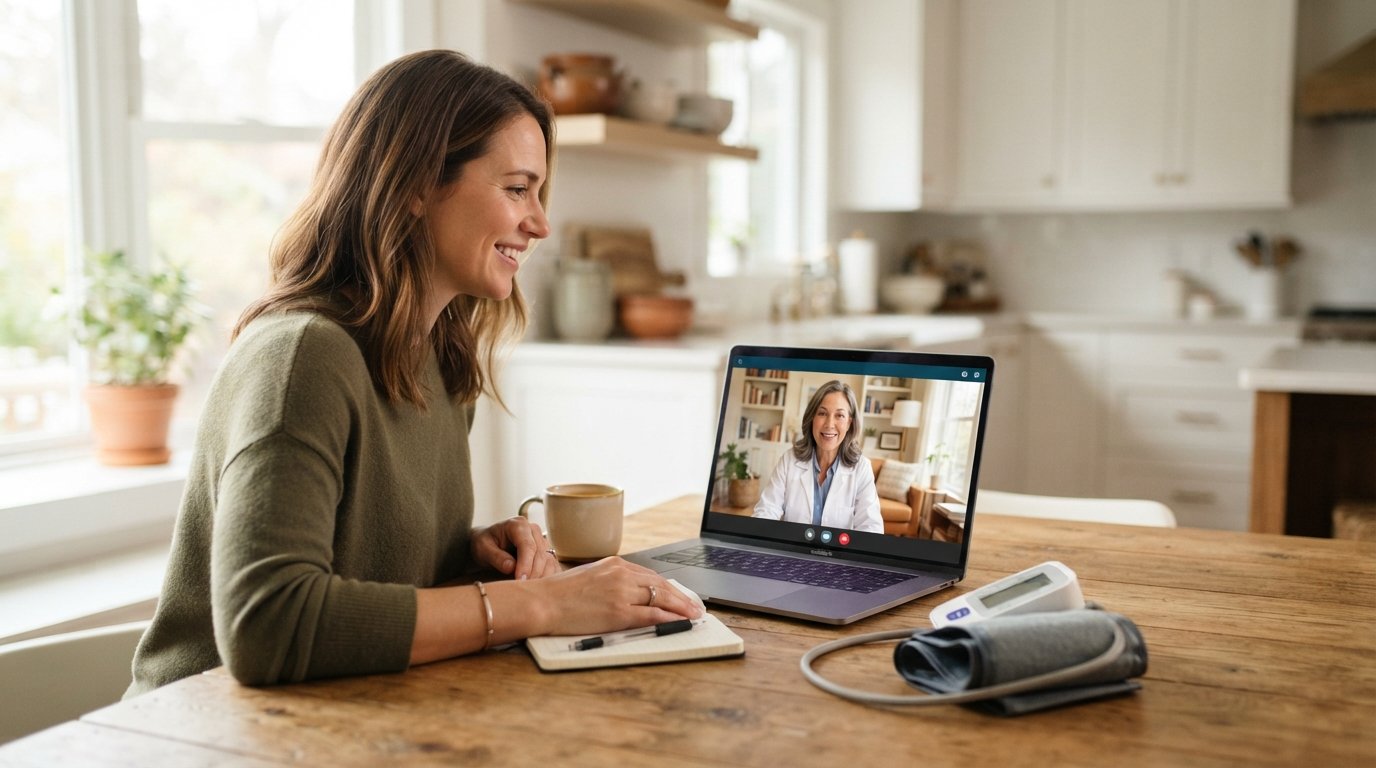
Telehealth for Women's Preventive Health and Wellness
Telehealth for women's preventive health and routine wellness discussions makes screening reviews and follow-up easier to fit into real life.

By Alice Owens
Women juggle careers, caregiving, and countless daily demands, and routine health often slides to the bottom of the list. Telehealth has changed that calculus. A virtual visit can fit into a lunch break, a commute, or a quiet evening at home, making it easier to discuss prevention and wellness before small concerns become bigger ones. The shift is practical, not a replacement for hands-on care, and it is worth understanding exactly where virtual care helps, where it stops, and how to use it well.
Why Virtual Care Fits Women's Preventive Health
Preventive health is about staying ahead of problems: reviewing risk factors, updating screening schedules, addressing bothersome symptoms early, and keeping vaccinations current. Much of that work is conversation and coordination, which is why telehealth for women's preventive health and routine wellness discussions has become a natural extension of primary care. A clinician can take a history, review medications, interpret home readings, and decide whether an in-person exam or lab draw is needed next.
Convenience matters, but so does consistency. When a visit is easier to attend, women are more likely to keep follow-ups and report changes. Virtual visits also remove some logistical barriers, such as transportation, childcare, and time away from work. For routine wellness discussions, that can mean more frequent touchpoints and earlier attention to issues like sleep, stress, contraception, and menstrual changes.
It helps to think of telehealth as a front door rather than the whole house. The conversation, triage, and planning often happen virtually, while physical exams, imaging, and certain lab tests happen in person. Understanding that division keeps expectations realistic and helps women get the right care at the right time.
Preventive Topics Commonly Discussed in Virtual Visits
Many preventive and wellness topics translate well to a video or phone visit because they rely on history, symptoms, and shared decision-making rather than a physical exam. Clinicians routinely use virtual visits to review risk factors, adjust ongoing prescriptions, and plan next steps. The key is honesty about symptoms and a clear list of medications, supplements, and prior results.
The topics below come up often in virtual preventive care. They are not a checklist to self-diagnose, but they show the range of what a routine telehealth conversation can cover.
- Contraception counseling: reviewing options, side effects, and whether a refill or change is appropriate.
- Menstrual and perimenopausal symptoms: discussing irregular cycles, hot flashes, sleep disruption, and mood changes.
- Screenings and risk review: confirming due dates for cervical cancer screening, mammography, and colorectal cancer screening based on age and family history.
- Vaccination review: checking whether flu, HPV, shingles, or other vaccines are due.
- Metabolic and heart health: reviewing blood pressure logs, cholesterol results, weight trends, and diabetes risk.
- Mental health check-ins: screening for anxiety, depression, and sleep problems, with referrals when needed.
- Bone and joint health: discussing calcium, vitamin D, activity, and fracture risk as women age.
- Sexual health: addressing pain, dryness, low desire, or concerns about infections in a private setting.
Each of these conversations works best when the patient brings specifics. For example, a woman discussing perimenopause should note cycle dates, the frequency of hot flashes, and how symptoms affect sleep and work. A woman reviewing contraception should mention side effects, missed pills, and any new medications. Specifics help the clinician decide whether virtual management is reasonable or whether an in-person visit is safer.
Educational resources such as DoctorsHome explain the topics women commonly look up before a telehealth visit, including birth control, menopause, weight loss, skin and hair concerns, and mental health. These pages name medications clinicians often discuss, such as hormonal contraceptives, menopausal hormone therapy, and GLP-1 options for weight management, and they flag safety points a licensed clinician still has to review. They do not diagnose or prescribe; they help women prepare better questions.
How Screening Schedules and Referrals Are Handled
Screening schedules are one of the most practical things to review virtually. Guidelines change with age, family history, and prior results, and a clinician can walk through what is due and why. The virtual visit is also a good place to reconcile records: which mammogram was last done, when the last Pap or HPV test occurred, and whether a colonoscopy or stool-based test is appropriate. If something is overdue, the clinician can explain the options and help arrange the next step.
Referrals usually follow a similar pattern. The virtual clinician identifies the need, explains the reason, and sends a referral or order to an in-person facility. In many systems, the patient then schedules directly with the imaging center, lab, or specialist. The virtual visit does not replace the mammogram or the colonoscopy; it makes sure the right test happens at the right interval and that the patient understands the preparation.
Follow-up is where telehealth can add real value. After an in-person screening, a virtual visit can review results, discuss next steps, and adjust medications. If a result needs a specialist, the virtual clinician can explain the referral and what to expect. This loop, from conversation to test to follow-up, is often smoother when patients know in advance how communication will work.
There are limits. A virtual visit cannot perform a pelvic exam, breast exam, or skin biopsy. It also cannot replace urgent evaluation for severe pain, heavy bleeding, or a new lump. When a symptom suggests something that needs hands-on assessment, the responsible move is to say so and direct the patient to in-person care promptly.
Questions That Make Referrals and Follow-Up Smoother
A short list of questions before the visit ends can prevent confusion later. These questions are especially useful when a screening or referral is being arranged.
- Which test or referral is being ordered, and what is the reason?
- How and when will I receive the results, and who will explain them?
- What preparation do I need, and are there medications to pause?
- What symptoms should prompt me to call before the scheduled test?
- How do I share records with the clinician who ordered the test?
Writing the answers down, or asking for them in the patient portal, reduces the chance of missed steps. It also gives the next clinician a clearer picture if care moves between virtual and in-person settings.
Which Exams and Tests Still Require In-Person Visits
Telehealth is not a substitute for hands-on care, and being clear about that protects patients. Several preventive services require physical presence because they depend on touch, imaging, or specimen collection. A virtual clinician can discuss these services, order them, and review results, but the visit itself happens in person.
The list below covers the main categories that still require an in-person setting. It is not exhaustive, but it reflects the services most often discussed in preventive care.
- Pelvic exams and cervical cancer screening, including Pap and HPV testing.
- Clinical breast exams, mammography, and breast ultrasound or biopsy.
- Colorectal cancer screening, including colonoscopy and stool-based tests that require a kit and lab processing.
- Bone density scanning and certain imaging studies.
- Blood draws and urine tests that require a lab or clinic.
- Skin checks and biopsies for suspicious moles or lesions.
- Vaccinations that must be given in person.
Some women wonder whether a virtual visit can replace an annual exam. The honest answer is that it depends on what the exam is for. A wellness conversation, medication review, and screening plan can often be handled virtually. A visit that includes a pelvic exam, breast exam, or skin check cannot. The best approach is to ask the clinician what can be done virtually and what should be scheduled in person, then keep both on the calendar.
There is also a safety dimension. Symptoms such as heavy bleeding, severe pelvic pain, a new breast lump, fainting, or chest pain need urgent in-person evaluation, not a virtual discussion. Telehealth works best when it is used for appropriate concerns and when patients know the red flags that require a different level of care.
Questions to Ask About Records, Privacy, and Follow-Up
Records and privacy deserve attention before the first virtual visit. Patients should know which platform is being used, whether the visit is covered by insurance, and how notes and results will be shared. A licensed clinician is bound by privacy rules, but patients still need to confirm how the specific platform handles data, who can access the record, and how to request a copy.
Continuity of care depends on records moving with the patient. If a woman sees a virtual clinician and also has a primary care doctor, the two should be able to share notes and results. Asking about this early prevents duplicated tests and conflicting advice. It also helps the virtual clinician make safer decisions about medications and referrals.
Follow-up is the other half of the equation. A virtual visit should end with a clear plan: what was decided, what happens next, who is responsible for each step, and when to check back. If a test is ordered, the patient should know how results will arrive and who will explain them. If a medication is started, the patient should know what side effects to watch for and when to call.
For women's preventive health and routine wellness discussions, the most useful questions are practical. They cover access, cost, privacy, and next steps, and they turn a one-time conversation into a workable plan.
Practical Questions Before and After the Visit
These questions are worth asking at the start and end of a virtual visit. They apply whether the visit is for contraception, menopause, screening review, or a general wellness check.
- Is this visit covered by my insurance, and what will I owe?
- How will my notes and results be shared with my primary care doctor?
- What is the follow-up plan, and who schedules the next step?
- How do I reach the clinician or office if something changes?
- Which symptoms should send me to urgent care or the emergency department instead of waiting?
These questions are simple, but they close the gaps that cause frustration. They also reinforce that telehealth is a tool within a larger care system, not a separate world.
Making Telehealth Work for Routine Wellness
The strongest use of telehealth for women's preventive health and routine wellness discussions is preparation plus follow-through. Before a visit, write down symptoms, cycle dates, medications, and questions. During the visit, be specific and ask about records, referrals, and follow-up. After the visit, check the patient portal, schedule any in-person tests, and note the next check-in date.
It also helps to keep a simple personal health file: last mammogram, last cervical screening, vaccination dates, current medications, and family history. That file makes every virtual visit more productive and reduces the chance that an important screening slips through the cracks. For women managing chronic conditions or perimenopausal symptoms, a short symptom log can be especially useful.
Telehealth will not replace every part of preventive care, and it should not try. What it can do is make routine conversations easier to have, screening plans easier to track, and follow-up easier to complete. Used with clear expectations and good questions, virtual care becomes a practical partner in long-term wellness, complementing the in-person exams and tests that only a physical visit can provide.