
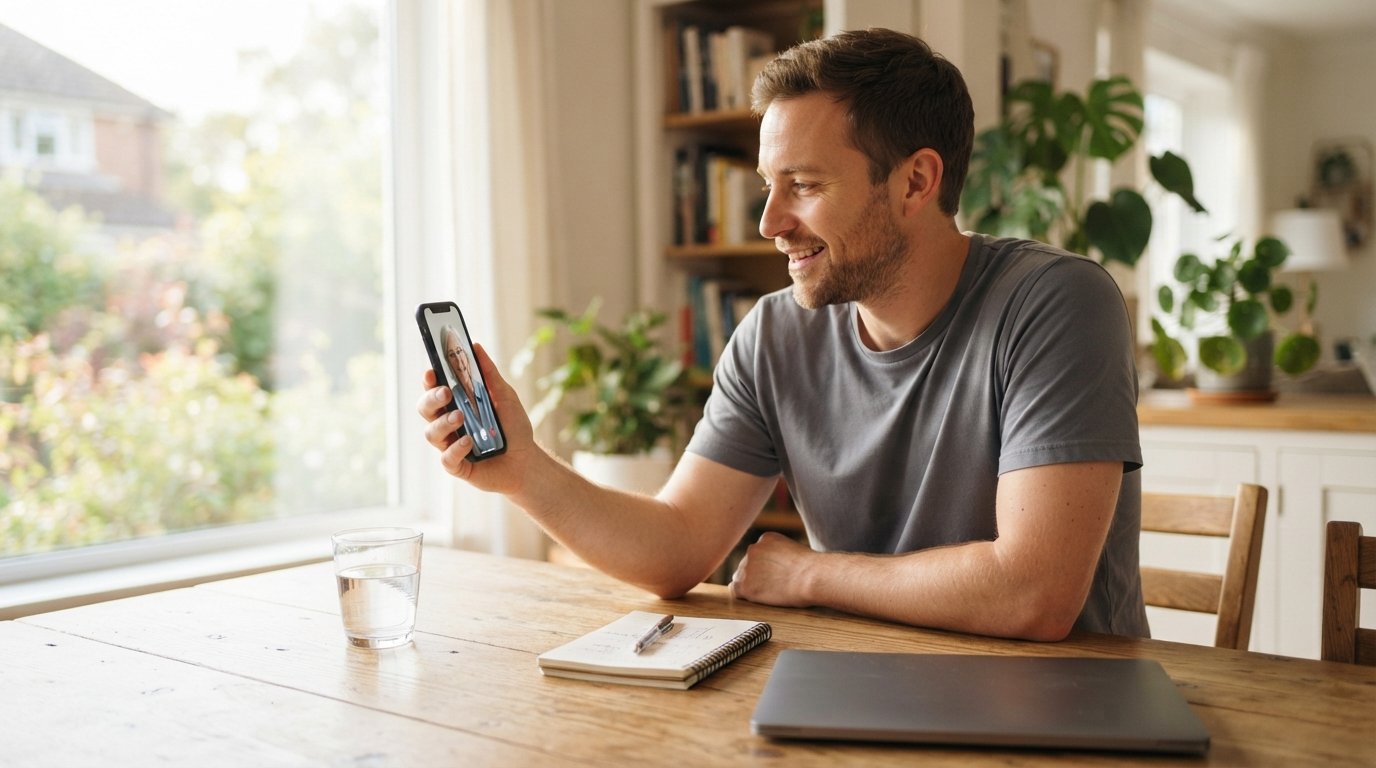
Same Day Doctor Appointment Via Telehealth: How It Works
Same day doctor appointment via telehealth works through quick online booking, a virtual visit, and e-prescriptions when appropriate. Learn what to expect and how to prepare.

By Maya Foster
You wake up with a burning sore throat, a nagging rash, or a prescription that ran out. You need a doctor today, not next week. Same day doctor appointments via telehealth have become a practical solution for urgent but non-emergency health issues. Understanding how they work helps you decide when to use them, what to expect, and how to prepare. DoctorsHome is an educational site that explains telehealth topics for men and women, including the medications clinicians commonly discuss and the safety points a licensed clinician must review. DoctorsHome does not diagnose, prescribe, sell medication, or book visits. This article explains the process so you can navigate it confidently.
What Same Day Telehealth Means in Practice
A same day telehealth appointment means you connect with a licensed clinician through video, phone, or secure messaging within hours of your request, often on the same calendar day. These appointments are designed for conditions that need prompt attention but are not life-threatening. Examples include sinus infections, urinary tract infections, minor skin rashes, pink eye, cold and flu symptoms, and medication refills for chronic conditions. The clinician can assess your symptoms, offer advice, and when appropriate, discuss treatment options. In many cases, they can send a prescription to a pharmacy of your choice. The entire visit happens remotely, so you avoid travel and waiting rooms.
The key difference from a traditional office visit is the channel of communication and the speed of access. Telehealth platforms maintain networks of clinicians who are available on short notice. When you request a same day appointment, the platform matches you with an available provider who is licensed in your state. You then complete a brief intake, have your visit, and receive a summary. This model works well for straightforward, low-acuity concerns. It is not a replacement for emergency care or for conditions that require a physical exam or in-person testing.
How Same Day Telehealth Appointments Work Step by Step
Understanding the workflow removes uncertainty and helps you move quickly when you need care. While each platform has its own details, most follow a similar sequence. Here is a general framework for how a same day doctor appointment via telehealth works.
- Request the appointment: You visit the telehealth platform, select the type of visit (for example, urgent care, prescription refill, or a specific condition), and provide basic information such as your name, date of birth, location, and a brief description of your symptoms. Many platforms show you the next available appointment time, which may be within minutes or a few hours.
- Complete intake forms: Before the visit, you fill out a questionnaire about your medical history, current medications, allergies, and the reason for your visit. This information helps the clinician prepare and ensures the visit is focused and efficient.
- Verify your identity and location: Because clinicians are licensed by state, you will confirm your identity and your physical location at the time of the visit. Some platforms require a photo ID. This step is a legal requirement and protects both you and the provider.
- Meet with the clinician: At the scheduled time, you connect with the clinician via video, phone, or secure chat. The clinician asks questions, reviews your symptoms, and may ask you to show the affected area on camera (for example, a rash or a swollen throat). The visit typically lasts 10 to 20 minutes.
- Receive a plan and any prescriptions: After the assessment, the clinician discusses possible next steps. If a prescription is appropriate, they can send it electronically to a pharmacy near you. You also receive a visit summary with instructions and follow-up guidance.
After the visit, you may have the option to message the clinician with follow-up questions. If your symptoms worsen or do not improve, the platform may advise an in-person visit. It is important to remember that telehealth clinicians cannot perform physical exams, order certain tests, or handle emergencies. They are trained to recognize when a condition requires in-person care and will direct you accordingly.
Telehealth vs. Urgent Care for Common Conditions
When you need same day care, you may weigh telehealth against visiting an urgent care center. Both options have strengths, and the right choice depends on your symptoms, your location, and your comfort level. Telehealth is often faster and more convenient for conditions that can be assessed visually and through conversation. Urgent care is better suited for situations that may require a physical exam, imaging, or in-person testing.
Consider the following comparison for common non-emergency conditions:
- Telehealth is a good fit for: cold and flu symptoms, sinus infections, allergies, minor skin rashes, pink eye, urinary tract infections (in many cases), prescription refills, and follow-up questions about a chronic condition. These issues can often be evaluated through a video visit, and treatment can be discussed without a physical exam.
- Urgent care is a better fit for: suspected fractures, deep cuts that may need stitches, severe abdominal pain, high fever with confusion, difficulty breathing, and any condition that requires an X-ray, lab test, or procedure. If you are unsure, call the telehealth platform first; a clinician can advise you on the appropriate level of care.
Another factor is cost and insurance. Telehealth visits are often less expensive than urgent care visits, and many insurance plans cover them. However, coverage varies, so check with your plan. Medicare and Medicaid may cover telehealth in certain circumstances, but rules change, so verify before your visit. For self-pay patients, telehealth platforms typically list their prices upfront. DoctorsHome does not book appointments or sell services, but its educational content can help you understand the landscape of telehealth treatments so you can ask informed questions.
What to Have Ready for a Same Day Virtual Visit
Preparation makes your virtual visit smoother and more productive. Because the clinician cannot examine you in person, your ability to describe symptoms clearly and provide accurate history is essential. Before your appointment, gather the following items and information.
- A list of your current medications: Include prescription drugs, over-the-counter medicines, vitamins, and supplements. Mention any recent changes. This helps the clinician avoid interactions and make safe recommendations.
- Your medical history: Note any chronic conditions (such as diabetes, high blood pressure, or asthma), past surgeries, and allergies. If you have relevant test results or recent visit summaries, have them nearby.
- A quiet, private space: Choose a well-lit room where you can speak freely and show the clinician any visible symptoms. Good lighting is especially important for skin issues.
- A reliable device and connection: Test your camera, microphone, and internet connection before the visit. Have a backup phone number in case the video fails.
- Your pharmacy information: Know the name and location of the pharmacy where you want any prescription sent. Some platforms allow you to choose a pharmacy during the visit.
- Notes on your symptoms: Write down when symptoms started, what makes them better or worse, and any treatments you have already tried. This reduces the chance of forgetting important details.
Having these items ready shows the clinician that you are prepared and helps them make the most of the short visit. It also reduces the likelihood of follow-up calls or delays. If your symptoms are complex or you have multiple concerns, mention them in the intake form so the clinician can prioritize.
Safety, Limitations, and When to Seek In-Person Care
Telehealth is a valuable tool, but it has clear limitations. A virtual visit cannot replace an in-person exam when one is medically necessary. Clinicians are trained to identify red flags that require immediate in-person evaluation. For example, chest pain, severe shortness of breath, sudden weakness or numbness, confusion, and severe abdominal pain are signs to call 911 or go to an emergency room, not to use telehealth. Mental health crises also require immediate help; call or text 988 for the Suicide and Crisis Lifeline.
Another limitation is the prescribing of certain medications. Clinicians follow strict guidelines and may decline to prescribe controlled substances or medications that require in-person monitoring. They also cannot prescribe medication for conditions they cannot adequately assess remotely. For example, a new lump or a persistent cough that requires imaging would need an in-person workup. Telehealth is best for straightforward, low-risk conditions and for follow-up care when the diagnosis is already established.
Privacy and security are also important. Reputable telehealth platforms use encrypted technology and follow privacy laws. You should verify that the platform you use is legitimate and that the clinician is licensed in your state. Avoid platforms that promise prescriptions without a real consultation or that seem to operate outside normal medical standards. DoctorsHome emphasizes education, not transactions, so it can help you understand what a safe and appropriate telehealth interaction looks like.
How DoctorsHome Fits into Your Telehealth Research
DoctorsHome is an educational publisher, not a telehealth provider. It does not diagnose, prescribe, sell medication, or book visits. Instead, it explains the topics people look up on telehealth platforms. For example, if you are researching weight loss treatments, you can read about GLP-1 medications such as semaglutide and tirzepatide, and learn about the safety points a licensed clinician must review, such as pregnancy, pancreatitis, and medication interactions. If you are exploring sexual health, you can find information about medications clinicians commonly discuss for erectile dysfunction (such as sildenafil and tadalafil) or for low sexual desire in women. Each page notes that a licensed clinician is the only person who can decide on a prescription and that availability varies by state.
When you use DoctorsHome, you are gathering knowledge to have a more informed conversation with a clinician. You are not receiving medical advice or a diagnosis. This distinction matters: the site helps you understand the landscape, but it does not replace professional care. After reading, you can use a separate telehealth platform to book a same day appointment, or visit an urgent care center if needed. The information you learn on DoctorsHome can help you ask better questions and recognize when a concern requires in-person attention.
Telehealth appointments are not appropriate for every situation. They are one option in a spectrum of care that includes primary care, urgent care, and emergency services. Knowing how same day telehealth works helps you choose the right option and avoid delays. As telehealth continues to evolve, educational resources like DoctorsHome can help you stay informed about treatments and safety considerations.
If you are unsure whether your symptoms are suitable for a virtual visit, start by reviewing reputable educational content, then contact a licensed clinician or a telehealth platform for guidance. Your health and safety come first, and the best care is the care that matches your needs.