
How Virtual Healthcare Services Work: A Guide to Online Doctor Visits
How Virtual Healthcare Services Work: A Guide to Online Doctor Visits

Imagine consulting with a doctor from your living room, getting a prescription refilled during your lunch break, or discussing a new symptom without rearranging your entire day. This is the reality of modern virtual healthcare services, a transformative approach to medical care that leverages technology to connect patients with licensed providers. The process of how online doctor visits work is more than just a video call, it is a structured, secure, and effective system designed to deliver quality care remotely. For millions, it has become the preferred first point of contact for non-emergency medical needs, offering a blend of convenience, accessibility, and clinical rigor that is reshaping the patient experience.
The Foundation of Virtual Care: Technology and Security
At its core, a virtual medical visit is a synchronous or asynchronous interaction between a patient and a healthcare provider using digital communication tools. The foundation of any reputable service, like Doctors Home, is built on two critical pillars: robust technology and uncompromising security. The platform must be intuitive for patients of varying tech-savviness while maintaining enterprise-grade security protocols to protect sensitive health information, adhering to regulations like HIPAA in the United States. This means all data transmitted during a consultation, whether video, audio, or text, is encrypted. The software itself is designed to facilitate a clinical encounter, often including features for secure messaging, digital intake forms, and integrated electronic health records (EHR) to ensure continuity of care.
Before a visit even begins, the technological infrastructure works behind the scenes to verify provider credentials, manage scheduling, and collect preliminary patient information. This pre-visit workflow is crucial for making the actual consultation time efficient and productive. Patients typically access these services through a dedicated patient portal on a website or a mobile application, creating a controlled environment distinct from general-purpose communication apps. This dedicated space ensures that the interaction is private, recorded accurately for medical records, and structured to support clinical decision-making. The seamless integration of these components is what differentiates a professional tele health visit from an informal video chat, providing a framework that both patients and providers can trust.
The Step-by-Step Process of an Online Doctor Visit
Understanding the step-by-step journey demystifies the experience and highlights its efficiency. The process is designed to be linear and patient-centric, minimizing wait times and administrative hurdles commonly associated with in-person care.
- Registration and Account Creation: The patient visits the telemedicine platform’s website or app and creates a secure account. This involves providing basic demographic information and, often, verifying insurance details or setting up a payment method. Reputable platforms make this process straightforward.
- Scheduling or On-Demand Access: Patients can either schedule an appointment for a future time that suits them or, for many acute issues, access an on-demand or same-day visit. This immediacy is a key benefit of virtual health care services for concerns like sinus infections, allergies, or prescription refills.
- Completing Digital Intake Forms: Prior to the visit, the patient completes digital forms about their current symptoms, medical history, current medications, and allergies. This information populates the provider’s chart before the meeting, saving valuable consultation time for discussion rather than data entry.
- The Virtual Consultation: At the appointed time, the patient joins the secure video or audio call. The provider conducts a interview, which can include a visual examination where applicable (assessing a rash, looking at a throat, etc.). Patients may be guided on how to position their camera or take their own vital signs (like temperature) with home devices.
- Diagnosis and Treatment Plan: Based on the interaction, the provider discusses their assessment. If appropriate, they can electronically prescribe medications to the patient’s chosen pharmacy. They may also recommend at-home care, order lab tests, or advise an in-person follow-up for certain conditions.
- Post-Visit Follow-up: After the visit, a visit summary is often available in the patient portal. Secure messaging allows for follow-up questions, and platforms may facilitate the ordering of integrated at-home testing kits if further diagnostics are needed.
This streamlined process eliminates travel, time in waiting rooms, and potential exposure to other illnesses. It is particularly powerful for managing chronic conditions, where regular check-ins are necessary, and for acute, minor ailments that require prompt attention. For a deeper look at navigating this system, our guide on how virtual healthcare services work provides additional patient-focused insights.
What Conditions Are Suitable for Virtual Care?
A common question surrounds the appropriate use cases for online doctor visits. Virtual healthcare services excel in several key areas, making them a versatile tool in a patient’s healthcare arsenal. They are ideal for medical issues that do not require a hands-on physical examination or immediate, emergency intervention. This includes a wide range of common conditions and healthcare management needs.
- Acute Minor Illnesses: Colds, flu, sinus infections, urinary tract infections (UTIs), allergies, and conjunctivitis (pink eye).
- Chronic Disease Management: Follow-up consultations for stable conditions like diabetes, hypertension, or thyroid disorders to review symptoms and adjust medications.
- Mental Health Services: Therapy sessions, counseling, and medication management for anxiety, depression, and other mental health concerns.
- Prescription Refills: For ongoing, stable medications where a routine check-in is required. Many platforms, including Doctors Home, specialize in convenient refills for specific conditions.
- Preventive Care and Lifestyle Counseling: Discussions on nutrition, weight management, smoking cessation, and sleep problems.
- Dermatology: Assessment of rashes, acne, eczema, and other skin conditions via high-quality video or uploaded photos.
It is crucial to recognize the limits of virtual care. True medical emergencies, such as chest pain, severe shortness of breath, stroke symptoms, major trauma, or severe abdominal pain, require immediate in-person emergency care. A responsible virtual care provider will always direct patients to the nearest emergency department or urgent care center when a condition presented is beyond the scope of a remote visit. The goal is to integrate virtual medical visits into a broader care continuum, not to replace all in-person care.
Benefits and Considerations for Patients and Providers
The adoption of virtual health care services delivers profound benefits, but also introduces considerations that users should understand. For patients, the advantages are compelling. The most cited benefit is unparalleled convenience: care is accessed from anywhere, often with shorter wait times, and without the need for transportation or time off work. This dramatically improves healthcare access for individuals in rural areas, those with mobility challenges, or people with demanding schedules. It can also reduce costs by eliminating travel expenses and potentially offering transparent, upfront pricing for self-pay visits. Furthermore, it minimizes exposure to contagious illnesses in waiting rooms, a significant factor in post-pandemic care.
For healthcare providers, tele health visits offer the ability to expand their reach, maintain more flexible schedules, and reduce overhead costs associated with a physical office. It can improve patient engagement and adherence through easier follow-up. However, providers must adapt their clinical skills to a virtual environment, learning to conduct effective interviews without all physical cues and understanding the technological platform. They also face the challenge of building rapport through a screen, though many find patients are often more relaxed in their own homes.
Key considerations include the “digital divide,” where lack of reliable internet or devices can limit access, emphasizing the need for platforms to offer low-bandwidth options. Insurance coverage continues to evolve, though most major insurers now cover telehealth for many services. Patients must also be proactive in their own care, ensuring they have a quiet, private space for the visit and can accurately describe their symptoms. The success of a virtual consultation heavily relies on clear communication from both parties.
Integrating At-Home Testing and Digital Pharmacy
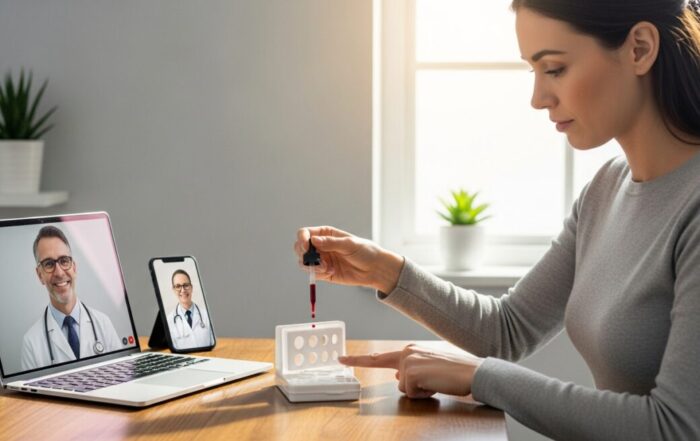
The true power of modern virtual healthcare services is realized when they are integrated with other digital health tools, creating a comprehensive care ecosystem. Two critical integrations are at-home testing kits and digital pharmacy services. When a provider during a virtual medical visit determines that lab work is needed, they can often order a certified at-home test kit directly to the patient’s door. The patient collects the sample (such as blood via a finger prick, saliva, or a swab) following detailed instructions and mails it to a CLIA-certified lab. Results are then sent securely to the provider, who can discuss them with the patient in a follow-up virtual visit. This closes a critical diagnostic loop that was previously a major gap in pure telehealth models.
Similarly, the treatment loop is closed through digital pharmacy integration. Following a consultation, prescriptions can be sent electronically not just to a local pharmacy, but often to a partner mail-order pharmacy that delivers medications directly to the patient. This is especially valuable for maintenance medications or for conditions where discretion and convenience are priorities. Platforms that offer a cohesive experience, managing the entire journey from symptom check to consultation, testing, prescription, and delivery, represent the next evolution of patient-centered virtual care.
Frequently Asked Questions
Are online doctor visits as effective as in-person visits? For the appropriate conditions outlined above, studies show that outcomes for virtual visits are comparable to in-person care for diagnosis, treatment, and patient satisfaction. They are a clinically validated modality for many common healthcare needs.
Is my information safe during a virtual visit? Reputable platforms use end-to-end encryption and comply with health privacy laws (like HIPAA). You should always ensure you are using a dedicated, secure patient portal, not a general consumer video app.
Will my insurance cover a tele health visit? Coverage has expanded significantly. Most private insurers, Medicare, and Medicaid now cover telehealth services. It is always advisable to check with your specific insurance plan for details on copays and covered services.
Can I get a prescription from an online doctor? Yes, licensed providers can prescribe medications when clinically appropriate during a virtual consultation. They cannot prescribe controlled substances (like opioids) in most cases via telehealth alone, and they will not prescribe without establishing a valid patient-provider relationship.
What do I need for a successful virtual visit? You will need a smartphone, tablet, or computer with a camera and microphone, a reliable internet connection, a private location, and any relevant information ready (current medications, pharmacy details, symptom notes).
The landscape of healthcare is undergoing a permanent shift, with virtual healthcare services becoming a standard component of care delivery. Understanding how online doctor visits work empowers patients to make informed choices about their health, accessing quality care in a format that fits their lives. By combining secure technology with clinical expertise, these services break down traditional barriers, offering a practical, efficient, and effective pathway to better health management. As technology and integration continue to advance, the scope and impact of virtual care will only grow, making it an indispensable tool for modern healthcare.
About the Author: Daniel Brooks




Sign up for our newsletter and Save 20% on Test Kits
"*" indicates required fields