

How Telemedicine Solutions Are Transforming Modern Healthcare Access
How Telemedicine Solutions Are Transforming Modern Healthcare Access

Imagine receiving a diagnosis, discussing treatment options, and having a prescription sent to your local pharmacy, all without leaving your home. This is no longer a futuristic concept but a present-day reality, fundamentally reshaping the patient-provider relationship. The rapid evolution of telemedicine solutions is not merely a technological trend, it is a systemic overhaul of how healthcare is delivered, accessed, and experienced. Driven by necessity and accelerated by advances in digital communication, these virtual care models are dismantling traditional barriers, offering unprecedented convenience, and creating a more patient-centered ecosystem. The transformation extends beyond simple video calls, it encompasses a holistic integration of digital tools, remote monitoring, and data analytics that is redefining modern healthcare from the ground up.
The Core Pillars of Modern Telemedicine Solutions
Telemedicine in healthcare is built upon several foundational pillars that work in concert to deliver effective care. At its heart is synchronous communication, typically real-time video consultations that replicate the face-to-face visit. This allows for visual assessment, discussion of symptoms, and immediate clinical decision-making. However, the true power of contemporary telemedicine solutions lies in their integration of asynchronous tools. Secure messaging platforms enable continuous communication, allowing patients to send follow-up questions, photos of a wound or rash, or updates on their condition, which providers can review and respond to at their convenience. This creates a continuous care loop rather than an episodic interaction.
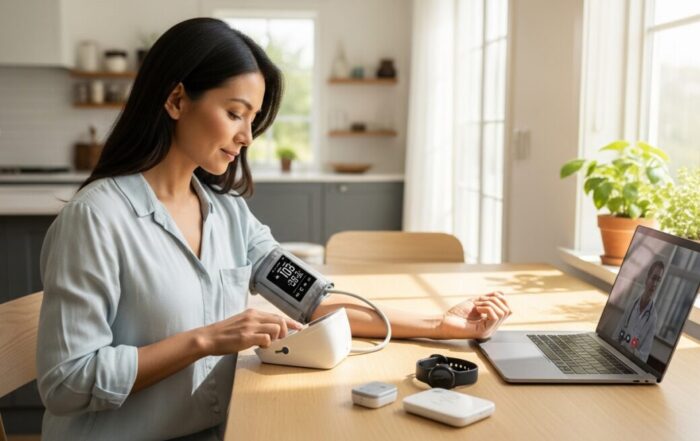
Another critical pillar is remote patient monitoring (RPM). This involves the use of connected devices, such as blood pressure cuffs, glucose meters, pulse oximeters, and weight scales, that transmit patient data directly to the healthcare provider. For managing chronic conditions like hypertension, diabetes, or congestive heart failure, RPM provides a constant stream of objective data, enabling proactive interventions before a minor issue becomes a major crisis. This shift from reactive to proactive care is a hallmark of how telemedicine solutions are transforming modern healthcare. The final pillar is digital integration, which includes electronic health record (EHR) connectivity, e-prescribing, and lab test ordering. Seamless integration ensures that virtual visits are not isolated events but are fully documented within the patient’s permanent medical record, facilitating coordination with other specialists and ensuring medication safety.
Expanding Access and Overcoming Geographic Barriers
One of the most significant impacts of telemedicine is its ability to democratize healthcare access. For patients in rural or remote areas, the nearest specialist might be hours away. Travel costs, time off work, and physical discomfort can deter individuals from seeking necessary care. Telemedicine solutions effectively erase these geographic barriers, connecting patients with specialists in urban centers regardless of distance. This is particularly vital for mental health services, dermatology, and endocrinology, where specialist shortages are often most acute outside metropolitan areas. Furthermore, it improves access for populations with mobility challenges, whether due to disability, lack of transportation, or advanced age.
The convenience factor cannot be overstated. A virtual visit eliminates commute time, waiting room delays, and potential exposure to other illnesses in a clinical setting. This efficiency makes it easier for patients to fit healthcare into busy schedules, leading to better adherence to follow-up appointments and treatment plans. For employers and health systems, this increased accessibility translates to higher patient engagement and satisfaction. It also allows health systems to extend their reach and serve a broader patient population without the capital expenditure of building new physical facilities. The net result is a healthcare model that is more equitable and responsive to patient needs.
Enhancing Chronic Disease Management and Preventive Care
Chronic diseases such as diabetes, heart disease, and COPD account for a substantial portion of healthcare costs and require continuous management. Traditional care models, with quarterly or semi-annual in-person check-ups, often fail to provide the frequent touchpoints needed for optimal control. Telemedicine solutions are revolutionizing this space by enabling continuous, data-driven management. Through remote monitoring devices, providers can track key health metrics in real-time. Alerts can be set for when readings fall outside safe parameters, prompting a timely nurse call or a quick virtual check-in to adjust medication or lifestyle recommendations.
This constant connection fosters a collaborative management environment. Patients become more engaged in their own health, understanding the direct impact of their daily choices as they see their data trends. Providers gain a more accurate, longitudinal view of the patient’s health status rather than a single snapshot from an office visit. This facilitates more personalized and effective treatment adjustments. The preventive power of this model is immense. By catching trends early, for instance, a gradual increase in blood pressure, interventions can be made to prevent a stroke or hospitalization. This shift from managing sickness to maintaining wellness is a core objective of value-based care, and telemedicine is a key enabler. For a deeper look at the diagnostic capabilities within this new model, our guide on remote medical diagnosis and virtual care explores how clinicians assess patients effectively from a distance.
Integrating At-Home Testing and Digital Pharmacy Services
A comprehensive telemedicine ecosystem extends beyond the consultation to include the entire care continuum. The integration of at-home testing kits is a prime example of this expansion. Patients can now order kits for a wide range of tests, from routine metabolic panels and cholesterol checks to more specific diagnostics like STI screening or hormone level tests. They collect their sample at home, mail it to a certified lab, and receive results through a secure portal, often with a follow-up telemedicine consultation to discuss the findings. This integration removes another logistical hurdle and encourages proactive health screening.
Similarly, digital pharmacy and prescription services are a natural extension of telemedicine solutions. After a virtual consultation, prescriptions can be sent electronically directly to a patient’s preferred local pharmacy or to a partnered digital pharmacy that offers home delivery. This seamless process improves medication adherence by ensuring patients receive their prescribed medications quickly and conveniently. For ongoing conditions, automatic refills and medication management apps can provide reminders and track adherence, closing another critical loop in patient care. The synergy between virtual consultations, at-home testing, and digital pharmacy services creates a closed-loop, patient-centric system that maximizes convenience and clinical outcomes.
Key Benefits of Integrated Telemedicine Systems
The convergence of these services delivers tangible benefits for all stakeholders. For patients, the advantages are clear, increased access, reduced travel and time costs, greater convenience, and enhanced engagement in their health. For healthcare providers, telemedicine solutions offer tools for more efficient practice management, the ability to see more patients, reduced no-show rates, and improved patient outcomes through better monitoring. For the healthcare system at large, effective telemedicine implementation can lead to significant cost savings by reducing unnecessary emergency department visits, hospital readmissions, and in-person clinic overhead. It also supports public health goals by enabling care during outbreaks or pandemics without disrupting essential health services.
Addressing Challenges and Ensuring Effective Implementation
Despite its transformative potential, the widespread adoption of telemedicine in healthcare is not without challenges. Digital literacy and access to reliable high-speed internet, often termed the “digital divide,” can exclude some of the most vulnerable populations. Ensuring equitable access requires initiatives to provide technology support and low-bandwidth options. Reimbursement policies from insurers and Medicare/Medicaid have improved but can still be complex and variable, creating uncertainty for providers. Licensure across state lines remains a regulatory hurdle, although many states have joined interstate compacts to facilitate this.
Clinical limitations also exist. Not all conditions can be diagnosed or treated virtually, physical exams are sometimes indispensable. Therefore, the most sustainable model is often a hybrid one, where telemedicine is integrated with in-person care, allowing each modality to be used for the situations where it is most appropriate. Data security and HIPAA compliance are paramount, requiring robust, encrypted platforms designed specifically for healthcare communication. Finally, preserving the human connection and rapport in a virtual setting requires deliberate effort from providers, who must hone their “webside manner” to ensure patients feel heard and cared for despite the digital medium.
Frequently Asked Questions
What conditions are most suitable for telemedicine visits?
Telemedicine is highly effective for many common conditions, including follow-up visits, medication management, mental health therapy, dermatology concerns (via photo upload), urgent care issues like colds, flu, allergies, and sinus infections, and chronic disease management check-ins for conditions like diabetes or hypertension.
Is telemedicine covered by insurance?
Coverage has expanded dramatically. Most private insurers, Medicare, and Medicaid now cover telemedicine visits. However, coverage details (like copays) can vary, so it’s always best to check with your specific insurance provider before an appointment.
How do prescriptions work with telemedicine?
If, during a virtual consultation, a provider determines a prescription is medically appropriate, they can send it electronically directly to your local pharmacy. Certain controlled substances may have stricter regulations, but most common medications can be prescribed via telemedicine.
What technology do I need for a telemedicine appointment?
Typically, you need a smartphone, tablet, or computer with a camera, microphone, and speaker, along with a reliable internet connection. Most platforms work through a web browser or a simple app, and no special technical skills are required.
Is my personal health information secure on telemedicine platforms?
Reputable telemedicine providers use platforms that are HIPAA-compliant, featuring end-to-end encryption and secure data storage. Always ensure you are using a platform recommended or provided by a legitimate healthcare organization.
The integration of telemedicine solutions into the fabric of modern healthcare is an irreversible and beneficial shift. It represents a move towards a more flexible, accessible, and efficient system that aligns with how people live and work today. While it will not replace all in-person care, its role as a complementary, and often primary, modality for a wide range of health services is firmly established. The ongoing transformation promises a future where high-quality healthcare is a more convenient, continuous, and integrated part of everyday life, ultimately leading to better health outcomes and a more sustainable system for all.
About the Author: David Reynolds




Sign up for our newsletter and Save 20% on Test Kits
"*" indicates required fields