

Home Blood Test Kits: Convenient Health Monitoring Explained
Home Blood Test Kits: Convenient Health Monitoring Explained

Imagine having a window into your own health, accessible from your kitchen table, without the need for a doctor’s appointment or a lab visit. This is the promise of modern at-home blood testing kits, a cornerstone of the digital health revolution. These kits empower individuals to take a proactive role in their wellness by providing convenient access to critical health data. From monitoring chronic conditions to checking vitamin levels, home blood test kits are transforming how we understand and manage our health. For many, the traditional barriers of time, cost, and access to healthcare facilities can delay important screenings. At-home testing bridges this gap, offering a discreet, often more affordable, and always convenient first step in health awareness. When integrated with telemedicine platforms like Doctors Home, these kits become part of a powerful, continuous care loop, connecting data directly with licensed professionals who can provide interpretation and guidance.
Understanding How At-Home Blood Testing Works
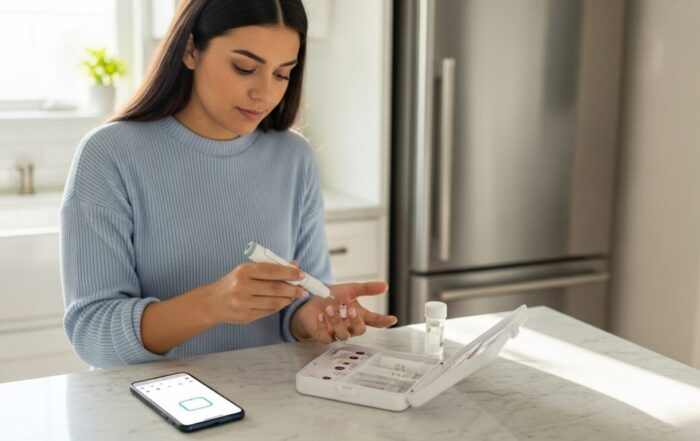
The process of using a home blood test kit is designed to be straightforward and user-friendly, though it requires careful attention to detail. Most kits arrive by mail with all necessary components: lancets for the finger prick, collection tubes or cards, antiseptic wipes, bandages, and a pre-paid return mailer. The core technology enabling this remote testing is the dried blood spot (DBS) method or, in some cases, small-volume liquid blood collection. With the DBS method, a few drops of blood from a finger prick are absorbed onto a special filter paper. Once dry, this sample is stable and can be mailed safely to a CLIA-certified laboratory for analysis. The labs use sophisticated equipment, often the same analyzers found in hospital labs, to process the samples and generate reports.
It is crucial to understand that while the collection happens at home, the actual analysis is performed in professional, certified laboratories. This distinction is what separates legitimate, clinically relevant home blood test kits from less reliable direct-to-consumer wellness gadgets. The reliability of the results hinges on two factors: the user’s ability to collect a sufficient and uncontaminated sample, and the quality standards of the partner laboratory. Reputable services provide detailed, illustrated instructions and sometimes even video tutorials to guide users through the collection process. Following these steps precisely is essential for obtaining an accurate sample that will yield meaningful results upon laboratory testing.
The Spectrum of Available Tests and Their Applications
The range of health markers you can check from home has expanded dramatically. Today’s offerings go far beyond simple glucose monitoring. Consumers can now access tests for a wide array of health and wellness indicators. Broadly, these tests fall into several key categories, each serving a distinct purpose in personal health management.
Common categories of home blood test kits include:
- General Wellness and Prevention: These panels often check cholesterol (lipid panel), liver and kidney function, blood cell counts (CBC), and key vitamins like Vitamin D and B12. They serve as a comprehensive baseline or annual check-up tool.
- Hormone and Fertility Testing: Kits can measure hormones like testosterone, estrogen, progesterone, and thyroid hormones (TSH, T3, T4), which are vital for understanding metabolic health, stress response, and reproductive status.
- Chronic Condition Management: For those managing diagnosed conditions, kits are available for monitoring HbA1c (for diabetes), inflammation markers like CRP, and other specific markers related to heart, liver, or kidney health.
- Food Sensitivity and Allergy Testing: Some kits measure IgG antibody reactions to a panel of common foods, though it’s important to discuss these results with a doctor for proper clinical interpretation versus true IgE-mediated allergies.
- Specialized Nutritional and Metabolic Panels: These delve deeper into micronutrient status, fatty acid profiles, and metabolic markers to guide dietary and supplementation choices.
It’s important to choose a test based on your specific health goals or concerns. For instance, someone experiencing persistent fatigue might benefit from a test checking thyroid, iron, and vitamin levels, while someone focused on cardiovascular health would prioritize a lipid and inflammation panel. Furthermore, certain tests, like those for kidney function, provide critical early detection data. For a deeper look at one specific application, our guide on kidney health screening at home explains how these kits can help monitor vital renal markers. A telemedicine provider can be an invaluable resource in selecting the most appropriate test based on your symptoms and health history, ensuring you gain actionable insights rather than just data.
Integrating Home Test Results with Professional Healthcare
The true value of a home blood test is unlocked not when the PDF report arrives in your inbox, but when that data is contextualized by a medical professional. Raw numbers on a page can be confusing or even alarming without proper interpretation. This is where the synergy between at-home testing and telemedicine becomes powerful. Platforms like Doctors Home are built for this integration. After you receive your lab results, you can schedule a virtual consultation to review them with a licensed healthcare provider. This professional can explain what each marker means, how the values relate to each other, and whether any results fall outside optimal ranges.
This step transforms data into a personalized health strategy. The provider can differentiate between a clinically significant result that requires immediate follow-up and a borderline result that suggests lifestyle modifications. They can also identify patterns that might be missed by looking at single values in isolation. For example, a slightly low vitamin D level coupled with a high parathyroid hormone level tells a different story than a low vitamin D level alone. This integrated approach closes the loop: convenient data collection at home leads to expert analysis and actionable advice, all without setting foot in a traditional clinic. It represents a shift from episodic, reactive care to continuous, proactive health management, putting you in the driver’s seat while keeping a medical expert in the passenger seat for navigation.
Evaluating Quality, Accuracy, and Safety of Kits
Not all home blood test kits are created equal. As a consumer, it’s vital to vet a company before pricking your finger. Key indicators of quality include partnership with CLIA-certified and CAP-accredited laboratories. CLIA (Clinical Laboratory Improvement Amendments) certification is a federal standard ensuring the lab meets quality requirements for testing. Look for transparency on the company’s website about which lab processes the samples. The best companies also employ physicians or PhDs to oversee the result review process. Be wary of kits that promise immediate results from a handheld device for a wide range of complex markers; most legitimate tests require lab processing, with a turnaround time of several days to a week.
Privacy and data security are non-negotiable. Carefully review the company’s privacy policy to understand how your sensitive health data is stored, used, and protected. Reputable companies will have HIPAA-compliant data practices and will not sell your personal health information. Furthermore, understand what the kit price includes. Does it cover both the kit shipment and the lab processing fee? Is physician review or a telemedicine consultation included, or is that an add-on cost? A clear, upfront pricing model without hidden fees is a sign of a trustworthy service. Finally, consider the customer support offered. Can you speak to someone if you have trouble collecting your sample? Is there a clinical team available for questions about your report? These factors collectively determine the safety, accuracy, and overall value of your at-home testing experience.
Frequently Asked Questions on Home Blood Testing
Are at-home blood test results as accurate as lab tests ordered by my doctor?
When the sample is collected correctly and sent to a high-quality, certified laboratory, the analytical accuracy is equivalent. The potential for variation comes from the sample collection technique (e.g., insufficient blood, contamination) and the lack of a controlled environment (like fasting state verification). Following instructions meticulously is key.
Will my health insurance cover the cost of a home blood test kit?
Coverage varies widely by insurance plan and the reason for testing. Most direct-to-consumer kits are typically not covered by insurance and are paid for out-of-pocket. However, if a test is ordered by a physician through a telemedicine platform as part of a diagnostic workup, it may be eligible for reimbursement. Always check with your insurance provider and the testing service beforehand.
What should I do if my results show an abnormal value?
Do not panic. First, review the result with the healthcare provider associated with the testing service, if that service is included. They can provide initial interpretation and recommend the next steps, which may include lifestyle changes, repeat testing, or a follow-up with your primary care physician for further evaluation. These kits are screening and monitoring tools, not definitive diagnostic instruments on their own.
How often should I use a home blood testing kit?
Frequency depends entirely on your health status and goals. For general wellness, a comprehensive panel once a year may be sufficient. For managing a chronic condition like diabetes or high cholesterol, testing might be needed quarterly or as directed by your doctor. It’s best to establish a testing rhythm in consultation with a healthcare professional.
Can I use these kits to diagnose a disease?
No. Home blood testing kits are designed for health screening, monitoring, and providing insights. They are not intended to diagnose medical conditions. A diagnosis requires a clinical evaluation by a healthcare provider who considers your symptoms, medical history, physical exam (in-person or virtual), and possibly additional, confirmatory tests. The kits provide valuable data points to inform that clinical conversation.
The landscape of personal health monitoring is being reshaped by the accessibility of home blood test kits. They demystify health data, reduce barriers to routine screening, and foster a more engaged and informed patient. By choosing a reputable service and, most importantly, integrating the results with professional medical guidance through telemedicine, you can build a more complete and dynamic picture of your health. This proactive model, which combines self-collection with expert analysis, places powerful tools for longevity and wellness directly into your hands, making personalized, preventive care a practical reality in your everyday life.
About the Author: Daniel Brooks




Sign up for our newsletter and Save 20% on Test Kits
"*" indicates required fields