
Home-Based Stroke Recovery: A Guide to Effective Physical Therapy
Home-Based Stroke Recovery: A Guide to Effective Physical Therapy
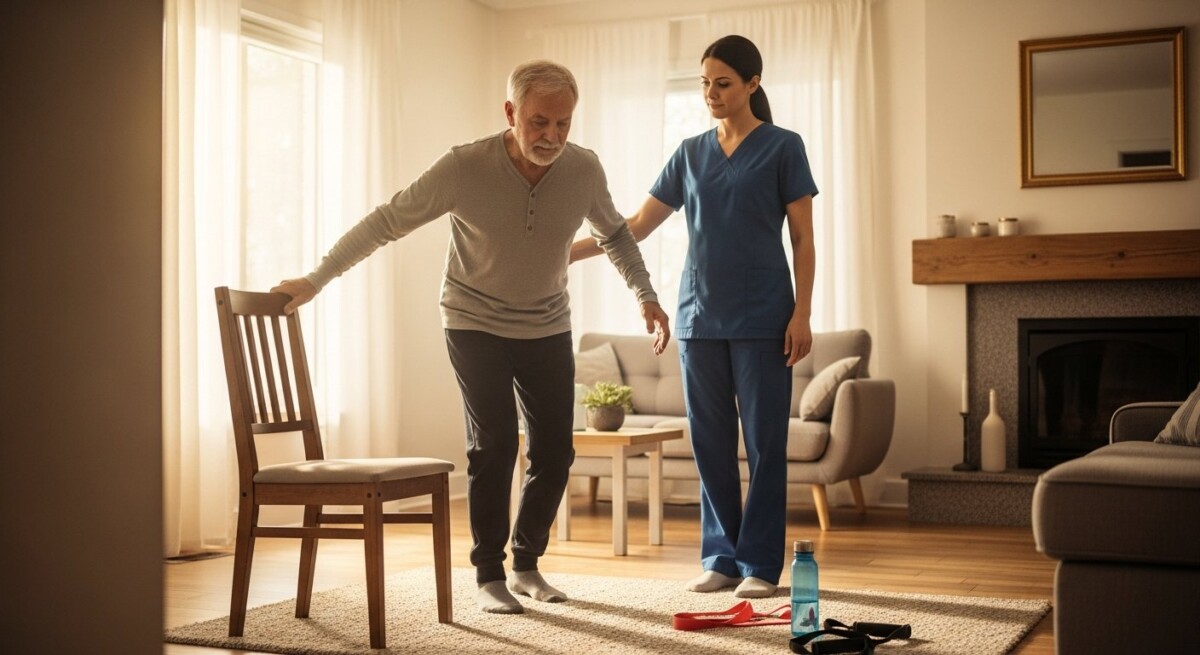
Recovering from a stroke is a journey that extends far beyond the hospital walls, and the most critical work often happens at home. For many survivors, consistent, daily physical therapy is the cornerstone of regaining mobility, independence, and quality of life. While outpatient clinics provide essential guidance, the reality is that true neuroplasticity, the brain’s ability to rewire itself, is fueled by high-repetition, task-specific practice in a familiar environment. This article provides a comprehensive roadmap for implementing safe, effective, and progressive physical therapy at home for stroke recovery, empowering survivors and caregivers to take an active role in the rehabilitation process.
The Foundation: Safety and Professional Guidance First
Before initiating any home exercise program, consultation with a licensed physical therapist (PT) or physician is non-negotiable. A professional assessment establishes a safe baseline, identifies specific impairments (like weakness, spasticity, or balance issues), and creates a personalized plan tailored to the survivor’s stage of recovery and goals. This step ensures exercises are appropriate and minimizes the risk of injury or reinforcing poor movement patterns. Furthermore, a PT can teach proper techniques to both the survivor and their caregiver, which is crucial for exercises involving assistance. Remember, home therapy is a supplement to, not a replacement for, professional care, especially in the early stages post-stroke.
Essential Components of a Home Therapy Program
A well-rounded home program for stroke recovery addresses multiple domains of function. It should not focus solely on the affected limb but on the whole body and its integration. The key is to start simple, prioritize safety, and gradually increase complexity as ability improves. Consistency, even in short sessions, is far more beneficial than sporadic, intense workouts.
Range of Motion and Spasticity Management
Maintaining joint flexibility is a primary goal, particularly if spasticity (muscle tightness) is present. Passive range of motion exercises, where a caregiver gently moves the affected limb through its available motion, are often the starting point. As voluntary movement returns, these transition to active-assisted and then fully active exercises. Daily stretching of key muscle groups, such as the chest, shoulder internal rotators, wrist flexors, and calf muscles, helps prevent contractures that can permanently limit movement. Holding gentle stretches for 30-60 seconds, repeated several times a day, can make a significant difference in comfort and long-term mobility.
Strength and Weight-Bearing
Rebuilding strength is fundamental. Initial exercises may involve isometric contractions (tightening the muscle without moving the joint) or gravity-eliminated movements. As strength improves, incorporating light resistance with therapy bands, small weights, or even household items can be highly effective. Equally important is weight-bearing through the affected arm and leg. For the leg, this begins with supported standing, progressing to weight shifts and mini-squats. For the arm, weight-bearing over a table on the extended elbow helps stimulate the shoulder girdle and improve proprioception. These activities send crucial sensory feedback to the brain, promoting neurological recovery.
Functional Mobility and Balance Training
The ultimate aim of rehabilitation is to restore the ability to perform daily activities. Home therapy should progressively incorporate functional task practice. This includes sitting balance exercises on the edge of the bed, practicing transitions (like moving from lying to sitting or sitting to standing), and working on walking (gait) training in a clear, safe space. Balance exercises must be performed with close supervision and support, such as standing at a kitchen counter. A simple progression might start with two-handed support, move to one-handed, then fingertip support, and finally attempting to balance without holding on. Each step builds confidence and stability.
To structure a daily session, consider this sample framework for a mid-stage recovery patient, always performed under safe conditions:
- Warm-up (5 minutes): Gentle seated marching, arm circles, and neck/shoulder rolls.
- Range of Motion (10 minutes): Passive or active-assisted stretches for wrists, elbows, shoulders, ankles, and knees.
- Strength (10 minutes): Seated leg extensions, seated knee marches, bicep curls with a light band, and tabletop elbow extensions.
- Balance & Function (15 minutes): Standing at counter with weight shifts, practicing sit-to-stand 5 times, and stepping in place.
- Fine Motor/Cognitive Cooldown (5 minutes): Pegboard exercises, stacking coins, or a simple puzzle.
Leveraging Technology and Home Setup
The home environment itself can be a powerful therapeutic tool. Simple modifications and technology can greatly enhance a home program. Creating a dedicated, clutter-free space for exercise is the first step. Useful low-tech equipment includes therapy putty for hand strengthening, a mirror for visual feedback during exercises, and various-sized objects for grasping practice. In the modern digital health landscape, telehealth has become a transformative asset. Platforms for telemedicine physical therapy sessions allow a therapist to observe a patient in their home environment, provide real-time feedback on technique, and adjust the program remotely. This bridges the gap between clinical visits and ensures the home program remains aligned with recovery goals. Wearable sensors and tablet-based apps can also provide motivation, track repetitions, and offer guided exercise routines.
Overcoming Common Challenges and Staying Motivated
The path of stroke recovery is non-linear, marked by plateaus and occasional setbacks. Fatigue, low motivation, and frustration are common adversaries. To combat this, setting SMART goals (Specific, Measurable, Achievable, Relevant, Time-bound) is critical. Celebrate small victories, like holding a stretch for longer or standing independently for a few more seconds. Incorporating therapy into daily routines, such as practicing gripping by holding a water bottle or working on balance while brushing teeth, makes practice more meaningful and less of a chore. Family support is invaluable; a caregiver’s encouragement and participation can double as both assistance and emotional sustenance. Finally, tracking progress, whether through a simple journal, photos, or an app, provides tangible evidence of improvement that can reignite motivation during difficult periods.
Committing to physical therapy at home for stroke recovery is a powerful act of reclaiming one’s life. It requires patience, perseverance, and a partnership between the survivor, their caregivers, and their healthcare team. By establishing a safe, structured, and consistent routine that evolves with ability, survivors can harness the brain’s remarkable capacity for neuroplasticity long after formal therapy ends. The home becomes not just a place of comfort, but the most personal and potent gym for rebuilding strength, mobility, and hope.
About the Author: Emily Rodriguez


Sign up for our newsletter and Save 20% on Test Kits
"*" indicates required fields