
At Home COVID and PCR Tests: Accuracy and Usage Guide
At Home COVID and PCR Tests: Accuracy and Usage Guide
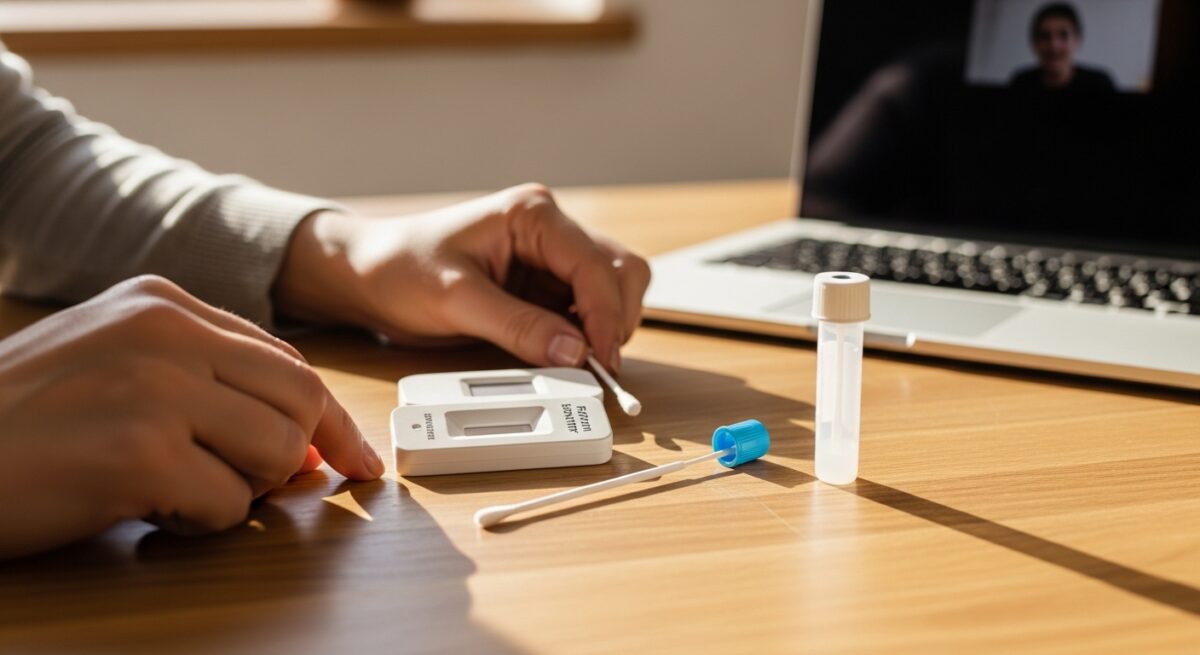
You wake up with a scratchy throat and a nagging cough. Is it just a cold, the flu, or could it be COVID-19? In today’s world, the answer is often just a swab away, thanks to the widespread availability of at-home tests. Navigating the landscape of self-testing, however, can be confusing. Understanding the critical differences between rapid antigen tests and the gold-standard PCR, knowing when and how to use each, and interpreting the results accurately are essential skills for managing your health. This guide cuts through the complexity, providing a clear, authoritative roadmap to using at-home COVID and PCR tests effectively, ensuring you make informed decisions for yourself and your family.
Understanding the Two Main Types of Tests
The first step to using any test correctly is understanding what it measures. At-home COVID tests primarily fall into two categories: rapid antigen tests and molecular tests, which include PCR and other nucleic acid amplification tests (NAATs). These tests work in fundamentally different ways, which directly impacts their accuracy, timing, and purpose.
Rapid antigen tests, the common over-the-counter kits, detect specific proteins (antigens) on the surface of the SARS-CoV-2 virus. They are designed for speed and convenience, providing results in 10-30 minutes. Their strength lies in identifying when a person is most infectious, as they typically show a positive result when viral load is high. Molecular tests like PCR (polymerase chain reaction), on the other hand, detect the virus’s genetic material. This process is more complex and sensitive, capable of identifying even tiny fragments of the virus, often before symptoms appear or after the infectious period has passed. While traditionally done in labs, the landscape now includes options for pcr tests at home, where you collect the sample yourself and mail it to a laboratory for processing.
Accuracy: Sensitivity, Specificity, and Real-World Performance
When discussing test accuracy, two terms are paramount: sensitivity and specificity. Sensitivity refers to a test’s ability to correctly identify those with the disease (true positive rate). Specificity refers to its ability to correctly identify those without the disease (true negative rate). No test is 100% perfect in both categories, and understanding this balance is key.
PCR tests are the benchmark for sensitivity, often cited as being over 95% sensitive when performed correctly in a lab. This makes them excellent for confirming an infection, especially early on or in cases with low viral load. At-home rapid antigen tests have lower sensitivity, especially compared to PCR. Their performance is highly dependent on viral load. When viral levels are high (when a person is most contagious), studies suggest many antigen tests have a sensitivity ranging from 80% to 95%. However, this number can drop significantly in the very early or late stages of infection. Their specificity, however, is generally very high (often over 98%), meaning a positive result is highly reliable. A false positive is rare, so an at home positive covid test should be taken seriously. The timing of the test, the technique used, and the specific viral variant all influence real-world accuracy.
A Step-by-Step Guide to Proper At-Home Test Usage
Maximizing the accuracy of any at-home test hinges on flawless execution. A poorly collected sample can render even the most sensitive test useless. Following the manufacturer’s instructions to the letter is non-negotiable, but several universal best practices apply.
First, prepare your space. Clean a flat surface, wash your hands thoroughly with soap and water, and ensure the test kit components are at room temperature. Check the expiration date, as degraded components can produce invalid results. The sample collection step is the most critical point for user error. For nasal swabs, insert the soft tip fully into one nostril, following the contour of your nasal passage (not straight up), and rotate it firmly against the inner wall for the full duration specified (usually 10-15 seconds). Repeat in the other nostril with the same swab. For throat or saliva samples, follow the specific timing and collection instructions precisely. When applying the sample to the test device, use the exact number of drops specified. Finally, set a timer for the exact development window. Reading the result too early or too late can lead to misinterpretation. A faint line, no matter how light, is typically considered a positive result.
To ensure you perform the test correctly, follow this essential checklist:
- Verify the test kit is unexpired and stored at the correct temperature.
- Wash and dry your hands thoroughly before handling any components.
- Read all instructions fully before beginning the process.
- Set a timer for the sample collection and result development steps.
- Perform the test in a well-lit area to read the result accurately.
After completing the test, dispose of all components in a sealed plastic bag and wash your hands again. Proper disposal prevents potential contamination.
When to Test and How to Interpret Results
Strategic timing transforms a simple test into a powerful diagnostic tool. Testing at the wrong time is a common reason for false negatives. The ideal window for using a rapid antigen test is when symptoms first appear. If you are symptomatic, test immediately. If you test negative but symptoms persist or are classic for COVID (like loss of taste or smell), test again 48 hours later. Serial testing significantly improves the chance of detection as the viral load increases.
For exposure without symptoms, the current guidance is to wait at least 5 full days after exposure before testing. Testing too soon after exposure will likely result in a negative test even if you are infected. If negative on day 5, consider a second test 48 hours later (day 7). Interpreting results seems straightforward, but nuances exist. A clear positive line next to the “T” (test) line, even if faint, indicates the detection of viral antigens. You should consider yourself infected, isolate, and notify close contacts. A negative result shows only a line at the “C” (control) line. This means the test worked, but it does not definitively rule out infection, especially if you have symptoms. An invalid result, where the control line does not appear, means the test did not function correctly and must be repeated with a new kit.
Beyond COVID: The Role of Influenza and Multiplex Tests
Respiratory symptoms can be caused by a multitude of viruses. Fortunately, the innovation in at-home testing has expanded. An influenza at home test is now available, allowing you to distinguish between influenza A, influenza B, and SARS-CoV-2. Furthermore, multiplex tests that can detect COVID-19, flu, and even RSV (Respiratory Syncytial Virus) from a single sample are becoming more accessible through healthcare providers and telemedicine platforms.
This differentiation is clinically vital. While both COVID-19 and the flu share many symptoms, their treatments, isolation periods, and potential complications differ. Knowing which virus you have enables more targeted care. For instance, antiviral medications for influenza, like oseltamivir (Tamiflu), are most effective when started early in the illness. A positive influenza at home test result can be a crucial piece of information to discuss with a healthcare provider during a telemedicine visit to determine if prescription treatment is appropriate for you. This integrated approach to testing and treatment is a cornerstone of modern, convenient healthcare.
Confirming Results and Next Steps After Testing
So, you have your result. What now? For a positive rapid antigen test, confirmation with a PCR test is generally not required for clinical decision-making, as the specificity is high. You should begin isolation immediately according to the latest public health guidelines. The critical next step is to connect with a healthcare provider, especially if you are at higher risk for severe disease (due to age, pregnancy, or underlying medical conditions). Telemedicine services, like those offered by Doctors Home, are ideally suited for this scenario. You can quickly consult a licensed professional from your home, discuss your symptoms, and determine if you are a candidate for prescription antiviral treatments, which must be started early to be effective.
For a negative test with persistent or worsening symptoms, do not assume you are in the clear. You may have tested too early, or you may have another illness. Re-test with an antigen test in 48 hours or consider a more sensitive PCR test. If you require a PCR test, you can often initiate the process through a telemedicine platform, which can guide you to a local testing site or arrange for a home-collection kit to be sent to you. Our detailed resource on at-home COVID PCR test accuracy and usage provides further insight into this process. Continuing to monitor symptoms and practicing respiratory etiquette is wise, as you could be contagious with another virus.
Integrating At-Home Testing into Your Healthcare Strategy
At-home tests are not a replacement for professional medical advice but a powerful tool for informed self-care and a gateway to professional care. They empower individuals to take an active role in their health, make timely decisions, and reduce unnecessary exposure in waiting rooms. For digital healthcare platforms, these tests are a natural extension of service. A patient can take a test, receive a result, and within minutes be in a virtual consultation with a provider who can interpret that result in the context of their full medical history.
This seamless integration is the future of patient-centered care. It allows for rapid triage, early intervention, and efficient use of medical resources. Keeping a few approved test kits at home, especially during respiratory virus season, is a prudent part of any household’s health supplies, much like having a thermometer or basic first-aid items. By understanding the strengths and limitations of each test type, you can use them confidently as a first line of defense for your family’s health.
Frequently Asked Questions
How long after exposure should I take an at-home COVID test?
If you have been exposed but have no symptoms, it is best to wait at least 5 full days after your last exposure before testing. Testing too soon can result in a false negative. If you develop symptoms at any point, test immediately.
My rapid test is negative, but I feel very sick. What should I do?
A single negative antigen test does not rule out COVID-19 or other infections. Isolate if possible, test again with an antigen test in 48 hours, or consider getting a PCR test, which is more sensitive. Consult a healthcare provider to evaluate your symptoms, as you may have influenza or another condition requiring treatment.
Are at-home PCR tests as accurate as lab PCR tests?
The accuracy depends on the sample collection. The PCR analysis itself, when performed in a certified lab on a properly collected sample, is highly accurate. The potential for error lies in the self-collection step. Meticulously following the kit’s instructions is crucial for achieving lab-comparable accuracy.
Can I use an at-home test that is past its expiration date?
No. You should not use an expired test. The chemical reagents in the test degrade over time, which can lead to invalid or inaccurate results, including false negatives. Always check the date on the box before use.
What is the difference between a COVID test and an influenza at home test?
They detect different viruses. A COVID test looks for proteins or genetic material from the SARS-CoV-2 virus. An influenza test detects proteins from influenza A and B viruses. Some multiplex tests can detect both, plus RSV, from a single sample, which is incredibly useful for differential diagnosis.
Mastering the use of at-home COVID and PCR tests provides a significant advantage in managing respiratory illnesses. By selecting the right test for the situation, executing the test with precision, and understanding how to act on the results, you take proactive control of your health. This knowledge, combined with ready access to telemedicine professionals, creates a comprehensive, responsive, and convenient healthcare strategy that fits seamlessly into modern life. When used wisely, these tests are more than just strips of paper or vials of solution, they are gateways to timely care and peace of mind.
About the Author: Amanda Lee




Sign up for our newsletter and Save 20% on Test Kits
"*" indicates required fields