
Out of State Telehealth: What Is Allowed in 2026
Out of State Telehealth: What Is Allowed in 2026
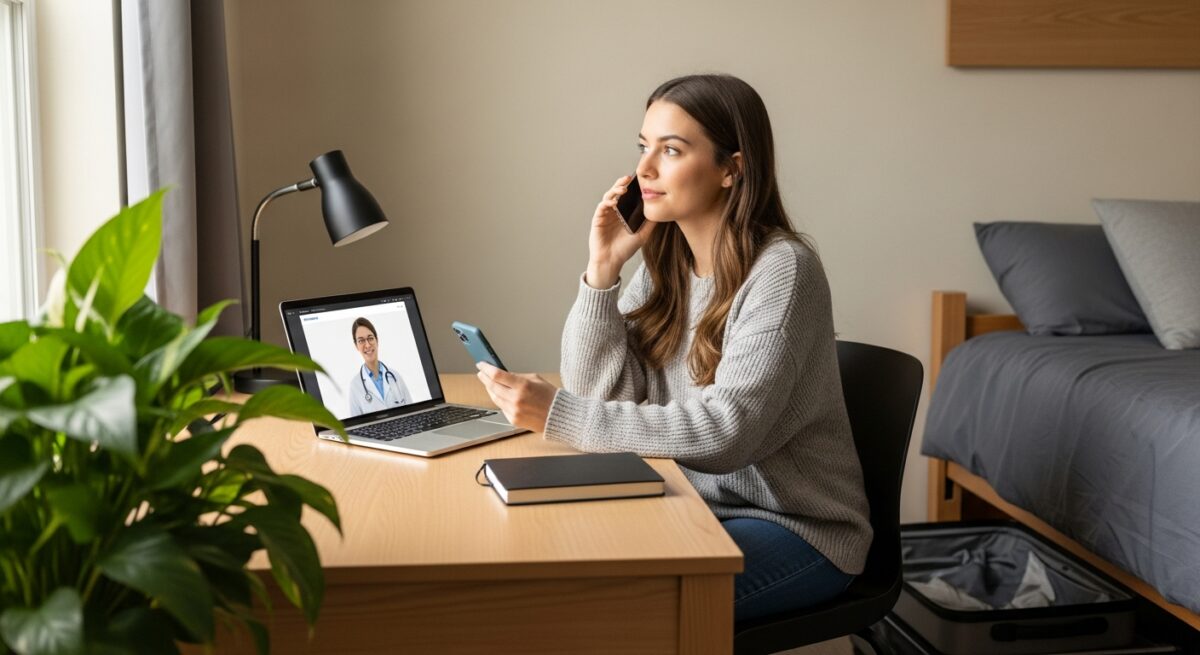
Telehealth has transformed how Americans access healthcare, but one question remains a major source of confusion: what happens when you need a virtual visit with a doctor who is licensed in a different state? Whether you are a snowbird spending winters in Florida, a college student studying out of state, or a remote worker who travels frequently, understanding out of state telehealth visits what is allowed is critical to avoiding legal and financial pitfalls. The rules governing cross state telehealth visits have shifted dramatically in recent years, and they continue to evolve at both the federal and state levels.
Before the COVID-19 pandemic, most states required a physician to hold a full license in the state where the patient was physically located at the time of the visit. That meant a New York doctor could not legally treat a patient who was vacationing in California unless the doctor also held a California license. The public health emergency temporarily relaxed many of these requirements, but those flexibilities have been winding down. Today, the landscape is a patchwork of permanent changes, temporary waivers, and interstate compacts. This article will walk you through exactly what is permitted, what is not, and how to protect yourself and your access to care when seeking out of state telehealth visits.
The stakes are high. If you see an out-of-state provider without proper authorization, your insurance may deny the claim, and the provider could face disciplinary action. On the patient side, you might receive a surprise bill or find that a prescription written by an out-of-state doctor cannot be filled at your local pharmacy. To make informed decisions, you need clarity on licensing laws, state-specific telehealth definitions, and the role of federal programs like Medicare and the DEA. This guide breaks down every layer so you can navigate cross state telehealth visits with confidence.
Why State Licensing Rules Matter for Telehealth
Each state has its own medical board that controls who can practice medicine within its borders. This authority stems from the Tenth Amendment, which reserves powers not delegated to the federal government to the states. For decades, this meant that a doctor had to be physically present in the state to treat a patient there. Telehealth challenged that model because it allowed a doctor in one state to provide care to a patient in another without crossing state lines. States responded by creating specific telehealth regulations that define where the doctor must be licensed and what constitutes an acceptable patient-provider relationship.
Currently, most states require the physician to be licensed in the state where the patient is located during the out of state telehealth visit. A few states have reciprocity agreements or special registration pathways, but these are exceptions rather than the rule. The key takeaway is that the location of the patient, not the doctor, determines which state laws apply. If you cross a state border and need a telemedicine consultation, the provider must legally be allowed to treat you in your current location. This is the central principle behind cross state telehealth visits and the source of most confusion.
The consequences of ignoring these rules are significant. For patients, an unauthorized visit may leave you with a bill that your insurance refuses to pay. For providers, practicing without a proper license can result in fines, loss of license, or even criminal charges. Understanding these basics helps you ask the right questions before booking an appointment and ensures you are not caught off guard by state-specific restrictions.
Interstate Compacts and Special Licensure Pathways
To address the friction of cross state telehealth visits, several interstate compacts have been created. The most well-known is the Interstate Medical Licensure Compact (IMLC), which streamlines the process for physicians to obtain licenses in multiple states. As of 2025, 39 states, the District of Columbia, and Guam participate in the IMLC. Instead of applying separately to each state board, a doctor can use the compact to fast-track licensure in other member states. This does not grant automatic practice rights; it simply makes the administrative process faster and less burdensome.
Other compacts exist for specific professions. The Nurse Licensure Compact (NLC) allows registered nurses and licensed practical nurses to practice in multiple states with one multistate license. The Psychology Interjurisdictional Compact (PSYPACT) enables psychologists to practice telepsychology across state lines. For social workers, the Social Work Licensure Compact is gaining traction. These compacts are designed to increase patient access to specialists who might otherwise be unavailable locally. If you need a specialist in a field covered by a compact, you may have more options for out of state telehealth visits than you realize.
In addition to compacts, some states offer special purpose licenses or registration for telehealth-only practice. For example, Alabama has a limited telemedicine license for out-of-state physicians, and Texas allows physicians who live near the border to treat patients across state lines under certain conditions. These pathways are often restricted to specific specialties or require the physician to maintain a referral relationship with an in-state provider. When researching cross state telehealth visits, always check whether the provider holds a compact privilege, a special license, or a full license in your state.
Federal Rules: Medicare, DEA, and the Interstate Exception
Federal law also plays a role in what is allowed for out of state telehealth visits. Medicare, for instance, has specific rules about originating sites and distant sites. During the pandemic, Medicare waived the requirement that the patient must be at a qualifying originating site (like a clinic) and allowed telehealth from home. Some of these flexibilities have been extended through 2025 and beyond, but they do not override state licensing laws. A Medicare beneficiary can see an out-of-state doctor via telehealth only if the doctor is licensed in the state where the beneficiary is located.
The Drug Enforcement Administration (DEA) imposes additional restrictions when cross state telehealth visits involve controlled substances. Under the Ryan Haight Online Pharmacy Consumer Protection Act, a prescription for a controlled substance generally requires at least one in-person medical evaluation before a doctor can prescribe via telemedicine. The DEA issued temporary waivers during the pandemic that allowed remote prescribing without an in-person visit, but those waivers have been phased out for most controlled substances. As of November 2025, a new Special Registration process is being implemented for telemedicine prescribing of controlled substances, but it is not yet fully operational. This means that if your out of state telehealth visit involves a medication like Adderall, Xanax, or opioids, the rules are especially strict and may require an initial in-person visit with a provider licensed in your state.
Another federal consideration is the Health Insurance Portability and Accountability Act (HIPAA). During the pandemic, the Office for Civil Rights waived penalties for using non-compliant platforms like FaceTime or Zoom for telehealth. That flexibility ended with the public health emergency. Today, covered entities must use HIPAA-compliant telehealth platforms for out of state telehealth visits. DoctorsHome, for example, uses secure, encrypted technology to protect patient data during every virtual consultation, ensuring compliance with both federal and state regulations.
State-by-State Variations You Need to Know
While a full list of every state’s telehealth laws is beyond the scope of this article, understanding the most common variations will help you prepare. Some states, like Florida and Texas, have historically been more restrictive, requiring a prior in-person relationship before a telemedicine visit. Others, such as New Mexico and Vermont, have been more permissive, allowing telehealth without an in-person visit as long as the standard of care is met. A growing number of states have adopted the model of the Federation of State Medical Boards, which allows telemedicine without an in-person exam if the provider uses real-time audio-visual technology and meets certain criteria.
Here are the key factors that differ by state:
- Definition of telemedicine: Some states restrict telemedicine to real-time audio-video interactions, while others allow store-and-forward (asynchronous) consultations. For example, asynchronous telemedicine is widely accepted in states like California and New York but is more restricted in states like Arkansas.
- Patient-physician relationship: Many states require a documented relationship before prescribing, which can be established via telemedicine itself. Others mandate an in-person visit first. States like Idaho and Arizona are generally more flexible, while Connecticut and Delaware are stricter.
- Prescribing authority: Some states prohibit prescribing controlled substances via telemedicine unless the patient has been seen in person within a certain timeframe (e.g., 12 months in South Carolina). Other states align with federal DEA rules but add their own restrictions.
- Insurance parity: Most states now require private insurers to cover telehealth at the same rate as in-person care, but this does not apply to self-funded employer plans governed by ERISA. Always check your specific plan details.
These variations mean that the legality of an out of state telehealth visit depends heavily on where you are physically located at the time of the appointment. If you travel frequently, you may need to establish relationships with providers in multiple states or use a telemedicine platform that works with clinicians licensed in many jurisdictions. DoctorsHome operates with licensed providers across multiple states, making it easier for patients to access care regardless of where they are traveling within the United States. In our guide on how to find affordable telehealth visits in the US, we explain how to identify platforms that prioritize multi-state compliance.
How to Verify an Out-of-State Telehealth Provider
Before booking any cross state telehealth visit, you should take proactive steps to confirm that the provider is legally authorized to treat you. Start by asking the provider which states they are licensed in. Most reputable telemedicine companies list this information on their website or provide it during the intake process. You can also verify a physician’s license through the state medical board’s online database, which is public and free to access. Look for the status of the license, any disciplinary actions, and whether it is current.
Next, ask about the platform’s compliance with your state’s specific telehealth laws. Some states require the provider to have a separate telehealth registration or waiver, even if they hold a full medical license. For example, New York requires physicians who practice telemedicine across state lines to register with the state Department of Health. Failure to register can invalidate the visit from a legal standpoint. A trustworthy provider like DoctorsHome will be transparent about its licensure and compliance processes, giving you peace of mind before you proceed.
Finally, check with your insurance company. Even if the provider is legally allowed to treat you, your plan may not cover out-of-state telehealth services. Some insurers restrict coverage to in-network providers located in your state of residence. Others have expanded coverage for telehealth but still require that the provider hold a license in your state. If you have a high-deductible plan or an HMO, verifying coverage before the visit can prevent an unexpected bill. Keep a record of your insurance verification and the provider’s license information for your files.
Frequently Asked Questions
Can I see my regular doctor via telehealth while I am traveling in another state? Yes, but only if your doctor holds a license in the state where you are physically located during the visit. If not, you may need to find a local provider or use a telemedicine platform with multi-state licensing. Some doctors have obtained licenses in multiple states through the Interstate Medical Licensure Compact, so it is worth asking.
What happens if I have an emergency while out of state and need a prescription? For non-controlled substances, many states allow a one-time emergency prescription under certain conditions. For controlled substances, the rules are stricter, and you may need to visit an urgent care center or emergency room. Always carry a list of your medications and allergies when traveling.
Does Medicare cover out-of-state telehealth visits? Medicare covers telehealth for beneficiaries located in any U.S. state, as long as the provider is enrolled in Medicare and is licensed in the state where the patient is located. Medicare also allows telehealth from home for many services through 2025, but state licensing laws still apply.
Are there any states that allow telehealth without a license for out-of-state providers? A few states, like New Mexico and Alaska, have limited exceptions for out-of-state providers who treat patients on a temporary or infrequent basis. However, these exceptions are narrow and typically require the provider to register with the state board. Most states require a full license or compact privilege.
How do I know if my telehealth platform is HIPAA compliant? Look for platforms that use end-to-end encryption, offer business associate agreements (BAAs), and clearly state their HIPAA compliance on their website. Avoid using general-purpose video apps like FaceTime or Skype for medical visits, as they may not meet current compliance standards.
Final Thoughts on Navigating Cross State Telehealth Visits
The rules governing out of state telehealth visits are complex but navigable with the right information. The most important principle is that the patient’s location dictates the applicable law. Whether you are seeking treatment for a chronic condition, a minor infection, or a prescription refill, always confirm that the provider is licensed in your current state. Interstate compacts, special licenses, and federal programs offer pathways for many patients, but they require proactive verification. Platforms like moving.homes can also help you understand the practical logistics of relocating while maintaining healthcare continuity. By staying informed and asking the right questions, you can access the care you need without legal or financial surprises. Telehealth is a powerful tool for modern healthcare, and understanding what is allowed across state lines ensures you can use it safely and effectively wherever life takes you.
About the Author: Sarah Thompson




Sign up for our newsletter and Save 20% on Test Kits
"*" indicates required fields