
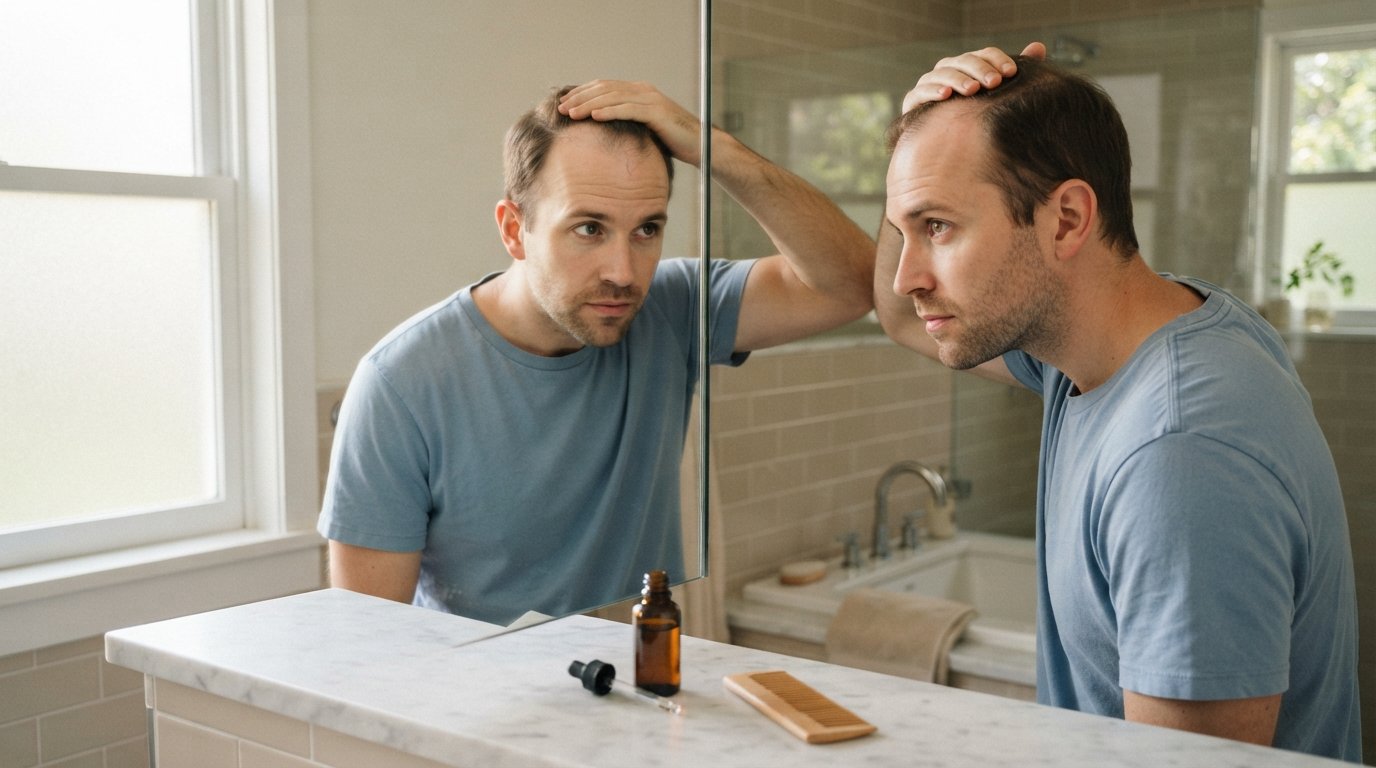
Finasteride and Minoxidil via Telehealth for Male Pattern Hair Loss
Finasteride and minoxidil for male pattern hair loss via telehealth: learn how these treatments work and what clinicians review. DoctorsHome explains, not prescribes.

By Daniel Miller
Male pattern hair loss, also known as androgenetic alopecia, affects millions of men and often begins with a receding hairline or thinning at the crown. If you have searched for solutions, you have likely encountered finasteride and minoxidil, two medications frequently discussed in telehealth settings. This article explains how these treatments work, what safety points clinicians review, and how telehealth fits into the picture. DoctorsHome is an educational publisher: we do not diagnose, prescribe, sell medication, or book visits. Our goal is to help you understand the landscape so you can have an informed conversation with a licensed clinician.
Understanding Male Pattern Hair Loss
Male pattern hair loss is driven primarily by genetics and hormones. The enzyme 5-alpha-reductase converts testosterone into dihydrotestosterone (DHT), which binds to hair follicles and gradually shrinks them, leading to shorter, finer hairs and eventual baldness. This process typically follows a predictable pattern, starting at the temples and crown. While not a medical emergency, hair loss can affect self-esteem and quality of life, prompting many men to seek treatment.
Telehealth platforms have made it easier to discuss hair loss with licensed clinicians, who can evaluate your history, assess potential causes, and determine whether medication is appropriate. However, it is important to remember that an educational site like DoctorsHome does not provide medical advice or prescriptions. All treatment decisions must be made with a qualified professional.
How Finasteride Works for Male Pattern Baldness
Finasteride is an oral prescription medication that inhibits the 5-alpha-reductase enzyme, reducing DHT levels by up to 70 percent. By lowering DHT, finasteride helps slow hair loss and can promote regrowth in some men. It is typically taken as a daily pill and requires a prescription. Clinical studies show that finasteride can be effective for many men, but results vary and it may take several months to notice changes.
Because finasteride affects hormone levels, clinicians review potential side effects and contraindications before prescribing. Common side effects include decreased libido, erectile dysfunction, and breast tenderness, though these are not experienced by everyone. A small percentage of men report persistent sexual side effects after stopping the medication, a topic that continues to be studied. Clinicians also consider that finasteride can lower prostate-specific antigen (PSA) levels, which is important for prostate cancer screening.
Telehealth consultations provide a convenient way to discuss finasteride with a licensed clinician who can evaluate your medical history, including any liver issues or prostate concerns. However, DoctorsHome does not prescribe or sell finasteride. We simply explain what clinicians commonly discuss so you can make informed decisions.
How Minoxidil Works for Male Pattern Baldness
Minoxidil is a topical medication available over the counter in 2% and 5% formulations. It is believed to work by widening blood vessels and improving blood flow to hair follicles, prolonging the growth phase of the hair cycle. Minoxidil is applied directly to the scalp, usually twice daily, and is effective for many men in slowing hair loss and stimulating regrowth. It may take up to six months to see results, and consistency is key.
Side effects of minoxidil are generally mild and localized, including scalp irritation, itching, or dryness. Some users experience unwanted facial hair growth if the solution drips, and rarely, more systemic effects like rapid heartbeat or dizziness can occur. Clinicians review these possibilities and may recommend a specific concentration or alternative if irritation persists.
While minoxidil is available without a prescription, telehealth clinicians can help you incorporate it into a comprehensive hair loss plan, especially when combined with finasteride. Again, DoctorsHome does not sell minoxidil or any other medication; our role is to provide educational context.
Combining Finasteride and Minoxidil: A Common Approach
Many clinicians recommend using finasteride and minoxidil together because they work through different mechanisms: finasteride reduces DHT, while minoxidil improves follicular blood flow. This combination is often more effective than either medication alone. However, it is essential to have a clinician assess whether the combination is safe for you, considering your overall health and any other medications you take. Telehealth visits can facilitate this discussion, but the actual prescribing and monitoring must come from a licensed provider.
It is also important to set realistic expectations. Hair loss treatments require patience and consistency, and not everyone responds. A clinician can help you track progress and adjust the plan as needed. DoctorsHome encourages readers to consult with a healthcare professional before starting any treatment regimen.
Safety Considerations Clinicians Review
Before prescribing finasteride or recommending minoxidil, clinicians typically evaluate several factors. For finasteride, they consider liver function, prostate health, and potential interactions with other medications. They also discuss sexual side effects and the importance of reporting any persistent issues. For minoxidil, they assess scalp condition and any history of heart problems. Both treatments require a discussion of pregnancy risk: finasteride is contraindicated for women who are or may become pregnant, and minoxidil should not be used by pregnant or breastfeeding women. Clinicians also review other medications and supplements that could interact.
Telehealth platforms enable these conversations remotely, but they rely on accurate self-reporting. It is crucial to be honest about your medical history and to follow up with your clinician if you experience any adverse effects. DoctorsHome does not provide medical advice or prescriptions; we simply outline the safety points that licensed professionals typically consider.
The Role of Telehealth in Managing Hair Loss Treatment Plans
Telehealth has transformed access to hair loss care by connecting patients with licensed clinicians through secure video or messaging platforms. For finasteride and minoxidil, telehealth can be used for initial consultations, follow-up visits, and prescription renewals. This convenience is especially valuable for men who may feel uncomfortable discussing hair loss in person or who have busy schedules. However, telehealth is not a replacement for comprehensive medical evaluation when needed, and clinicians may refer you to a dermatologist or other specialist if your case is complex.
When using telehealth for hair loss, expect a thorough review of your medical history, a discussion of treatment options, and clear instructions on how to use medications and monitor for side effects. Some platforms may require recent blood tests or photos to assess progress. Always ensure the platform is legitimate and staffed by licensed clinicians in your state. DoctorsHome does not operate a telehealth service; we provide educational content to help you understand what to expect.
What DoctorsHome Does and Does Not Do
DoctorsHome is an educational publisher focused on telehealth treatments for men and women. We explain topics such as weight loss, sexual health, hair, skin, herpes, birth control, menopause, and mental health. Our articles name medications clinicians commonly discuss and highlight safety points that require professional review. We do not diagnose, prescribe, sell medication, or book visits. If you are seeking a prescription for finasteride or minoxidil, you must consult a licensed clinician through a legitimate telehealth provider or in-person visit.
Our goal is to empower you with knowledge so you can make informed decisions and have productive conversations with healthcare professionals. We encourage readers to verify any information with their clinician and to prioritize safety.
Frequently Asked Questions
Can I get finasteride and minoxidil via telehealth?
Yes, many telehealth platforms offer consultations for hair loss, and licensed clinicians can prescribe finasteride and recommend minoxidil if appropriate. However, DoctorsHome does not provide these services. You should research reputable telehealth providers and ensure they operate in your state.
Are finasteride and minoxidil safe for long-term use?
Both medications have been studied for long-term use, but they require monitoring. Finasteride may have persistent sexual side effects in a small percentage of men, and minoxidil can cause scalp irritation. Clinicians typically recommend regular follow-ups to assess efficacy and safety. Always discuss long-term risks with your healthcare provider.
What should I do if I experience side effects?
If you experience side effects from finasteride or minoxidil, contact your prescribing clinician promptly. Do not stop or change your medication without professional guidance. DoctorsHome does not provide medical advice; your clinician is the best resource for managing side effects.
Does DoctorsHome sell hair loss medications?
No, DoctorsHome does not sell any medications, including finasteride or minoxidil. We are an educational site and do not prescribe or book visits. Our content is for informational purposes only.
Male pattern hair loss can be a challenging condition, but effective treatments are available. Finasteride and minoxidil, often used together, are commonly discussed in telehealth settings. By understanding how they work and what safety considerations clinicians review, you can take a proactive role in your hair health. Remember to consult a licensed clinician for personalized advice, and use resources like DoctorsHome to stay informed about telehealth treatment options.