
CBT via Telehealth: How Effective Is It Really?
Research shows cognitive behavioral therapy via telehealth effectiveness rivals in-person care for anxiety, depression, and more. Here is what to expect.

By Adam Adler
You have probably heard that cognitive behavioral therapy (CBT) works for anxiety, depression, and a long list of other mental health conditions. You may have also noticed that more therapists are offering sessions through video calls, phone calls, and secure messaging. The natural question is whether therapy delivered through a screen is as powerful as therapy delivered in person. The research on cognitive behavioral therapy via telehealth effectiveness is extensive, and the short answer is encouraging: for many people and many conditions, telehealth CBT produces outcomes that are comparable to face-to-face therapy. But the details matter, and understanding them helps you make an informed decision about your own care.
What Makes Telehealth CBT Effective: The Evidence Base
Cognitive behavioral therapy is a structured, goal-oriented approach that focuses on the relationship between thoughts, feelings, and behaviors. Because it is highly protocolized and often manualized, CBT translates well to remote delivery. Researchers have studied telehealth CBT across decades, starting with telephone-based interventions and expanding to video conferencing and internet-delivered programs. The consistency of the findings is striking: across dozens of randomized controlled trials and several meta-analyses, telehealth CBT consistently outperforms waitlist controls and often matches in-person CBT for symptom reduction.
For depression, trials comparing video-based CBT with in-person CBT have found no clinically meaningful difference in outcomes at post-treatment or follow-up. A large body of work on internet-delivered CBT, which typically includes therapist support, shows moderate to large effects on depressive symptoms. For anxiety disorders, including generalized anxiety disorder, panic disorder, and social anxiety disorder, telehealth CBT has demonstrated strong efficacy, with remission rates similar to clinic-based care. Obsessive-compulsive disorder, post-traumatic stress disorder, and insomnia have also been studied extensively, and the pattern holds: structured CBT delivered remotely works.
The evidence is not limited to mild cases. Telehealth CBT has been tested in primary care settings, in rural populations with limited access to specialists, and among patients with chronic health conditions and comorbid depression or anxiety. In many of these studies, attendance rates are higher for telehealth than for in-person care, likely because transportation barriers and scheduling conflicts are reduced. Higher attendance translates directly into better outcomes, since CBT depends on consistent practice and skill-building between sessions.
How Telehealth CBT Sessions Work in Practice
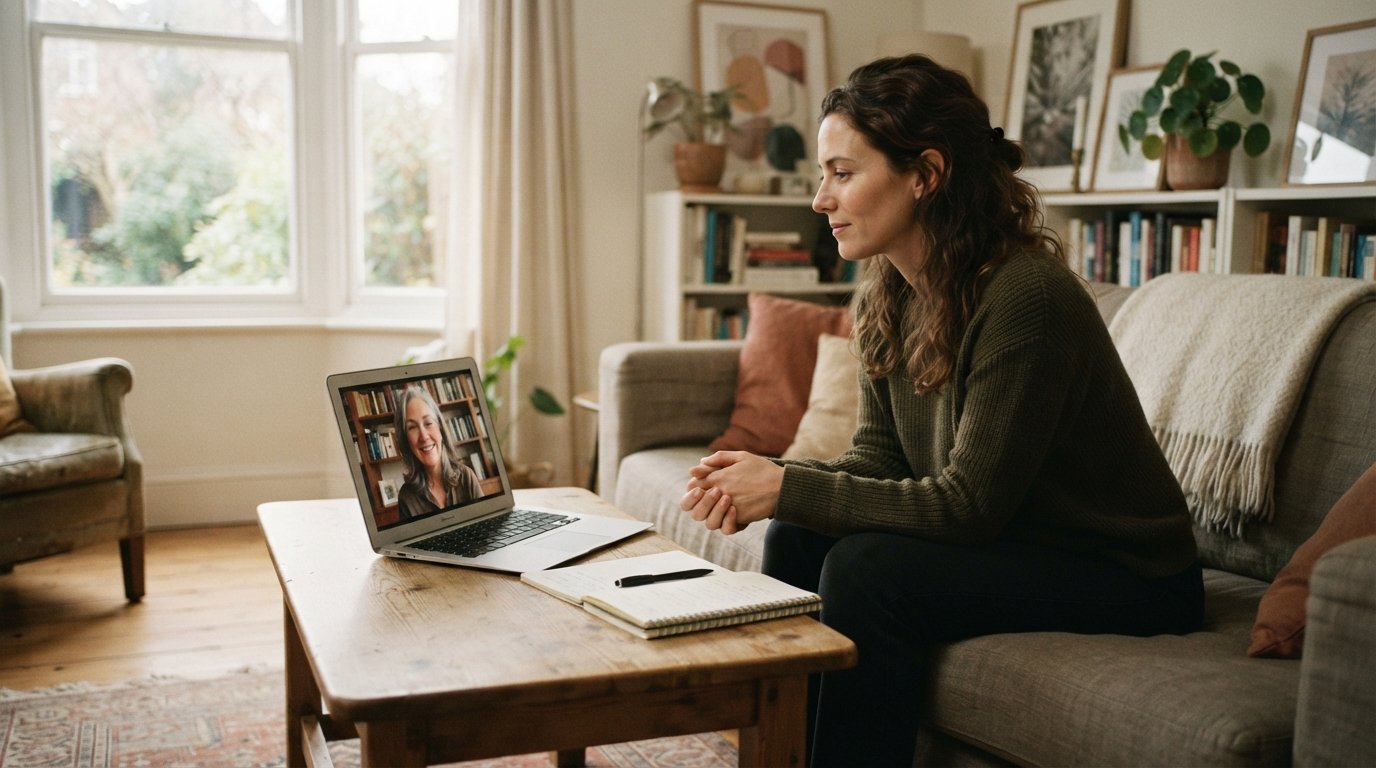
If you have never attended therapy remotely, the format may feel unfamiliar. A typical telehealth CBT session lasts 45 to 60 minutes and follows a structure similar to in-person CBT. You and your therapist review the week, discuss any homework or behavioral experiments you attempted, identify patterns in your thoughts and behaviors, and set goals for the coming week. The therapist may share worksheets, thought records, or relaxation exercises through a secure portal or screen sharing. The core mechanisms of CBT, including cognitive restructuring, behavioral activation, exposure, and problem-solving, are all delivered effectively through video.
What changes in the telehealth format is mostly logistical. You need a private space, a reliable internet connection, and a device with a camera and microphone. Most platforms used by licensed therapists are designed to be HIPAA-compliant, meaning your session is encrypted and not recorded without your consent. Some therapists offer phone sessions as an alternative if video is not feasible, and a smaller number use secure messaging or asynchronous modules, though these formats are usually adjuncts to live sessions rather than replacements.
The first session typically includes an assessment and a discussion of goals. Your therapist will ask about your symptoms, your history, and what you hope to change. You should expect to talk about confidentiality and its limits, including situations involving risk of harm to yourself or others. By the second or third session, you will likely begin working with specific CBT tools. The therapist may assign homework, such as monitoring negative automatic thoughts or practicing a feared activity. The effectiveness of CBT depends heavily on this between-session practice, and telehealth makes it easy to check in or adjust assignments through brief messages if the platform allows.
Benefits of Receiving CBT Through Telehealth
The advantages of telehealth CBT extend beyond convenience. Access is the most significant benefit. People in rural areas, those with mobility limitations, and individuals with busy schedules often cannot attend weekly in-person appointments. Telehealth removes those barriers. For people with anxiety disorders, the idea of leaving home to attend therapy can itself be a hurdle; remote sessions allow them to engage in treatment without facing that obstacle immediately. For social anxiety specifically, the ability to do exposure work in real-world environments while staying connected to a therapist is a genuine clinical advantage.
Cost and time savings are also meaningful. You avoid commuting, parking, and waiting rooms. Many insurers now cover telehealth mental health services at the same rate as in-person care, and some employers and employee assistance programs offer telehealth CBT as a covered benefit. Privacy can be another benefit: you can attend a session from your home or office without sitting in a public waiting area. For people in small communities, this privacy can make the difference between seeking care and avoiding it.
Continuity of care is easier to maintain. If you travel for work or relocate temporarily, you can often continue sessions with the same therapist, provided licensing laws allow it. Many states have reciprocity agreements or temporary practice allowances for telehealth, though you should always confirm that your therapist is licensed in the state where you are physically located during the session. This portability supports the consistent weekly rhythm that CBT relies on.
Limitations and Considerations
Telehealth CBT is not a perfect substitute for in-person care in every situation. Severe mental illness, active suicidal ideation, and situations requiring immediate crisis intervention are better served by in-person or emergency services. If you are in crisis, call 911 or call or text 988 for the Suicide and Crisis Lifeline. Therapists who provide telehealth CBT are trained to assess risk remotely, but they may recommend a higher level of care if your needs exceed what outpatient telehealth can safely provide.
Technology problems can interrupt sessions, and not everyone has a private space at home. Some people find it harder to build rapport through a screen, though research suggests that the therapeutic alliance in telehealth CBT is generally strong. If you have hearing or vision difficulties, you may need accommodations. And while most insurers cover telehealth CBT, coverage varies by plan and state; you should verify benefits before starting.
Another consideration is the quality of the program. Not all telehealth CBT is created equal. Therapist-guided CBT with a licensed mental health professional is supported by strong evidence. Fully self-guided apps and automated programs have smaller effects and are best used as supplements rather than stand-alone treatments for moderate to severe conditions. If you are considering a digital program, look for one that includes human support and is based on established CBT protocols.
How to Find a Licensed Therapist Offering CBT via Telehealth
Finding a qualified telehealth CBT therapist requires a bit of diligence, but the process is straightforward. Start by confirming licensure. Your therapist must be licensed in the state where you are located during the session. Most therapist directories allow you to filter by state and by treatment orientation. Look for providers who list CBT as a primary modality and who have experience treating your specific concern.
Here are practical steps to guide your search:
- Check your insurance coverage for telehealth mental health services and ask whether CBT is covered.
- Use a reputable directory or your insurance provider's search tool to find licensed therapists who offer CBT and telehealth.
- Confirm the therapist's license is valid in your state and ask about their experience with your condition.
- Ask about the platform they use and whether it is HIPAA-compliant.
- Schedule a brief consultation to discuss goals, session format, and fees before committing.
Many therapists offer a free 15-minute consultation. Use that time to ask how they structure CBT, how they assign homework, and how they handle technical issues. A good fit matters as much in telehealth as in person. If the relationship does not feel right after a few sessions, it is reasonable to try someone else.
DoctorsHome is an educational publisher, not a provider. We explain topics people look up on telehealth platforms, including mental health conditions, and we name medications clinicians commonly discuss. We do not diagnose, prescribe, sell medication, or book visits. The information here is for learning, and a licensed clinician is the only person who can decide on a treatment plan. If you are exploring telehealth for mental health, use this article as a starting point for informed conversations with a qualified professional.
Telehealth CBT is a well-studied, effective option for many people. The evidence supports its use for depression, anxiety, OCD, PTSD, insomnia, and other conditions, and the practical benefits of access and convenience are real. With the right therapist and a private space, remote CBT can be just as powerful as therapy in a clinic. The key is to treat it as serious clinical care, verify licensure and coverage, and engage fully in the between-session work that makes CBT effective.