
How Telehealth Works: Limitations and What It Cannot Do
Telehealth works for many non-emergency issues but cannot handle emergencies or physical exams. Learn the real limits before your next virtual visit.

By Maya Foster
Telehealth has become a routine part of American healthcare, but many people still wonder exactly how it works and where its boundaries lie. If you have ever opened a telehealth app, answered a few questions, and then found yourself unsure whether the clinician could actually help with your specific problem, you are not alone. Understanding how telehealth works limitations and what it cannot do is essential for using these services safely and effectively. This article walks through the typical visit process, clarifies what telehealth can and cannot address, and explains the practical limits that every patient should know. It also explains why DoctorsHome, an educational publisher, is not a telehealth provider and how to use its content appropriately.
The Typical Telehealth Visit: From Scheduling to Follow-Up
Most telehealth visits follow a predictable sequence, whether you use a direct-to-consumer platform, a hospital affiliated service, or your own primary care practice. The process usually begins with an online intake form. You answer questions about your symptoms, medical history, current medications, and allergies. Some platforms ask for a photo or a short video, especially for skin or hair concerns. After you submit the form, a licensed clinician reviews your information, often within minutes to a few hours, depending on the service.
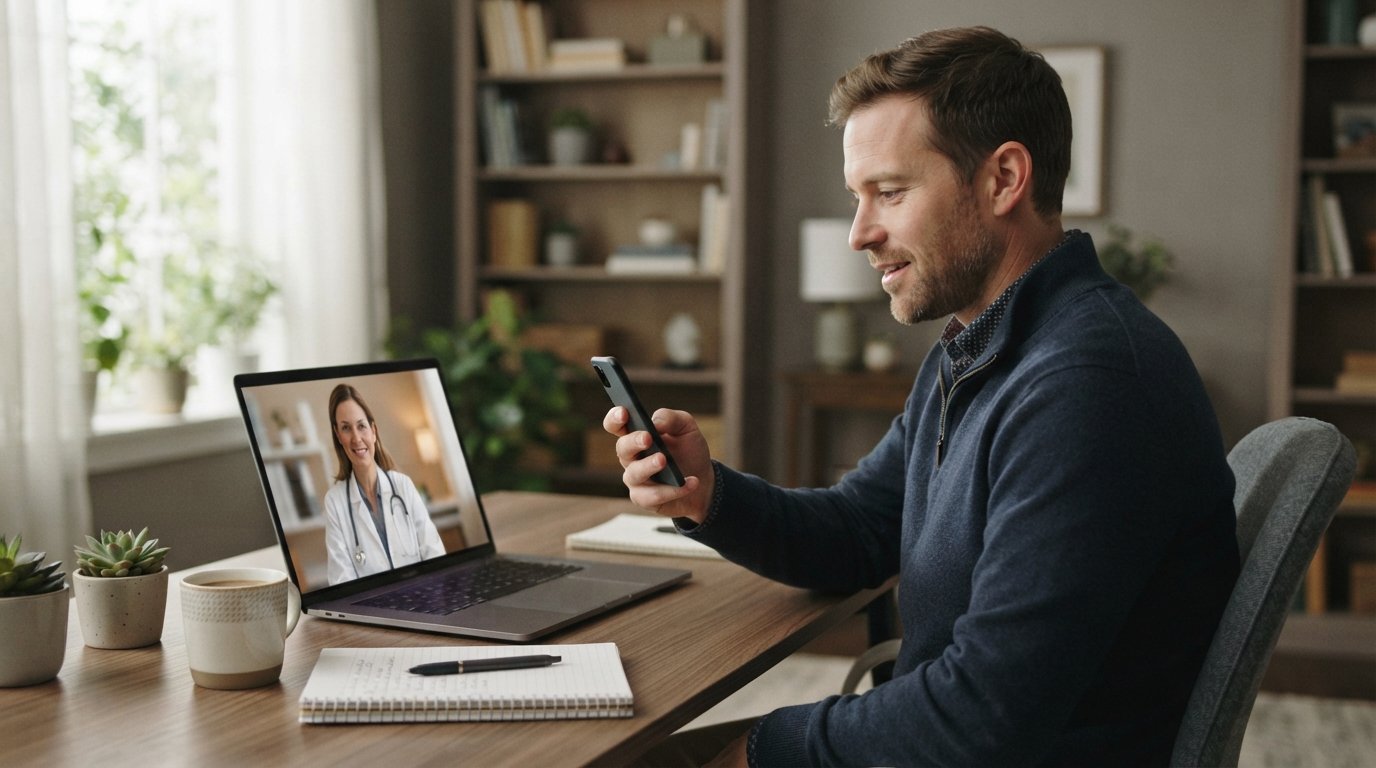
If the clinician believes a synchronous conversation is needed, you will be invited to a secure video or phone visit. During that visit, the clinician asks follow-up questions, may request that you perform a simple self-examination on camera (for example, pressing on a swollen area or showing a rash), and discusses possible treatment options. In many states, clinicians can prescribe medication after a telehealth visit, but they must follow the same standard of care as in-person visits. Some controlled substances and certain medications have additional restrictions. After the visit, you receive a summary, any prescriptions are sent electronically to a pharmacy you choose, and follow-up instructions are provided. Follow-up may happen through messaging, a scheduled video call, or a recommendation to see an in-person provider.
This process sounds straightforward, but its success depends on several factors: reliable technology, accurate self-reporting, and state licensing rules. For example, a clinician licensed in California generally cannot treat a patient located in Texas unless they hold a Texas license or the state has a specific exception. Many platforms verify your location at the start of each visit. If you travel frequently, you may need to use a different platform or wait until you return home. These logistical details are part of how telehealth works limitations and what it cannot do, and they are worth understanding before you rely on a virtual visit for time-sensitive care.
What Telehealth Can Address Effectively
Telehealth is well suited to a wide range of non-emergency concerns. Research and clinical experience show that virtual visits can be appropriate for many common conditions when the diagnosis is straightforward and the treatment plan does not require a physical examination or immediate procedures. Examples include mild to moderate acne, uncomplicated urinary tract infections in women, seasonal allergies, uncomplicated respiratory infections, and certain mental health conditions such as mild to moderate anxiety or depression. Telehealth is also commonly used for medication management, including adjusting doses of chronic medications, reviewing lab results, and providing counseling on lifestyle changes.
For men and women researching treatment options, telehealth platforms often discuss medications for weight loss (such as GLP-1 options like semaglutide and tirzepatide), sexual health (such as sildenafil and tadalafil for men, or low sexual desire treatments for women), hair loss (such as finasteride, minoxidil, and spironolactone), and skin conditions (such as tretinoin for acne and anti-aging). Birth control prescriptions, menopause symptom management, and herpes antiviral therapy are also frequently addressed through telehealth. In these cases, the clinician relies on your history and description, sometimes supplemented by photos, to make a diagnosis. When the condition is clear and the medication is low-risk, this model can be convenient and effective.
However, even for these conditions, telehealth has boundaries. A clinician cannot palpate an abdomen, listen to heart sounds, or perform a pelvic exam through a video call. If your symptoms suggest a more serious underlying issue, the clinician should direct you to in-person care. That is why reputable telehealth services screen carefully and why patients should be honest about their symptoms. The convenience of telehealth does not eliminate the need for accurate information and appropriate follow-up.
What Telehealth Cannot Do: Emergencies, Physical Exams, and More
The most important limitation to understand is that telehealth is not designed for emergencies. If you are experiencing chest pain, severe shortness of breath, sudden weakness or numbness, a severe allergic reaction, or any sign of a stroke, you must call 911 or go to the nearest emergency department. Telehealth visits cannot provide emergency care, and delaying emergency treatment to start a video call can be dangerous. Similarly, if you are having thoughts of harming yourself or others, call or text 988 to reach the Suicide and Crisis Lifeline. Telehealth platforms may offer mental health support, but they are not crisis services.
Beyond emergencies, telehealth cannot perform physical examinations that require touch, such as feeling for enlarged lymph nodes, auscultating the lungs, or conducting a speculum exam. It cannot perform in-person procedures like suturing a wound, removing a mole, or administering an injection. It also cannot provide imaging studies or immediate lab work on site. While some platforms order lab tests that you complete at a local facility, the results are not available during the video visit. These physical and diagnostic limitations mean that certain conditions simply cannot be diagnosed or managed adequately through telehealth alone.
Another critical limitation involves controlled substances and certain medications. Federal and state laws restrict the prescribing of controlled substances via telehealth. For example, stimulants for ADHD, benzodiazepines for anxiety, and opioid pain medications generally require in-person evaluation or have strict telehealth exceptions that vary by state. A telehealth clinician cannot prescribe these medications without meeting specific legal requirements, and some platforms do not handle them at all. Additionally, certain medications require regular monitoring, such as blood tests for liver function or kidney function, which may not be feasible through a purely virtual service. Patients should never assume that a telehealth visit will result in a prescription for any particular medication.
Technology, Licensing, and Privacy Limitations
Telehealth depends on technology that not everyone has reliable access to. A stable internet connection, a device with a camera and microphone, and a private space for the conversation are basic requirements. In rural areas or low-income households, broadband access may be limited. Some older adults may struggle with the apps or portals. Language barriers and hearing difficulties can also interfere with communication. While telephone-only visits are allowed in some circumstances, they provide less information than video and may not be suitable for certain concerns. These practical barriers are part of how telehealth works limitations and what it cannot do, and they can affect the quality of care.
State licensing rules create another layer of complexity. Clinicians are licensed by individual states, and they generally must be licensed in the state where the patient is located at the time of the visit. If you are traveling, you may not be able to use your usual telehealth provider. Some states have interstate compacts or temporary exceptions, but these are not universal. International telehealth is even more complicated, and most U.S. clinicians cannot treat patients located outside the country. Privacy is another consideration: while reputable platforms use encryption and comply with HIPAA, no system is perfectly secure. Patients should use secure networks and avoid public Wi-Fi for sensitive visits.
Finally, telehealth cannot replace the continuity of an ongoing relationship with a primary care provider who knows your full history. A one-time virtual visit may address an acute issue, but chronic condition management, preventive screenings, and coordinated care often require in-person visits and a longitudinal relationship. Telehealth works best as a complement to, not a replacement for, comprehensive medical care.
Where DoctorsHome Fits: Education, Not Treatment
DoctorsHome is an educational publisher, not a telehealth provider. It does not diagnose, prescribe, sell medication, or book visits. Instead, it explains the topics people look up on telehealth platforms, including weight loss, sexual health, hair, skin, herpes, birth control, menopause, and mental health. Each page names medications clinicians commonly discuss and notes the safety points a licensed clinician still has to review. For example, an article might mention that GLP-1 medications like semaglutide and tirzepatide are commonly discussed for weight loss, but it will also emphasize that pregnancy, a history of pancreatitis, and certain thyroid conditions require careful evaluation. Similarly, a page on hair loss might list finasteride, minoxidil, and spironolactone, while noting that these treatments are not appropriate for everyone and require a clinician's review.
This educational role is valuable because it helps patients ask better questions and understand the limits of telehealth before they seek care. However, it is not a substitute for a clinical visit. Readers should never use DoctorsHome content to self-diagnose or self-prescribe. The site's disclaimers are clear: it does not provide medical advice, diagnosis, or treatment. If you need care, you should contact a licensed clinician in your state. If you have an emergency, call 911. If you are in a mental health crisis, call or text 988.
Understanding how telehealth works limitations and what it cannot do empowers you to use virtual care appropriately. Telehealth is a convenient tool for many non-emergency concerns, but it has real boundaries. By knowing what to expect and when to seek in-person or emergency care, you can make safer, more informed decisions about your health.