
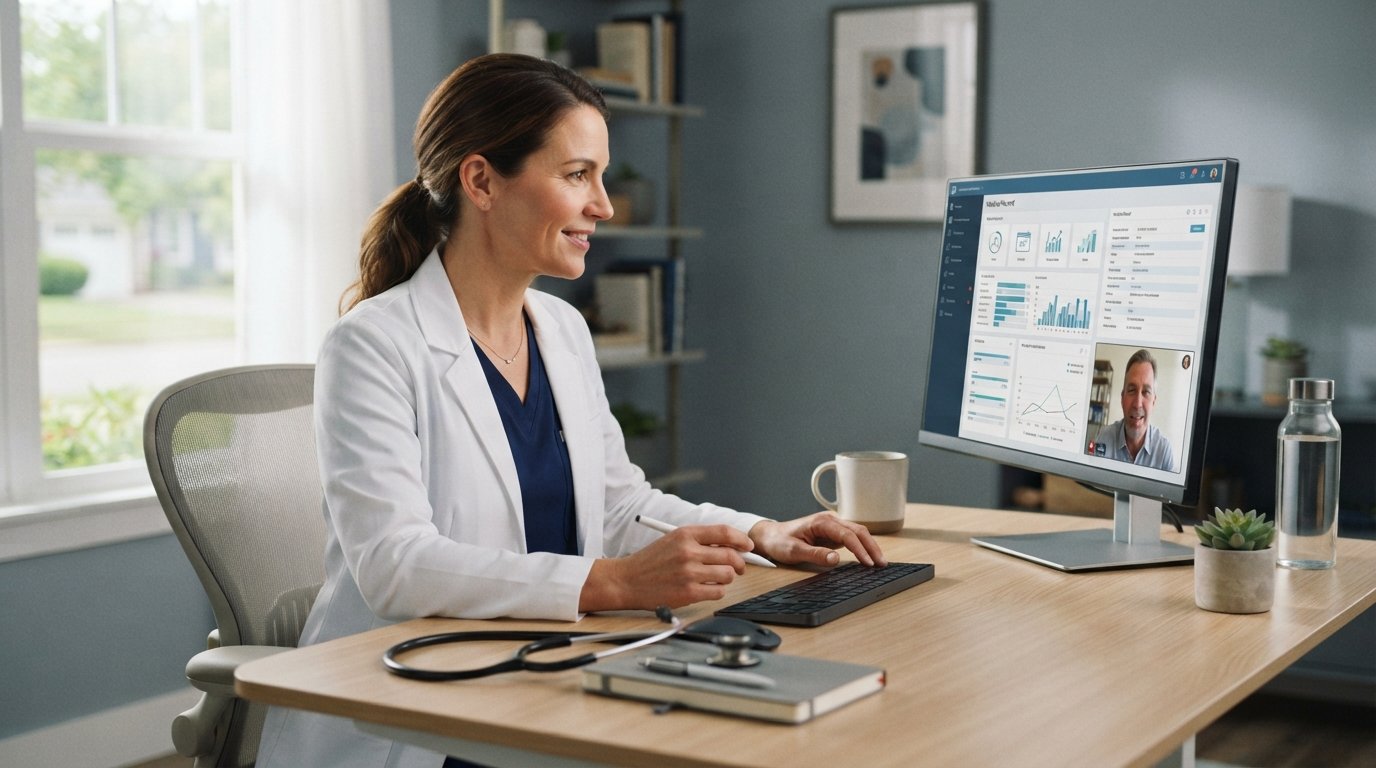
How Electronic Health Records Are Used in Telehealth Appointments
Learn how electronic health records are used in telehealth appointments to keep your care safe and coordinated, and what it means for your privacy.

By Daniel Miller
When you join a telehealth appointment, your clinician often has a complete picture of your health history before you even say hello. That is not magic; it is the electronic health record (EHR) working behind the scenes. Understanding how electronic health records are used in telehealth appointments can help you feel more confident about your virtual care, protect your privacy, and get the most from every visit. Whether you are discussing a new prescription, following up on lab results, or managing a chronic condition, the EHR is the digital backbone that keeps your care coordinated and safe.
What an Electronic Health Record Is and Why It Matters for Telehealth
An electronic health record is a digital version of a patient's medical chart. It contains your medical history, diagnoses, medications, allergies, immunization dates, lab results, imaging reports, and clinical notes from your visits. Unlike a paper file that sits in one office, an EHR is designed to be shared securely among authorized clinicians across different settings, including telehealth platforms.
In telehealth, the EHR matters because the clinician cannot physically examine you in person. They rely on the data in your record to make informed decisions. For example, if you are seeking treatment for erectile dysfunction, the clinician needs to know whether you take nitrates for chest pain, because combining nitrates with certain ED medications can cause dangerous drops in blood pressure. Without an EHR, that critical safety check might be missed. The EHR also stores your medication history, so the clinician can avoid prescribing something that interacts with your current regimen.
DoctorsHome is an educational publisher and does not access, manage, or store electronic health records. The site explains how telehealth treatments work and what safety points clinicians review, but it does not diagnose, prescribe, sell medication, or book visits. When you use a telehealth service, that provider's EHR system is what keeps your information organized and available to your care team.
How EHRs Facilitate Communication Between Telehealth Clinicians and Patients
Communication is at the heart of any good clinical encounter, and the EHR supports it in several concrete ways during a telehealth appointment. Before the visit, the clinician reviews your record to understand your history, current medications, and any recent test results. During the visit, they document your symptoms, update your medication list, and note any changes in your condition. After the visit, the EHR generates a visit summary that you can access through a patient portal, and it sends prescriptions electronically to your pharmacy if appropriate.
Here is a typical sequence of how an EHR supports a telehealth visit:
- Pre-visit review: The clinician opens your EHR to check your history, allergies, and current medications, flagging any potential safety concerns.
- Real-time documentation: During the video or phone visit, the clinician enters notes, updates your problem list, and orders any necessary labs or imaging.
- Electronic prescribing: If a medication is appropriate, the clinician sends the prescription directly to your preferred pharmacy through the EHR, reducing errors from handwritten scripts.
- Patient portal update: After the visit, you receive a summary of the discussion, instructions, and any follow-up steps through a secure portal linked to the EHR.
- Care coordination: If you see another clinician, such as a specialist, your EHR can be shared (with your consent) so that everyone has the same information.
This flow not only saves time but also reduces the risk of miscommunication. For instance, if you are discussing birth control options, the clinician can see whether you have migraines with aura, which would rule out certain estrogen-containing contraceptives. The EHR makes that safety check automatic rather than relying on memory.
Patients also benefit from greater transparency. Many EHR systems include a patient portal where you can view your medication list, lab results, and visit summaries. This access helps you stay informed and engaged in your care, and it allows you to correct any errors in your record before they affect future decisions.
Privacy and Security Considerations for Patient Data in Telehealth
Because telehealth relies on digital tools, privacy and security are paramount. Electronic health records used in telehealth must comply with the Health Insurance Portability and Accountability Act (HIPAA) in the United States, which sets strict standards for protecting patient information. HIPAA requires that EHR systems use encryption, access controls, and audit trails to prevent unauthorized access.
When you use a telehealth platform, look for clear privacy policies that explain how your data is stored and shared. Reputable platforms use secure, HIPAA-compliant video conferencing and encrypt data both in transit and at rest. They also limit access to your record to clinicians directly involved in your care. You should never share sensitive health information over unsecured channels like standard email or text messages unless your provider has specifically approved a secure method.
It is also important to understand that not all telehealth services operate under the same privacy standards. Some direct-to-consumer platforms may not be covered by HIPAA if they are not affiliated with a covered entity, but they should still have robust privacy practices. Always read the fine print and ask questions if something is unclear. Remember that DoctorsHome is purely educational and does not collect or manage any health records; any data you share with a telehealth provider is governed by that provider's policies.
How EHRs Support Safety and Quality in Telehealth Prescribing
One of the most significant roles of the EHR in telehealth is enhancing medication safety. Clinicians use the EHR to run interaction checks, verify dosages, and review allergies before prescribing. For example, if you are seeking treatment for hair loss with finasteride, the EHR will alert the clinician if you have a history of liver disease or if you are taking medications that could interact. Similarly, for weight loss medications like semaglutide or tirzepatide, the EHR helps the clinician screen for a personal or family history of medullary thyroid carcinoma, which is a contraindication.
The EHR also supports quality reporting and population health management. Telehealth providers can use aggregated, de-identified data to identify trends, improve care protocols, and ensure that patients receive appropriate follow-up. This does not replace clinical judgment, but it adds a layer of oversight that benefits everyone. For patients, the result is safer, more consistent care, even when the visit happens remotely.
DoctorsHome explains these safety points in its educational content, but it does not have access to your EHR. The site simply helps you understand what a licensed clinician will review during a telehealth appointment. That knowledge can help you prepare for your visit and ask informed questions.
Preparing for a Telehealth Appointment with Your EHR in Mind
You can take steps to make your telehealth appointment smoother by understanding how the EHR will be used. Before your visit, gather any information you want to discuss, such as recent lab results, a list of your current medications (including over-the-counter supplements), and any symptoms you have been experiencing. This preparation helps the clinician update your record accurately.
During the visit, be honest about your health history and any medications you take, even if you think they are unrelated. The EHR is only as good as the information entered into it. If you have seen another provider recently, let the telehealth clinician know so they can request those records if needed. After the visit, review your patient portal summary and check for accuracy. If something looks wrong, contact the provider to correct it.
Finally, remember that telehealth is not appropriate for emergencies. If you are experiencing a medical emergency, call 911. If you are in a mental health crisis, call or text 988. The EHR supports routine and urgent care, but it does not replace emergency services.
Electronic health records are the silent partners in every telehealth appointment, helping clinicians deliver safe, coordinated, and personalized care. By understanding how they work, you can be a more informed and engaged patient. DoctorsHome remains your educational resource for learning about telehealth treatments, but the actual care and record-keeping happen with licensed clinicians and their secure EHR systems.