
Future of Telehealth Technology Trends: AI, Remote Monitoring, and VR
Explore the future of telehealth technology trends, from AI triage to remote monitoring, and learn how these tools may improve access while requiring clinician oversight.

By Hannah Young
Telehealth has moved from a pandemic-era convenience to a permanent part of how care is delivered. But the next wave of change will not be about video calls. It will be about what happens before, during, and after those calls, powered by remote monitoring, artificial intelligence, and immersive tools. Understanding the future of telehealth technology trends matters for anyone who researches treatments online, because these shifts will change what you can learn, what your clinician can see, and how safely your data travels. At DoctorsHome, an educational publisher that explains telehealth topics for men and women, we track these developments so you can ask better questions when you speak with a licensed clinician.
Remote Monitoring Moves From Pilot to Standard Practice
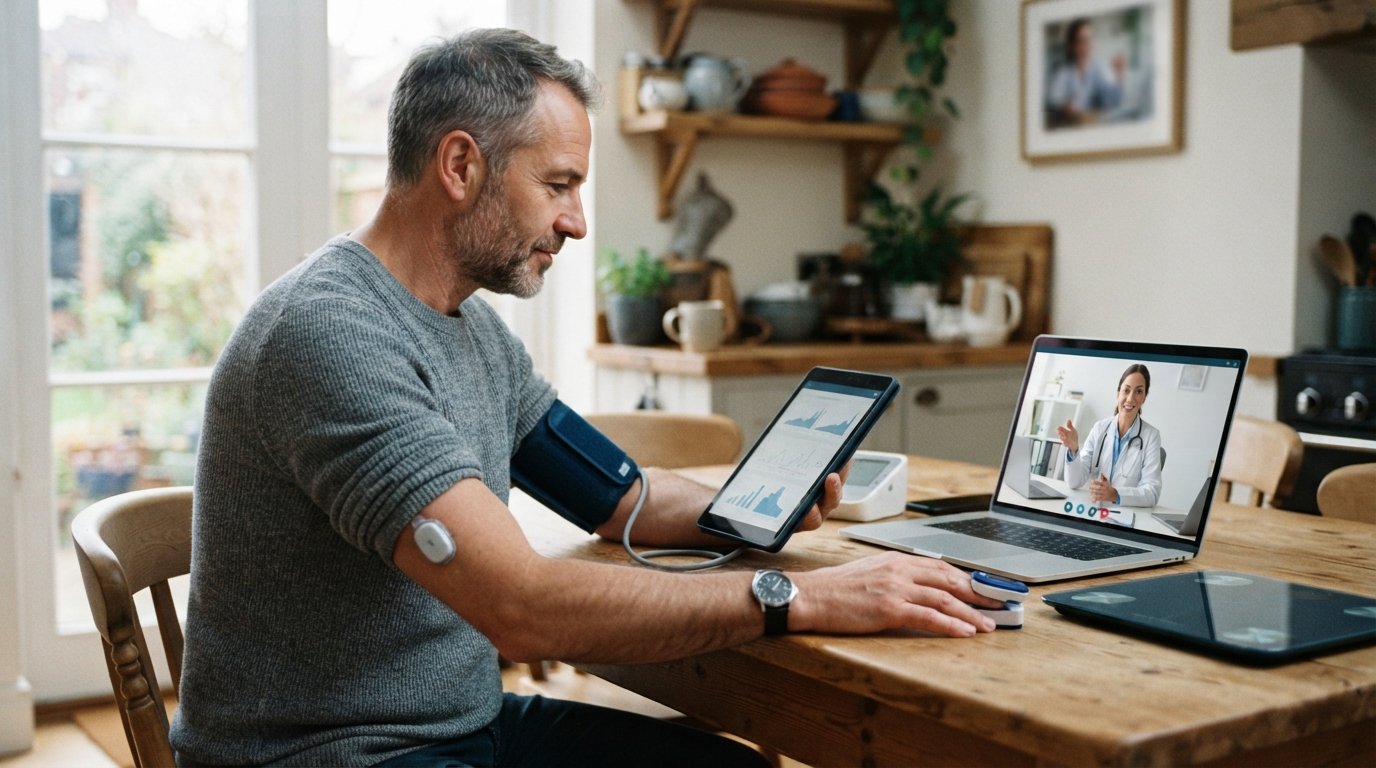
The first major trend is the expansion of remote patient monitoring beyond simple step counters. Connected devices now include blood pressure cuffs, continuous glucose monitors, pulse oximeters, smart scales, and even wearable patches that track heart rhythm. These tools feed data directly to clinicians between visits, turning a one-time video call into a continuous loop of information. For chronic conditions such as hypertension, diabetes, and heart failure, this shift could catch problems earlier and reduce hospital readmissions.
What does this mean for patients? Instead of describing symptoms from memory, you may share a week of readings. That gives a licensed clinician a richer picture when deciding whether a medication needs adjustment. For example, someone discussing weight loss treatments like semaglutide or tirzepatide may use a smart scale that transmits weight trends, helping the clinician assess progress and side effects. Similarly, a person managing blood pressure could send daily readings rather than a single office measurement.
However, remote monitoring raises practical questions. Who owns the data? How is it stored? And what happens when a device flags an abnormal reading outside business hours? The future of telehealth technology trends will need clear protocols for alerts and follow-up. Patients should ask their clinicians which devices are compatible, how data is secured, and who reviews the information. Educational sites like DoctorsHome can help you understand the categories of monitoring without replacing professional advice.
Artificial Intelligence as a Clinical Assistant, Not a Replacement
Artificial intelligence is already used in telehealth for triage, scheduling, and documentation. The next phase involves AI tools that analyze symptoms, suggest possible conditions, and flag safety concerns before a clinician sees the patient. These systems can review intake forms and highlight red flags, such as chest pain or suicidal thoughts, so that a human clinician prioritizes the case. AI can also transcribe visits and generate notes, freeing clinicians to focus on conversation.
But AI in telehealth is not a doctor. The future of telehealth technology trends will hinge on keeping AI as an assistant. For patients, this means you may interact with a chatbot before your visit. That chatbot should be transparent about its role and should never diagnose or prescribe. At DoctorsHome, we emphasize that only a licensed clinician can decide on a prescription. AI can help you prepare questions, but it cannot replace the clinical judgment required for medications like sildenafil, tadalafil, finasteride, or birth control.
Regulators are watching closely. The FDA has been developing frameworks for AI-based medical software, and states are updating telehealth rules to clarify liability. Privacy is another concern: AI systems that process health data must comply with HIPAA and other laws. Patients should look for clear privacy policies and avoid sharing sensitive information with unverified chatbots. The most trustworthy AI tools in telehealth will be those that explain their limits and direct users to human care when needed.
Virtual Reality and Augmented Reality for Assessment and Therapy
Virtual reality (VR) and augmented reality (AR) are moving from novelty to clinical tool. In telehealth, VR can support mental health therapy by creating controlled environments for exposure therapy, relaxation, or social skills training. AR can help patients understand anatomy or guide them through rehabilitation exercises. For pain management, VR distraction techniques have shown promise in reducing discomfort during procedures.
These technologies may improve access to specialized care. A patient in a rural area could use VR to participate in a therapy session that would otherwise require travel. However, VR requires hardware and reliable internet, which can widen disparities if not deployed carefully. The future of telehealth technology trends must include affordability and accessibility. Clinicians also need training to use VR effectively and to interpret data from these sessions.
For patients researching treatments online, VR is unlikely to replace the initial video visit for most conditions. But it could become a valuable add-on for mental health, physical therapy, and chronic pain. Educational resources should explain what VR can and cannot do, so patients do not overestimate its benefits. At DoctorsHome, we focus on the safety points a licensed clinician must review, and VR does not change the need for professional oversight.
How These Technologies May Improve Access and Quality
The promise of these trends is better access and higher quality care. Remote monitoring can reach patients who cannot easily travel, including older adults and those in rural areas. AI triage can reduce wait times by routing urgent cases faster. VR therapy can bring specialized mental health care to places where no specialist practices. Together, these tools could make telehealth more personalized and proactive.
Quality improvements are also possible. Continuous data can help clinicians adjust treatments earlier, reducing trial and error. AI can reduce documentation errors and flag drug interactions. VR can provide standardized therapy experiences. But these benefits depend on thoughtful implementation. A list of key considerations helps patients and clinicians evaluate new tools:
- Clinical validation: Is the technology supported by peer-reviewed studies for its intended use?
- Data security: Does the tool comply with HIPAA and use encryption?
- Equity: Is the technology accessible to people with disabilities, low income, or limited broadband?
- Clinician oversight: Does a licensed professional review AI outputs and monitoring alerts?
- Transparency: Are patients told when AI or VR is part of their care?
These considerations should guide both adoption and patient questions. For example, if a telehealth platform offers an AI symptom checker, ask whether a clinician reviews the results. If a remote monitoring device is recommended, ask how data is shared and protected. The future of telehealth technology trends will be shaped by these practical details as much as by the technology itself.
Regulatory and Privacy Considerations for Emerging Technologies
Regulation struggles to keep pace with innovation. Telehealth licensure rules vary by state, and emerging technologies raise new questions. For instance, if an AI tool provides advice across state lines, which state's laws apply? If a VR therapy session is recorded, how long can the recording be stored? These issues are being debated by lawmakers and professional boards.
Privacy is a central concern. Remote monitoring devices collect intimate data. AI systems may analyze conversations. VR platforms may track physical movements. Patients need strong protections. HIPAA covers many telehealth providers, but not all health apps. The FTC has taken action against companies that misuse health data, but enforcement is uneven. The future of telehealth technology trends must include clearer rules for data ownership, consent, and breach notification.
For patients, practical steps include reading privacy policies, using secure Wi-Fi, and asking who has access to their data. Educational sites like DoctorsHome can help explain the categories of privacy risk without giving legal advice. As telehealth evolves, patients should expect transparency about how technology is used in their care. Regulators will need to balance innovation with safety, and clinicians will need to advocate for standards that protect patients.
What Patients Can Expect in the Evolution of Telehealth
In the near term, patients can expect more hybrid care models. A video visit may be followed by remote monitoring, AI-generated reminders, and possibly VR-based therapy. The experience will become more continuous and data-driven. But the core relationship with a licensed clinician remains essential. Technology should support that relationship, not replace it.
Patients should also expect new responsibilities. You may need to learn to use devices, share data, and interpret dashboards. You may need to ask sharper questions about AI and privacy. The future of telehealth technology trends empowers patients who are informed and engaged. At DoctorsHome, we provide educational content on topics such as weight loss, sexual health, hair loss, skin conditions, herpes, birth control, menopause, and mental health, always noting that a licensed clinician must review safety points and decide on treatment.
As these technologies mature, the most successful telehealth services will be those that combine human expertise with thoughtful tools. Remote monitoring can enhance chronic care. AI can streamline triage. VR can expand therapy options. But none of these can substitute for professional medical judgment. Patients should continue to seek care from licensed clinicians and use educational resources to prepare for those conversations.
The future of telehealth technology trends is not just about faster connections or smarter algorithms. It is about building a system where technology expands access, improves quality, and protects privacy. By staying informed, patients can navigate these changes and advocate for their own care. DoctorsHome remains committed to explaining these developments in clear, factual terms, so you can make better decisions with your clinician.